What Are the Dangers of Termites? A Full Breakdown of Their Common Harm
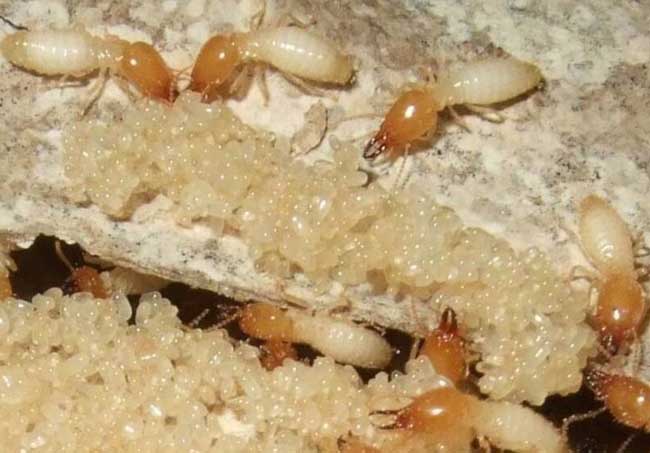
Termites are insects of the order Blattodea, found on six continents except Antarctica. They usually live in dark environments, building nests in soil, in wood, or inside tall earthen mounds, and they tunnel and move about concealed, so their damage is hard to notice. Once it is discovered, the losses are severe and already beyond recovery. Let us take a look below at the dangers of termites and how to eliminate and control them!
What are the dangers of termites?
The losses caused by termite damage are staggering, and this damage is mainly seen in the following aspects:
1. Damage to crops: Generally speaking, termites are not yet a major pest for our country's crops. But for the cash crop sugarcane, the damage is still fairly serious. The main species include: Coptotermes formosanus (Taiwan termite), Macrotermes barneyi (yellow-winged large termite), Odontotermes formosanus (black-winged soil termite), Odontotermes hainanensis (Hainan soil termite), and Coptotermes formosanus (Taiwan milk termite).
2. Damage to trees: There are many species of termites that harm trees, the main ones being: new termites, sand-piling termites (Cryptotermes), Coptotermes, tree termites, Reticulitermes, wood-nosed termites, soil termites and large termites, and primitive termites.
3. Destruction of houses and buildings: Termite damage to houses and buildings, especially to brick-and-wood and wood-frame structures, is particularly severe. Because they hide inside the wooden structure and destroy or weaken its load-bearing points, they often cause buildings to suddenly collapse, drawing great public concern. In our country, the termite species that harm buildings are mainly: Coptotermes, Reticulitermes, and sand-piling termites (Cryptotermes). Among them, species of the genus Coptotermes are the most destructive termites for buildings. Their traits are strong spreading ability, large colonies, and rapid destruction, capable of causing huge losses in a short time.
4. Destruction of river embankments and dams: The seriousness of termite damage to river embankments was already recorded in fairly detailed form in ancient Chinese documents, and modern records are even more detailed. The species include termite colonies of the genera Odontotermes, Macrotermes and Coptotermes; inside the embankments they build dense nests, reproduce rapidly, and their nursery mounds are dotted everywhere (except for Coptotermes), with termite galleries extending in all directions, some even running through the inner and outer slopes of the embankment. When water levels rise during flood season, pipe leaks and dangerous situations often appear, and in worse cases this leads to embankment collapse and dam failure.
5. Termites can corrode silver: Termites secrete a highly concentrated formic acid, which reacts chemically with silver to form silver formate, a black powder that is then eaten by the termites.
But according to statistics, more than 90% of termite species pose no harm to humans. These species are mostly distributed in tropical and subtropical mountain forests and grasslands, and they play an important role in accelerating the decomposition of organic matter on the surface, promoting material cycling, purifying the ground surface, and increasing soil fertility.
How to eliminate termites
1. At the site where termite damage is found, try to locate the nest or the termite galleries. First, spray termite-killing powder onto the termites inside the nest or galleries as much as possible, so that they can pass the poison on to one another and achieve the elimination effect.
2. Where termite damage is found, drill holes at set intervals in wooden door and window frames and inject liquid pesticide, and spray liquid pesticide on the surrounding soil at the same time, so that both the wood and the soil contain a certain toxin; when termites move about and touch the poison or feed on it, they will be poisoned and die.
3. Bait-killing method: Because spraying pesticides easily causes soil pollution and damage, developed countries and regions such as Europe and America use biological control methods to intercept and kill termites.
How to prevent and control termites
1. Ecological control method
The ecological control method is a type of control method used before construction of buildings and water conservancy projects begins, during construction, over the long period after completion and handover for use, and throughout a series of planting industry tasks; according to the requirements of termite prevention and control, various necessary measures are taken or various activities carried out to create an environment unfavorable to termite breeding, so that buildings, earthen embankments and dams, and agricultural and forestry crops are protected from termite damage.
2. Biological control method
Based on the interspecies struggle that exists in nature and the relationship between termites and fungi, this method uses termites' natural enemies to control termites and uses fungal indicators to locate nests.
3. Physical and mechanical control method
Methods of controlling termites using manpower, equipment, and physical energy such as light, heat, electricity, sound and waves:
① Nest excavation method.
② Bait-killing method (light trapping of winged adults, food bait trapping)
③ Heat-killing method
④ Building sand-grain barriers to stop termites from crossing
⑤ Application of biophysics in termite control: high-frequency and microwave termite killing, radioisotope tracing, using acoustic frequencies to detect nests, using resistivity to detect nests, and using ground-penetrating radar to detect termite nests.
4. Chemical control method
Using various toxic chemical substances—— pesticides, through certain methods, to directly contact termite bodies, or to treat their habitat, breeding sites, and the objects being damaged, so that termites die from poisoning by contact with or swallowing the pesticide, or develop a repellent effect and cannot invade and cause damage. Its features are quick results, high efficiency, simple methods of use, and little restriction by region.
① Dosage forms of termite control pesticides: powder, wettable powder, emulsion, aqueous solution, oil-based formulation, tablets (lozenges), and smoke formulations.
② Methods of use for termite control pesticides: dusting, liquid spraying, pressure injection, fumigation, pressure smoking, brushing, soaking, food-bait poisoning, trail-pheromone baiting, toxic bait trapping, building toxic soil belts, seed and seedling soaking, pouring/drenching, filling with pesticide-containing mud slurry, and wrapping with anti-termite pesticide belts.