What are the main aspects of the harm caused by red-eared sliders?
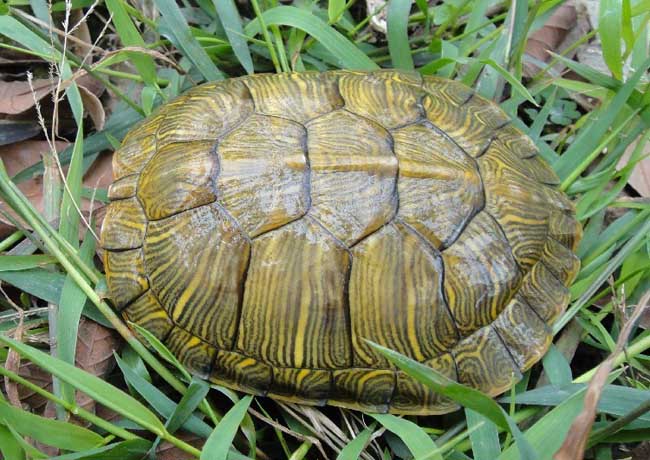
What harm do red-eared sliders cause? In 1981, Guangdong introduced the golden apple snail, intending it to be farmed for food. In the end, due to overbreeding and its poor taste, it was released into the wild, where it multiplied in large numbers. It spread quickly, destroying vegetables and aquatic crops. The people of Guangdong have already paid a heavy price to eradicate it, and the tiny red-eared slider poses the same kind of harm.
The harm of red-eared sliders
Red-eared sliders must never be released into the wild. When an organism is introduced into a new environment, if it escapes human control and becomes wild, then under suitable climate, soil, water and dispersal conditions it can easily spread rampantly, forming large areas of single-species communities, destroying native flora and fauna, and even threatening the survival of locally endangered plants and animals, thereby causing a loss of biodiversity. In their original ecosystems, these invasive species inevitably have natural enemies that control their population size, but in a new environment such control mechanisms are usually absent, so these species may run rampant.
Domestic cases of harm
In Hong Kong, China and Taiwan, China, scientific surveys have proven that the red-eared slider is truly an “ecological killer.” Less than 20 years after being introduced to Taiwan, China, red-eared sliders have already settled and bred there, establishing populations and becoming the most common turtle in Taiwan, China. In the wild, red-eared sliders prey heavily on small fish, shellfish, and frog eggs and tadpoles, causing havoc in local aquatic ecosystems. Taiwan, China's Keelung River has long since been taken over by red-eared sliders and plecos.
Red-eared sliders can reproduce at 2 years of age, while native tortoises do not reach sexual maturity until seven or eight years old, which is one reason red-eared sliders are cheap. Red-eared sliders are not demanding about food or living environment, have strong environmental adaptability, grow quickly, reproduce prolifically, and prey aggressively. If released at will, then in the long run, because they basically have no natural enemies, large numbers entering rivers and lakes and competing with native turtles for food will threaten the survival of native turtles and related species, causing enormous damage to the original ecological chain.
Overseas cases of harm
The government of Queensland, Australia, recently announced the launch of a campaign to wipe out an invasive turtle, because this turtle species, called the “red-eared slider,” may threaten the survival of turtle species native to Australia.
Red-eared sliders were brought to Australia as pets in the 1960s and 1970s, after which they multiplied at an astonishing rate. By the time they were confirmed to be highly threatening to the local ecological balance, their numbers had already grown considerably.
The International Union for Conservation of Nature has listed this turtle among the 100 most invasive species, and relevant Australian authorities have warned that red-eared sliders may cause major losses for those engaged in freshwater aquaculture, because these turtles like to eat organisms such as freshwater crayfish.
In addition, traces of red-eared sliders have also been found in some waters of Victoria and New South Wales.
Queensland also uses a Labrador retriever to hunt red-eared sliders. This dog has a very keen sense of smell and can detect the urine traces and eggs of red-eared sliders. If turtle eggs are found, the hunters will dig the eggs out of the soil and dispose of them. In addition, the Queensland government also stipulates that anyone found keeping or selling red-eared sliders will be fined 60,000 Australian dollars.