What natural enemies are flies afraid of? A full analysis of common fly natural enemies
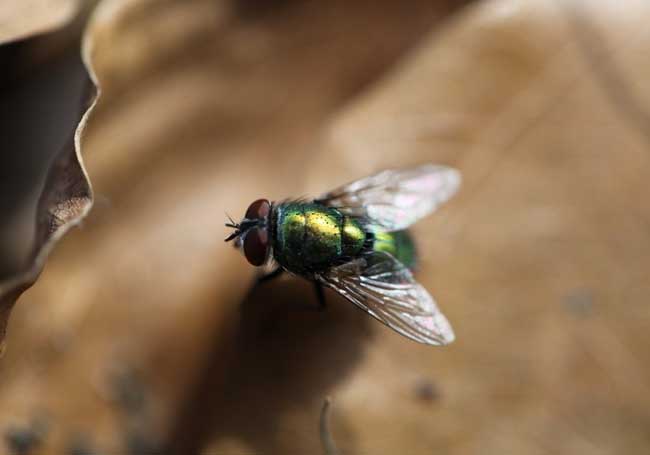
Flies harm humans by carrying and spreading various pathogenic microorganisms. Do you know what flies are afraid of? Do you know what else flies fear besides fly-killing tools like mosquito killers, fly swatters, and sticky fly paper? Let us take a look below at these things that flies are afraid of!
What natural enemies are flies afraid of?
In the biological world, the natural enemies of flies fall into three categories: predatory natural enemies, parasitic natural enemies, and microbial natural enemies:
1. Predatory natural enemies: including frogs, dragonflies, spiders, praying mantises, ants, lizards, geckos, robber flies, and birds, etc. Chicken manure is a breeding medium for house flies and stable flies, but it often contains the ferocious Macrocheles mites and earwigs, which prey on fly eggs and fly maggots in the manure.
2. Parasitic natural enemies: such as ichneumon wasps, chalcid wasps, and other parasitic wasps. They often lay their eggs inside fly maggots or pupae, and after the larvae hatch they feed on the fly maggots and fly pupae. Some people have found that among the flesh fly pupae dug out in spring, 60.4% were attacked by parasitic wasps and died prematurely.
3. Microbial natural enemies: Japanese scholars have found that Bacillus moritai can inhibit fly breeding.
What plants are flies afraid of?
Some plants have special fragrances or odors that are harmless to humans, but mosquitoes, cockroaches, flies, and other pests will avoid them as soon as they smell them. Some of these special fragrances or odors can also inhibit or kill bacteria and viruses. These plants include: tuberose, pyrethrum, wild chrysanthemum, four o'clock flower, lemon, crape myrtle, jasmine, orchid, lilac, Atractylodes lancea, cornflower, dandelion, mint, and so on.
1. Night-blooming cestrum: also known as night jessamine, native to tropical America. Its leaves are heart-shaped with soft hairs along the edges. Between summer and autumn, clusters of yellow-green bell-shaped flowers bloom in the leaf axils. When the moon rises above the treetops, it gives off waves of delicate fragrance. This scent frightens mosquitoes and makes it an excellent mosquito repellent.
2. Lavender: a small blue-purple flower native to the Mediterranean, with a flower shape like a wheat ear, usually blooming in June. Lavender itself has insecticidal effects, which is why people make it into sachets and place them in wardrobes, and some also place them in bedrooms to repel mosquitoes.
3. Pitcher plant: a carnivorous plant and an expert at catching mosquitoes.
4. Orange jasmine: orange jasmine is a small evergreen shrub with a corymb-like shape, small glossy leaves, dense white flowers, and red fruits. When you touch its leaves you feel a strong sweet fragrance, and its mosquito-repellent effect is very good.
5. Carnivorous grass: an Asteraceae herbaceous plant with small yellow flowers. A single plant can have hundreds of flower heads, and the outer part of each flower head has sticky liquid. As soon as a small mosquito lands on it, it gets stuck, and the insect's corpse is slowly digested as nutrients for its growth. If dust falls on it, it is also digested without a trace after a few days. Placing a pot of carnivorous grass at home catches insects and absorbs dust.
6. Lantana: its branches, leaves, and flowers give off an odor that mosquitoes and flies are sensitive to. It has a strong mosquito-repellent effect and is completely harmless to the human body.