What are the uses of wood ash? A detailed guide to common applications
Wood ash is the residue left after burning firewood and straw. It is a loose-textured, quick-acting potassium fertilizer, generally containing 5% to 15% available potassium, as well as calcium, magnesium, sulfur, phosphorus and iron. It has been an important fertilizer source in traditional agricultural production. Let us take a look below at exactly what wood ash can do!
Promoting seed germination
After sowing forest tree seeds, cover them with 0.5-1 cm of wood ash. This can raise soil temperature, keep the soil loose and aerated, prompt the seeds to germinate earlier, and produce seedlings that are uniform and sturdy with a high survival rate.
Promoting crop rooting
When transplanting seedlings, use wood ash together with organic fertilizer as a base fertilizer, or mix 5%-20% wood ash into the growing medium. This not only increases the available nutrients in the base fertilizer and growing medium and promotes root growth, but also helps reduce pests and diseases.
Preventing crop leaf drop
Spraying a 10% wood ash extract (mix 10 kg of fresh wood ash with 100 kg of clean water, stir thoroughly, let stand for 14-16 hours, then filter; after removing the residue and clarifying, it is ready to spray) as a supplementary nutrient can boost leaf vitality, prevent early leaf drop, enhance photosynthesis, and promote more beautiful and vivid flowers and fruit.
Improving the quality of agricultural products
Besides major nutrient elements such as potassium and calcium, wood ash also contains various trace elements such as iron and magnesium, and it acts quickly, making it a high-quality foliar fertilizer. Spraying a 50%-80% wood ash extract on the leaves before and after flowering can keep branches and leaves green, enhance photosynthesis, reduce flower and fruit drop, promote vivid coloring of flowers and fruit, extend the ornamental period, and improve fruit quality.
Suppressing pests and diseases
Broadcasting 30-50 kg of wood ash per mu in a nursery can kill soil-borne pests and pathogens, protect seeds, roots and stems, reduce pests and diseases, and prevent the occurrence of damping-off and anthracnose. Applying wood ash in orchards can control the occurrence of powdery mildew and fruit rust; applying 2.5-5 kg of wood ash per tree also helps control root rot. Spraying a 2%-3% wood ash extract can control aphids, red spiders and other pests on flowers and fruit, and improve the chemical control effect against pear psylla.
Improving drought resistance of fruit trees
For fruit trees on dry land with poor irrigation conditions, spraying a 5%-6% wood ash extract 2-3 times in succession can improve drought resistance. This is because wood ash contains a large amount of potassium ions, which can effectively reduce the intensity of leaf transpiration, strengthen the tree's ability to resist drought and high temperatures, and also promote the transport of carbohydrates, improving the tree's resistance to diseases and pests.
Use as agricultural fertilizer
Wood ash must not be applied mixed with organic farmyard manure (human excrement and urine, barnyard manure, composted manure, etc.) or with ammonium nitrogen fertilizers, to avoid nitrogen volatilization losses; it also must not be mixed with phosphate fertilizer, to avoid phosphorus fixation and reduced phosphate fertilizer efficiency.
1. Soil application: Because wood ash is alkaline, it is best applied to clayey, acidic or neutral soils. When applied to the soil, it can be used as a base fertilizer, seed fertilizer or topdressing, and can also be used as a cover material for raising seedlings and rice seedlings (seed-covering fertilizer). When used as a base fertilizer or seed fertilizer, the amount must not be too large and it should be separated from the seeds to prevent seed burn. The usual application rate per mu is 50-100 kg. Soil application is best done in a concentrated way; either band application or hole application works, at a depth of 8—10 cm, with soil covering afterward. Before application, first mix it with 2-3 times its volume of moist soil or dampen it with a little water.
2. Foliar topdressing: More than 90% of the potassium in wood ash is soluble in water, making it a quick-acting potassium fertilizer. Based on this property, wood ash can be used for foliar topdressing, that is, spraying the leaves with a 1% concentration wood ash extract.
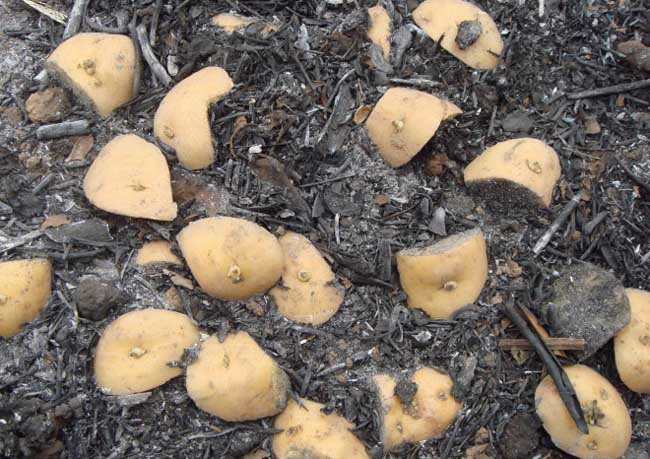
3. Priority crops: Wood ash is suitable for various crops, especially potassium-loving crops or potassium-loving, chlorine-sensitive crops such as potato, sweet potato, tobacco, grape, sunflower and sugar beet. When used on potato, wood ash can not only be applied to the soil but also used to coat cut seed pieces, so it serves as both a seed fertilizer and a way to prevent wound infection and rot.
4. Fertilizer function: Potassium in plants promotes nitrogen metabolism and the synthesis and transport of carbohydrates, helping plants grow sturdy and strengthening their ability to resist pests, diseases and natural disasters; it also improves drought resistance. It ensures that various metabolic processes proceed smoothly. When deficient, stems become thin and weak and plants easily lodge.
Use as a disinfectant
Wood ash is a widely available raw material for disinfectants in rural areas. It has a strong ability to kill pathogenic bacteria and viruses, with an effect similar to that of the commonly used strong disinfectant caustic soda.
Using 2 to 3 kg of wood ash and heating it with 10 kg of hot water makes a disinfectant for livestock sheds, feed troughs, utensils and the like. To enhance the disinfecting effect, use 30 kg of wood ash, add 100 kg of water, boil in a pot for 1 hour, then filter out the residue; this can be used to disinfect livestock sheds and utensils contaminated by swine fever, foot-and-mouth disease, Newcastle disease and other viruses. This disinfectant is characterized by strong disinfecting action, no side effects and no irritant effects.
It should be noted that wood ash is alkaline and must not be mixed with acidic fertilizers or pesticides. When spraying wood ash extract on leaves, it must be filtered and clarified before use to prevent contamination of leaves, flowers and fruit.