What Harm Does Water Hyacinth Cause? A Full Analysis of Prevention and Control Methods
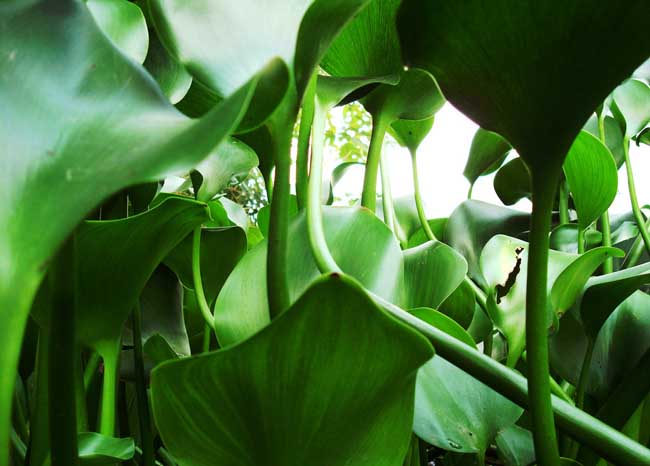
Water hyacinth has an extremely strong reproductive capacity, and precisely because it is so strong, it covers the entire lake surface, preventing other plants in the water from carrying out photosynthesis, while the animals in the water do not get enough air and food. The ecological balance in the water cannot be maintained. But water hyacinth also causes a great deal of harm, and today the editor will introduce the harm caused by water hyacinth and methods for its prevention and control.
What harm does water hyacinth cause?
Water hyacinth adopts a brutal blockade strategy against the water surface where it lives, blocking sunlight, causing underwater plants to die from lack of sufficient light and disrupting the food chain of underwater animals, which leads to the death of aquatic animals. At the same time, no boat, large or small, can move freely through water hyacinth's territory. Not only that, water hyacinth also has the ability to accumulate heavy metals; after water hyacinth dies, its rotting remains sink to the bottom and form a layer with high heavy metal content, directly killing benthic organisms. It is truly a three-in-one extinction tactic!
Because water hyacinth reproduces rapidly and has virtually no competitors or natural enemies (although various wild and domestic animals feed on its stems and leaves, their consumption is small and has no impact compared with its enormous growth), it has spread rapidly in the rivers and lakes of southern China and has become one of the main invasive alien species in China's freshwater bodies. Water hyacinth is mainly distributed in southern China; because rivers in the north have freezing periods, water hyacinth cannot survive in the natural state. But in recent years, with global warming and its natural selection and evolution, the area of harm has shown a trend of expanding northward.
Methods for Preventing and Controlling the Harm Caused by Water Hyacinth
Dugongs can be introduced, using dugongs to control the highly reproductive water hyacinth. Compared with herbicides, which cause pollution, are costly, and are unstable (they may increase water hyacinth's resistance to the chemicals), using dugongs for control causes no pollution, is very cheap, and has a good control effect. In the 1950s, someone brought water hyacinth to the Congo Basin in Africa. Three years later, water hyacinth had defeated all rival aquatic plants, taking over as the dominant species and spreading along 1500km of the upper Congo River channel, blocking the navigation route.
In order to eliminate water hyacinth, the local government spent huge sums of money spraying herbicides along the river, but in less than half a month, water hyacinth grew rapidly again. Later, sea cows (dugongs) were brought in, and one of them could eat more than 400,000 sq m of water hyacinth a day, so the river channel became navigable again, and the Congo River regained its former vitality.
Conclusion: Water hyacinth is often used as a landscaping material in garden waterscapes. Planted in a corner of a small pond and enclosed with bamboo, it has a quiet, wild charm. In addition, water hyacinth also has a strong ability to purify sewage. If used reasonably, water hyacinth is not only harmless but can actually help nature. That is all for today's introduction to the harm caused by water hyacinth and its prevention and control methods.