What bait works best for fishing in winter?
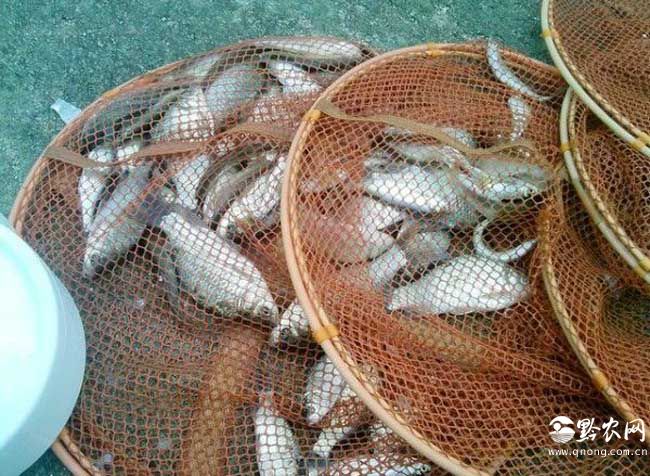
In winter, fish are not active, so if you want to stir their appetite, you have to work on the bait, making the fish come when they smell the aroma and never get enough of eating it. As a good angler, you must not only know how to fish but also know how to prepare a delicious meal for the fish. That is the key to fishing well!
What bait to use for fishing in winter
For winter fishing, the attractant must be fine. It should be strong rather than weak, and little rather than much. The flavor must mainly be strongly aromatic bait; a sweet and tasty cream flavor or strawberry flavor will both do, but do not scatter too much or break it up. Otherwise the fish will only suck up the scattered attractant and will not take the hook. Some anglers may ask why not use strongly fishy bait to make the groundbait? Actually, strongly fishy bait can also be used as groundbait, but in recent years it has been found that using purely strongly fishy bait to attract fish is far slower than strongly aromatic attractants. The reason is unknown; perhaps this may be the principle the masters call "aromatic bait" (strongly aromatic fish bait) attracting fish!
The bait for winter fishing must have good palatability, and it must match the characteristics of fish tastes in winter: live, fishy, and fresh. It must contain rich animal protein so that the fish will love to eat it. Therefore, the bait must focus on live bait with high protein content and a certain fishy smell. This is the key to whether you can catch fish. In northern regions, people generally choose live red earthworms and bloodworms. Earthworms should be put on the hook whole, while bloodworms must be chosen live, brightly colored, and plump males. Use a bloodworm clip to bundle 4-6 at a time, and clip them right before fishing to ensure the bloodworms stay live and do not die.
How to use bloodworms for fishing in winter
More and more friends like to use bloodworms for fishing. Large bloodworms are bright red all over and very beautiful. The fishing effect is indeed better than earthworms, and they are also cleaner and more hygienic than earthworms. They are deeply loved by anglers and are the first-choice bait for winter fishing.
Bloodworms are divided into two types, one is large bloodworms and the other is small bloodworms. Let's talk about large bloodworms first. Large bloodworms range from 1 to 2 cm in body length, and their thickness is just like a matchstick. Large bloodworms are divided into males and females. From the outside, males have a dark red body color, but after entering the water they become very bright, especially red. They also have thick skin and are easy to thread on a hook, making them the first choice. As for females, their body color is bright red. Although beautiful, their skin is thin and they are not as easy to use as males, so they are the second choice. The price difference between males and females is large; males are expensive and females are cheap, but for anglers, no matter how expensive, everyone still likes to use males. What about small bloodworms? They are mainly used for making groundbait. Generally, the method is: small bloodworms for groundbait and large bloodworms for hook bait. The effect is good. Some anglers also mix small bloodworms into commercial fish bait, or into fishy aromatic pull bait, and the effect for winter crucian carp fishing is still good.
There is also technique to threading large bloodworms onto the hook. You cannot rush, especially beginners. If you do not know how to thread them, as soon as you pierce them they leak fluid, and once they leak fluid they cannot be used. I think for winter fishing it is generally more suitable to use barbless sleeve hooks. When threading, gently thread from the head of the bloodworm all the way to the tail. If threaded well, the hook-up rate is very high, because one hook only holds one bloodworm, so this threading method is only suitable for catching small crucian carp. Young people can thread bloodworms onto hooks; for older people with poor eyesight, threading hooks is a bit difficult. There is no other way, just thread slowly.
If fishing for carp and large crucian carp, you can also use the method of tying them around the waist with red thread. According to your own habits, you can tie 10-20 at a time. After tying, they become a bloodworm ball. After entering the water, the target is large and also very bright red, so it has a very strong attraction to big fish, and the effect is also very good. There is another method, "skewering": use a knife to cut a 1 cm thick slice of white radish, place the bloodworms on it, then hold the hook with your hand and skewer upward. Skewer 3-4 on one hook, and that is enough. This is more convenient than threading and the fishing effect is also decent.