What are the winter fishing techniques in southern China? A full analysis of practical fishing methods
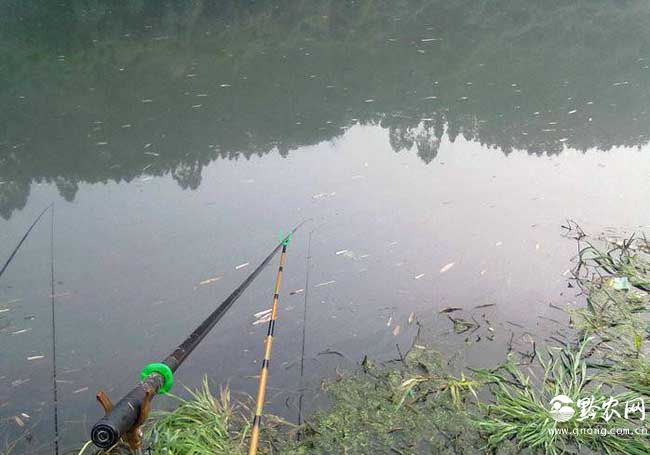
Although winter fishing is not as good as summer fishing, you can still catch fish by adapting to local conditions. In some areas of southern China, the winter water temperature is relatively high, making it suitable for fishing. Below, the editor of Qiannong Network will introduce the winter fishing techniques in southern China.
Winter fishing techniques in southern China
Choosing a good fishing spot can give you an unexpected advantage. When fishing in winter, the fishing spot should be chosen facing the sun and sheltered from the wind, and according to the water temperature and the depth of the water area, spots should be widely distributed. In winter in the Ganjiang River basin, the temperature is low in the morning and evening, so it is suitable to fish in deep, low-lying places. Whenever cold air from the north moves south, shallow waters often form a thin layer of ice, while deep water surfaces facing the sun and sheltered from the wind rarely freeze and still ripple with water, and in the early morning you can even see steam rising slowly. This shows that the deep pool water is warm and there is also a lot of natural bait, making it a gathering, resting and foraging spot for fish. In recent years, most of the large lakes and reservoirs in the Ganjiang River basin have cage and purse seine fish farming, and the areas around the cages are often feeding canteens for fish. If you can fish by the cages or purse seines, the effect is quite good. Around noon on days with plenty of sunlight, when the temperature rises, it is suitable to fish in shallow waters and shoals facing the sun, sheltered from the wind and close to the shore. In response to the warmth-seeking nature of fish, cast bait and make a nest. When fish swim toward waters with higher water temperatures, this helps gather fish and improves fishing. At those flowing water mouths connected to ditches and ponds, whether year-round or seasonal, the current brings various foods into the water area. Fish have the habit of swimming in flowing water, so the chance of catching them is also relatively high.
Winter weather is unstable, with cold waves occasionally arriving. You should choose the timing of your trip according to changes in weather and temperature. Every year from "Start of Winter" to "Winter Solstice," in the days before a cold wave arrives, the climate in the south is mostly clear, warm or cloudy. Grasp the characteristics of temperature changes and carefully choose the time to go fishing. The living habits of fish are that they move three times a day with changes in temperature, which affects the range of their migratory activity. In the south, when the temperature is low, fish hide in deep water. When the sun rises and heat radiates onto the water surface, shallow waters warm up quickly, and migratory fish such as carp and crucian carp mostly swim to waters with higher temperatures to bask and play. This usually occurs after 9 a.m. and before 3 p.m., which is the best time period for early winter fishing.
In winter, because the temperature is low, aquatic plants do not grow, and the sense of smell of fish is not as keen as in summer, so what kind of bait to use is very important. For attractant bait, it is best to use warm-natured, powdered, strongly fragrant and sweet heavy bait to make a nest. Before going fishing, stir-fry wheat bran, cornmeal, sesame and soybean powder over low heat until cooked, and before it cools, add some baijiu and cover it for a night. Baijiu has a rich fragrance, carries sweetness and is warm in nature. After bringing it to the fishing spot, if conditions permit, mix in bean dregs and so on. Each bait ball put into the nest should preferably be more than 250 grams. Rich, fragrant and sweet heavy bait is the secret weapon for attracting and gathering fish in winter. It should be used flexibly according to water conditions and fish behavior.
Views on the low water temperature in winter fishing
The most important thing in winter fishing is water temperature. Only by choosing the right and suitable temperature can you catch fish. As the saying goes, "fish the sunny side in winter," and this is the same principle, because the sunny side has a higher water temperature, and only then do fish have the desire to eat. When the water temperature is low, fish do not want to move or eat, and they do not even want to go to places where the water temperature is too low. However, in choosing a fishing spot, you should not limit yourself only to the sunny side; there are also some bright places. Moreover, water temperature changes within a day: it is higher at noon, cooler in the morning and evening, and even colder at night. Night fishing is of course not much considered in winter.
Water temperature and fishing spots are closely related. The overall requirement for choosing spots throughout winter is to be sheltered from the wind and facing the sun, and the fishing spot should be deep, because the lower water temperature at fishing spots meeting this requirement is slightly higher than in other places, and it is also conducive to fish hiding. The selection of fishing spots also has different characteristics in different solar terms in winter. From early winter to the "third nine-day period" cold winter season, the selection of fishing spots should transition from shallow to deep, and the fishing waters should transition from small to large, because as the temperature gradually decreases, the water temperature in deep water and large water surfaces decreases more slowly than in shallow water and small water surfaces. From the "sixth nine-day period" to the season when spring warms and flowers bloom, the selection of fishing spots should transition from large water surfaces to small ponds, because as the temperature continuously rises, the water temperature in shallow water and small water surfaces rises faster than in deep water and large water surfaces. It should be noted that fishing deep in winter is a general rule. In early winter and late winter, there are sometimes more than ten consecutive days of fine weather, and at this time there will be isolated cases of fish swimming into shallow water, but even this isolated phenomenon occurs in shallow water areas at the boundary between deep and shallow, or in shallow water areas in the waters that are conducive to fish hiding, such as those with aquatic plants or obstacles. In terms of the time to go fishing, you should choose time periods with higher water temperatures. Generally speaking, daytime temperatures are higher than at night, noon temperatures are higher than at dawn and dusk, and temperatures before a cold air mass passes are higher than after it passes.
Winter fishing bait is also very different from that of other seasons, and this is also related to water temperature. In winter, the density of water is greater, which is not conducive to the spread of bait smell in the water, and the sense of smell of fish is not as keen as in summer. Therefore, when using bait, choose strongly fishy and strongly fragrant bait. When using insect bait, you should also choose red worms, small red earthworms, Antarctic shrimp and so on with strong fishy odors to increase the stimulation of the fish's sense of taste. When using dough bait, you can lightly drag the line group every few seconds to make the hook bait move and lure the fish. In winter, fish open their mouths small and suck weakly. Bait adapted to this characteristic should be light in weight, small in volume and soft to the touch, so that the bait ball can enter the mouth smoothly. Therefore, in choosing bait and adjusting methods, greater care should be taken. In choosing bait, first choose bait with high animal content as the main ingredient, then increase the bait's smell and nutritional content by adding additives such as shrimp powder. Add a certain amount of snowflake powder, short-fiber pull powder and a small amount of expansion powder to adjust the bait's specific gravity and state. In this way, the mixed bait can be made lighter in specific gravity, the atomization speed of the bait ball can be accelerated, and the pulled bait balls are small and fluffy. When making pull bait, you should also note that winter bait does not easily form strands, so the resting time of the bait should be longer than usual, or the proportion of pull powder in the bait should be increased. If conditions permit, you can also use warm water at about 30°C to make the bait.
Notes on winter crucian carp fishing with a hand rod
For winter fishing of wild wary crucian carp, the first choice of weather is warm and stable cloudy days, followed by consecutive sunny and overcast days with stable temperatures. Weather that suddenly turns cold and hot, suddenly clear and cloudy, or rainy and snowy is not suitable for fishing. However, in the 2-3 days before a cold wave arrives, because the water body warms up, fishing is unusually good and can continue until the day of snow or light rain, but on the next day it is very difficult to catch fish. If the weather is very cold, wait three or four days until the colder climate stabilizes, and then you can also catch crucian carp.
The choice of fishing spot is also very important. Only by choosing a good fishing spot can you harvest more. In winter fishing, you should choose places facing the sun and sheltered from the wind, such as the side of the water area directly hit by sunlight and places where trees, buildings or natural objects block the wind. These areas are relatively warmer. Also choose places where the water surface is covered by aquatic plants, or the roots of hard-stem aquatic plants such as cattails and reeds, as well as places with weeds and bricks or stones below, the bottom foot of sluice ponds and hydropower stations, or the corners of bridges and culverts, embankments and wharves. Choose places away from roadsides, noise interference such as human voices, animal sounds, machines and vehicles, and vibrations from heavy operations. It is best to choose a "middle" water area that is neither deep nor shallow, about 1-3 m, and find a "middle" place where grass is neither sparse nor dense to test the water and choose a nest.
Next is the preparation of bait. In winter, the sense of smell of fish is not as acute as in summer, so the flavor should be stronger and the amount should be more generous. The more fragrant the bait, the better. You can stir-fry soybean cake powder until fragrant, stir-fry soybean kernels and sesame until fragrant and grind them fine, use peanut cake powder, white sugar and water, and use them alone, in combination, or with commercially available flavorings, all with good results. Or soak clove, star anise and cassia bark for more than a week to make "three-fragrance liquor," then add fried cornmeal, fried wheat flour with bran and brown sugar. For fishing bait, the general principle is that it must be better than the attractant bait, and its smell should be similar to that of the attractant bait. For winter fishing of wary crucian carp, most people use dough bait, rice grains, red worms and live shrimp. If dough bait and rice grains do not work, switch to earthworms. If they still do not work, switch to live shrimp. The effect of fresh shrimp is even better than shrimp powder. The fishy fragrance of shrimp can best arouse the appetite of crucian carp. With shrimp as bait, even the wariest crucian carp will take the hook.
How to choose spots for winter fishing
In winter, fish generally do not actively search for food. Most of the time, they choose waters with relatively higher water temperatures, stay together in groups, reduce swimming and save energy. From this it can be seen that as long as you can find where the fish are hiding, choose bait suitable for the fish's overwintering needs and master appropriate fishing techniques, you can not only catch fish in winter, but because winter fish like to gather in groups and there is little interference from small miscellaneous fish, the harvest may even exceed that of other seasons.
1. The overall requirement for choosing spots throughout winter is to be sheltered from the wind and facing the sun, and the fishing spot should be deep, because the lower water temperature at fishing spots meeting this requirement is slightly higher than in other places, and it is also conducive to fish hiding. However, in different solar terms in winter, the selection of fishing spots also has different characteristics. From early winter to the "third nine-day period" cold winter season, the selection of fishing spots should transition from shallow to deep, and the fishing waters should transition from small to large, because as the temperature gradually decreases, the water temperature in deep water and large water surfaces decreases more slowly than in shallow water and small water surfaces. From the "sixth nine-day period" to the season when spring warms and flowers bloom, the selection of fishing spots should transition from large water surfaces to small ponds, because as the temperature continuously rises, the water temperature in shallow water and small water surfaces rises faster than in deep water and large water surfaces. It should be noted that fishing deep in winter is a general rule. In early winter and late winter, there are sometimes more than ten consecutive days of fine weather, and at this time there will be isolated cases of fish swimming into shallow water, but even this isolated phenomenon occurs in shallow water areas at the boundary between deep and shallow, or in shallow water areas in the waters that are conducive to fish hiding, such as those with aquatic plants or obstacles.
2. In terms of the time to go fishing, you should choose time periods with higher water temperatures. The rule meeting this requirement is: daytime is better than nighttime, noon is better than dawn and dusk, and before a cold air mass passes is better than after it passes. Therefore, choose the fishing time in the middle and afternoon of consecutive fine weather, and especially foggy days before the arrival of winter cold air are even more ideal.
3. In winter fishing, you must pay attention to safety. My personal suggestions are: ① Make cold-proof preparations. Wear light, warm clothing and a hat that are easy to move in, and at the same time stand up and move around every one or two hours of fishing; ② Do not choose a fishing ground that is too far away. In winter fishing, you must consider the fishing ground and the travel factors, and you must go with companions. If anything goes wrong, having a companion can promptly help you get out of danger; ③ Safety first, facing the sun and sheltered from the wind. The choice of fishing spot should be conducive to drawing water, playing fish and packing up fishing gear. Never climb high or take risks; 4. Make various other preparations: bring all fishing gear and bait; withdraw if the fishing ground conditions do not allow; prepare for encountering big fish; prepare for various accidents; and stop at the right point. Do not greedily keep fishing and forget the time just because the fish are biting well.
A small guide to winter snakehead fishing
Snakehead, also called snakehead stick, belongs to carnivorous fish and is a major harmful fish in the fish farming industry. This fish reproduces and grows quickly and is fierce by nature. As long as the fishing method is correct, it is very easy to catch. The season for fishing snakehead is from July to October, and you can fish in the morning and evening, with dusk being the best time, but it requires no wind and no rain. Fishing is also suitable at noon during long droughts or when the scorching sun is in the sky. There is a fishing method that has been tested in practice by myself and others and proved to be very effective. It is now introduced to fishing enthusiasts.
1. Fishing tackle: a 7-10 m hard rod. Bamboo rods are best if they are single rods of even thickness. The next best is one made in three sections. But the latter is easier to carry. Fishing line 2.5-3.5 m, 1.5-2.5 mm nylon line, soaked thoroughly in pig blood, dried in the sun and rubbed soft. Large snakehead hook. It is best if the shank is long with a ring and the hook point is slightly turned outward. A ball of fine cotton thread. One bamboo large fish basket. With a waist belt. One bait basket. One pair of leg wraps. A straw hat, water bottle and dry food are essential. Usually bring one 4.5 m hand rod (for fishing frogs).
2. Bait: Once everything is ready, you can cast the hook. To achieve "never miss a shot," in addition to understanding fish behavior, you must also tie the bait correctly. Frog is the best bait, and frog is second. The size should match the hook. It must be noted that a small frog is tied on top of the hook, not hooked on the hook. Because a frog injured by the hook will quickly die, while one tied to the hook will not be injured and can live on the water surface for a day. The method of tying a small frog is to twist ordinary clothing thread into a double strand and tie it around the small frog's waist, not too loose and not too tight. After tying, hang it on the hook. To prevent the small frog from escaping, leave the thread end longer and tie it to the branch line on the hook shank.
3. Fishing method: Snakehead fishing requires absolute quiet, and you must not walk around by the river. To find out whether there are snakehead in the grass near the shore, you can first walk along the water's edge. If there are fish, there will be movement in the open water among the aquatic plants. Then throw the tied frog into a grass opening. If the frog does not land in place, you can pull it back quickly and recast. But do not recast too many times, so as not to injure the small frog and disrupt the water surface environment. Snakehead activity has a certain regional range, especially when there are small snakehead. After a snakehead sinks at a certain grass opening, after a while it will still float up at that grass opening to look after the small fish. At this time, if the frog is in the grass opening, the snakehead will certainly rush fiercely and bite the frog. After the snakehead swallows the hook, it turns and leaves, and its tail often makes sounds and splashes on the water surface. When the fishing line is pulled straight, lifting the hook immediately will certainly catch a fish. At this time, the hook is not in the fish's mouth, but in the fish's stomach, so you can confidently lift the fish.
How to fish for big crucian carp in winter
1. Understand the habits of big crucian carp: There is a fishing proverb, "winter crucian carp and summer carp," meaning that in winter it is easy to catch big crucian carp, and in summer it is easy to catch big carp. As for whether this is because the season determines the fish's survival characteristics or because the fish adapt to the seasonal pattern, no one has yet published authoritative statements. We usually believe that when winter comes, the weather turns cold and the water temperature drops, small miscellaneous fish eat less and move less, and at this time the naturally timid and cautious big crucian carp come out to forage. But if you think carefully, if this were really the case, then would big crucian carp not forage at other times? Of course, as for where big crucian carp go at other times, I do not know either. More than ten years ago, an experienced fishing predecessor once told me: that is when big crucian carp swim with eggs. The so-called swimming with eggs is actually the early nutritional preparation that big crucian carp make for spawning. The egg-swimming time of big crucian carp in each reservoir is different, and the chosen fishing spots are also different, but the fishing methods are basically the same.
2. Weather: The maximum temperature should not exceed 8°C, and the minimum temperature should not be lower than 0°C. The smaller the temperature difference between day and night, the better, and overcast days are best. In such weather, the temperature changes little, and fish are caught almost all day. If the temperature is between 1-5°C, quite a few of the crucian carp caught exceed 0.5 kg, and sometimes you can even catch a huge crucian carp weighing 1 kg. When going out fishing, follow the principle that no wind is better than wind, and light wind is stronger than strong wind.
3. Fishing spot: As long as the water depth is more than 5 m, there are large amounts of broken rocks or dead branches on the bottom, and places with sunken boats are also fine. If it is a steep bank or slope, fish can also be caught, only the chance of catching big crucian carp is a bit lower.
4. Bait: Use fried fragrant crushed soybean cake, millet soaked in medicinal liquor, commercial crucian carp bait, then add a few pieces of crushed fruit candy and mix evenly with water from the fishing spot to feed the nest. The first nest feeding should be larger in amount, generally about 0.5 kg, and afterward supplement the nest as the number of fish caught decreases. Feed in a radial nest or fan-shaped nest, with the nest point as the center, scattering several straight lines or semicircles forward, forward left and forward right to attract big crucian carp from afar to come and forage. Use large flat No. 2 red earthworms; red worms do not catch fish as large as earthworms.
5. Fishing rig: White Fox No. 2 hook. This hook has a thin hook body, long hook shank, narrow hook gap, sharp hook point and good toughness, and is easy to thread with earthworms. When crucian carp takes the bait, it only needs to open its mouth a little to suck the hook bait into its mouth. Use soft, non-bending 0.18 mm diameter line as the leader, and 0.24 mm line as the main line. Even if a big fish weighing 1 kg is caught, it can be handled. A float with small buoyancy means a small sinker, which can reduce resistance when the fish sucks the bait. A slender float can more accurately provide the movement of fish eating bait in cold weather. With the rig assembled from the above hooks, lines and float, the resistance when big crucian carp suck bait can be reduced to a minimum. As long as the float moves, lifting the rod will surely catch fish. The fishing rod can be a medium-hard carbon hand rod of 5.4 m or more. When adjusting the float, one hook should slightly touch the bottom, one hook should suspend, fishing sensitive, with only one eye of the float left on the water surface. Pay close attention to the movement of the float, because the water is deep, and as long as the float rises or falls half an eye or even less, you can lift the rod. Most of the fish hooked are big crucian carp, and they mostly take the bottom hook. When tying hooks, the difference between the upper and lower hooks can be 2-3 cm. In this way, it can increase the chance of catching two fish with one rod.
6. If possible, setting up multiple nests and fishing them in turn with star floats should be a positive and effective method. During this period, big crucian carp swimming with eggs are usually in twos and threes together. Use rice wine to make 3-5 nest points, and use a seven-star float traditional rig to fish them in turn. After catching 1 or 2 fish in one nest, promptly supplement the nest with rice wine, then fish another nest. Eliminate the ones without fish. Fishing in turn like this is better than stubbornly guarding one nest. Note: When going out fishing, you must dress warmly, because the days for fishing big crucian carp are all especially cold times, and hands, feet and ears are very easy to get frostbitten. During fishing, stand up and walk around every not too long a time, rub your hands and ears, and promote blood circulation. In this way, under normal circumstances, you will not get frostbitten.
Notes on fishing crucian carp in deep winter
Compared with grass carp and carp, crucian carp is a cold-tolerant fish, because it feeds in all four seasons. Even in the cold winter, as long as you choose the correct fishing method, you can still catch it. For fishing crucian carp in deep winter, I believe the following four points should be noted.
1. Attractant bait: The first thing to prepare for fishing is fishing bait. The author believes that for attractant bait in deep winter, although the amount is important, the strength of the fragrance is even more important. Because it is cold winter, if the water surface is large and the amount of attractant feed scattered is small, it has no influence on the fish's vision. If the water surface is small and too much attractant feed is scattered, especially if you have not accurately found where the fish rest and hide and they eat little and move little, then this is not only wasteful, but more importantly it plays no role at all. In particular, when fish are not biting, you must not frequently scatter feed to supplement the nest, because if there really are no fish in the nest, feeding more is useless; if there are fish, they will eat the bait scattered in the water. While grasping how much attractant bait to scatter, its quality is even more critical. Use fresh-colored and strongly fragrant attractant bait to stimulate the fish's vision and smell, thereby luring it to bite the hook.
2. Choice of sunny and shady sides of the fishing spot: Winter is cold, so you should choose a nest facing the sun. This is the view held by many people. But in actual situations, the author believes that for choosing a fishing spot for deep winter crucian carp fishing, choosing only the sunny side is not very scientific, because many shady-side fishing spots are also very good fishing places, such as ponds and reservoirs sheltered from cold wind, deep bends avoiding frost and fog, or shore areas with dense bamboo groves or large trees. In these places, when there is no sun and the temperature is relatively low, because the degree of invasion by cold wind is small, the water temperature may even be higher than that on the sunny side, which is conducive to the survival of fish. Of course, if there is sun, especially around noon on several consecutive days of fine weather, the fishing spot should be chosen on the sunny side. This is basic common sense in winter fishing.
3. How to lift the rod: Crucian carp are relatively small in size. When a fish is hooked and the rod is lifted, some fishing friends often ignore the depth of the fishing spot and habitually give only a slight flick, so that the hook does not pierce into the fish's mouth, resulting in a pause but no fish caught. The author believes that at the moment of lifting the rod and controlling the lightness or heaviness of the rod tip's flicking force, you should determine it according to the depth of the fishing spot, so as to effectively avoid tearing or failing to pierce the fish's mouth and causing the hook to come off and the fish to escape. Because the fishing spot is shallow, the float water line is short, and when lifting the rod and bringing in the line, the water resistance of the hook line cutting through the water layer is small. Thus, even if the rod tip's flicking force is relatively light, the "upward lift" penetration transmitted to the fish hook is still powerful, so the hook easily pierces into the fish's mouth. Conversely, if the fishing spot is deep and the water line is long, when lifting the rod and bringing in the line, the water resistance of the fishing line cutting through the water layer is greater. If the rod-lifting force is too light, it buffers the strength of the "upward lift" penetration transmitted by the fishing line to the fish hook, making it difficult for the fish hook to pierce into the fish's mouth, resulting in the hook coming off and the fish escaping.
4. The issue of changing nests: Because fish eat little and move little in winter, after feeding the nest, even if the attractant bait is fresh-colored and strongly fragrant and can stimulate its vision and smell, it will take at least two hours before it can be lured into the nest. During this period, if the fishing friend cannot hold back and, after guarding for twenty or thirty minutes and seeing no fish signals, habitually changes nests frequently, the result is often that the person leaves and the fish come, and it is unavoidable to return empty-handed. But if after several hours you still stubbornly guard a nest point where no fish have taken the hook, this is also a mistake. The author believes that the appropriate method of changing nests is: when nest A, from scattering feed to trial fishing for about two hours, still shows no reaction at all, then consider changing to nest B, which was also scattered with attractant feed at the same time. When trial fishing at nest B for 30 minutes still shows no fish signals, then change to nest C, and so on, trying each one in turn. When you find that a certain nest has fish, do not change again. Because winter weather is originally not suitable for fishing, being able to get some harvest is still not bad.
Techniques for winter carp fishing
Crucian carp are widely distributed, reproduce quickly, have strong tolerance, eat a mixed diet, like to swim in groups, often inhabit places with overgrown weeds, and forage on the bottom where there is humus. Crucian carp are timid and alert, and escape at the slightest disturbance. At the same time, crucian carp often swim in different waters due to temperature changes and change their feeding habits accordingly. They also do not stop foraging during the spawning period, so crucian carp can be caught throughout the year from morning to night. This requires anglers not only to choose a good fishing spot, but also to adopt suitable fishing tackle and bait. Therefore, fishing for crucian carp is the starting point for beginners in fishing and is also one of the important indicators for testing an angler's fishing skills. Below are some of my usual experiences in carp fishing, told for everyone to exchange and learn together.
1. Finding carp: To fish for carp, you must first find traces of carp. Carp like to root in the mud for food, thereby producing evenly sized and dense bubbles, dozens of them rising at the same time in a string, and often moving, rising one after another, spherical and often accompanied by muddy water rising. Once you find carp stars, you have found where the carp are.
2. Choosing a fishing spot: In response to the light-avoiding habit of carp, on sunny days, whether there is wind or not, the best position is where the river surface has plant shade and the water level is about 1.8 m. A cliff cut wall with a water level of about 3 m is the middle position. A backlit gentle slope with grooves and hollows on the bottom is the lower position. Fishing for carp on overcast days, if there is no wind, generally yields quite a lot. Choose a rocky gentle slope with a water level within 1 m but where the bottom cannot be seen as the best position, with a 4.5 m platform fishing rod; a cliff cut wall with a water level within 2.5 m as the middle position; a gentle slope with a water level within 2 m as the lower position. Overcast days with wind are different. Choose a cliff cut wall with a water level within 2.5 m as the best position, a water groove or natural angled water area with a water level of about 2 m as the middle position, and a gentle slope with a water level of about 2 m as the lower position.
3. Line group matching. For hand-rod carp fishing, platform fishing should be the best choice. The main line should be at most No. 1.5, the leader at most No. 1.2, and a large float of No. 4 or above. For wild fishing, it is recommended to use tune eight fish two; for pond fishing, it is recommended to use tune four fish two or tune three fish one. For hook types, Iseama No. 4 or 5, Izu No. 6 or 7, and Shinkanto 0.5 or 0.8 are best.
4. Attracting nest: Unlike crucian carp, carp fishing nests require tightness, heaviness and durability all together. Tight means the attractant bait is placed at a fixed point with a nest feeder, and it must be compact. Heavy means the amount of attractant bait is large, a thick-bottomed heavy nest. Durable means the nest effect is lasting, often with small fish lingering, but they cannot eat it all. To a certain extent, small fish are good for gathering carp in the nest. It is recommended to use a two-layer nest bottom. For the first layer, mix oil cake with chick feed, cornmeal and fermented fragrant bait, and knead it into a square shape, half a fist in size. In this way, even if the bottom is a gentle slope, the bait ball will not roll downward. For the second layer, stew wheat grains and old corn kernels until cooked. The effect will be known once you try it.
5. Bait: For carp fishing in spring and late autumn, mainly use fishy-fragrant bait. It is recommended to use Old Ghost No. 2 with a small amount of Marukyu Koshoku, 1/7 Antarctic shrimp powder and white sugar. If there is Crazy Fishing Crucian Carp No. 2, even better. In summer, mainly use light-fragrant bait. It is recommended to use Magic bottled carp flavor, Fishing King Crazy Carp, a small amount of Marukyu Koshoku, and chick feed.
6. Carp fishing requires waiting: According to the foraging habits of carp, fishing should adopt the "wait by the stump for a rabbit" method. After choosing a good fishing spot, you must persist in guarding it and wait patiently. After a period of time, you can lift the rod and change to new bait. Especially when fish stars appear around the nest, you must not frequently lift the rod to tease as when fishing for crucian carp, otherwise the timid and alert carp will be frightened away. Practice has proved that changing bait too frequently and lifting the rod mistakenly too many times will inevitably disturb carp from swallowing food and cause you to lose the opportunity to hook them.
7. Lifting the rod and playing the fish: Carp take the hook differently from other fish. They are not reckless when taking bait. They always carefully take the fishing bait into their mouths, test it, taste it, then spit it out, take it in again to taste, then put it down again. Sometimes this can be repeated many times, and they do not rashly swallow it. Therefore, they swallow food slowly and lightly, and swim away immediately after feeding. The float reaction is a large sinking or lateral diagonal movement, with the float tip gradually going from high to low and slowly sinking into the water. Lifting the rod in time will certainly hook a fish. After a carp is hooked, its struggle is strong, its escape is swift, and its fatigue resistance is strong. Playing the fish is actually about overcoming your own excitement, maintaining a calm mindset, and confidently playing the fish so that you can win every battle.
8. Handling after the fish is hooked: First raise the hand rod and quickly lead the fish away from the fishing spot, so as not to frighten away the school of fish in the nest. Lift it out of the water and do not let the fish struggle and escape in the water. If the fish is relatively large, when leading the fish, make the line move slightly faster than the fish swims, so that the fish follows the line, changing from passively following the fish to actively leading the fish to swim, controlling the fish's swimming direction. After the fish is tired, use a landing net to scoop it ashore. If you encounter a big carp "staking," hold the rod and keep tension for a period, then shake the rod to make the fish sting and swim upward. When leading the fish, keep the hand rod in a bow shape and raise it as high as possible so that the fish's head faces upward. In this way, the fish can only jump upward. After the fish is played until tired and its belly faces upward, place the landing net underwater in advance and aim the landing net at the fish's head and scoop in the direction of the fish's body to land it.
9. Respond in time: Carp are easily disturbed by the outside world and swim to quiet waters, "quiet places," to hide. Quiet places are mostly secluded places where fish are not usually present, such as edge and corner zones by the shore, the head zones of long shoals, the central zones of larger waters, and so on. If you encounter many people fishing, you should promptly analyze and judge the situation and, without missing the opportunity, move to calm waters or waters farther from the shore to fish. You will certainly achieve better results.
Techniques for fishing crucian carp in early winter
The late autumn and early winter mentioned here refers to the period from Frost's Descent to Minor Snow each year. Because the weather suddenly turns cold during this period, fish once again show a foraging peak in preparation for overwintering. Therefore, fish are very easy to catch during this period, especially crucian carp.
Crucian carp is a cold-tolerant fish. Compared with carp, grass carp, silver carp and bighead carp, crucian carp is a fish that feeds in all four seasons. Even in the cold winter, as long as the fishing method is suitable, it can be caught. Below, combining my own fishing experience, I will discuss some methods for fishing crucian carp in late autumn and early winter, and I hope the broad fishing friends will criticize and correct them.
1. Weather selection: For fishing crucian carp in late autumn and early winter, you must grasp the timing of going fishing. Do not go fishing in windy and cold overcast weather. Generally, in such weather, fish do not actively feed, or even stop biting, and it is difficult to have much harvest. You can go fishing on clear days or overcast days with a light breeze. Fishing in rainy weather must be during the 1-3 days of rain. Due to the effect of rainwater, although the surface water temperature decreases somewhat, the impact on the bottom water temperature is not too great. On the contrary, because rainwater increases the dissolved oxygen content of the water body, the activity and appetite of crucian carp also increase accordingly, so it is easy to catch. If fishing after rain, you must wait until there have been more than one week of consecutive clear days before going fishing. Due to the relatively long influence of rainy days, the temperature of the entire water body also decreases. At this time, crucian carp activity decreases correspondingly and foraging is relatively slow. When consecutive clear days appear, the water surface or shallow shoals receive sunlight, the water temperature gradually rises, and crucian carp will avoid the cold and seek warmth and begin to forage. At this time, casting the hook will certainly bring harvest. Windy days are not suitable for going fishing. First, people are prone to illness from the cold; second, the wind and waves are strong, and it is early winter, so fish will lie still; third, it is difficult to see the float, affecting the catch.
2. Choice of fishing spot. Sunny places with aquatic plants, protruding and recessed places in lakes, ponds and reservoirs, and places with uneven bottoms or wooden stakes and branches are all excellent spots for crucian carp fishing. In terms of time, follow the rule of fishing deep and far in the morning and evening, and fishing shallow and near at noon. For early winter crucian carp fishing, you must have sufficient understanding of their activity patterns. "Follow the temperature" is absolutely correct. So we should choose relatively deep places by the shore as fishing spots. Considering the timid and cautious habits of crucian carp, finding depth and finding grass are still the first priorities. If the temperature is relatively high, you can fish shallow water, but the shallow water must have aquatic plants. If there are no aquatic plants, there must be a certain degree of turbidity - it cannot be too clear. "When water is too clear, there are no fish." This saying is absolutely true. At this time, fish are not strongly active. When fishing grass nests, often after catching a few fish in one nest, it takes a long time before fish come again. So before fishing, we can make several nests in order to "sow widely and harvest thinly."
3. Line group matching: When fishing with a hand rod, the winter line group should be as sensitive as possible. Small hooks, fine lines and small floats are already commonly recognized principles of line group matching. Whether traditional fishing or platform fishing, both should adapt to the characteristics of fish feeding in winter. In winter, fish feeding movements are not as large as in summer, and the feeding movements may even be subtle. Clumsy fishing rigs certainly cannot meet the needs of fishing. According to the size of the fish being targeted, everyone should choose a relatively sensitive line group matching as much as possible. Taking fishing for crucian carp of about 100 grams as an example, a 0.4-0.6 main line, 0.3-0.2 leader, and a No. 2 sleeve hook or 0.1 Kanto are enough. The float should be as small as possible and adjusted to be more sensitive. I often use Baxian's Cao Guojiu No. 2, tuned five fishing two, and the effect is quite good. If using an ISO rod, you can use a string hook with red worms. The hooks should be a bit larger than for a hand rod and must have barbs. You can also use the bait box fishing method.
4. Choice of bait: For winter bait, it is best to use bait rich in animal protein, and live bait is better than dead bait. The bait should cater to their preferences, being rich in color and fragrance, fresh and delicious. For attractant bait, use fried fragrant soybean cake powder and steamed cornmeal mixed with millet soaked in clove liquor. It can be kneaded into balls and disperses upon entering water, causing the bait to form an atomized zone as it sinks. In this way, fish can only smell it and rarely eat it. When they encounter the fishing bait, they compete for it, increasing the catch. For fishing bait, use red earthworms, choosing those that are small in body, strong in smell and fresh in color. If the earthworm is relatively large, pinch off the front 2/3 of the worm body and use only the tail. The effect of red worms is even better.
Techniques for winter fishing of crucian carp in shallow water
The shallow water here refers to a depth of about 60-150 cm. We need a good fishing rig to have a good harvest. The fishing rig described below has both platform fishing equipment and float adjustment methods, and also has the advantage of the short leader of traditional fishing methods. You can not only learn the fun of fish sending the float up, but also learn the platform fishing technique of lifting the rod as soon as the fish takes the bait and pauses, giving you endless fun.
1. Leader: One of the two hooks has a long leader. From the connecting ring down to the hook, this leader is 12 cm long in total. The short leader, compared with the long one, is about 3-5 cm shorter. When the bottom is dirty and uneven, use a leader shorter by 5 cm; when the bottom is clean, use one shorter by 3 cm. Within 8-12 cm is best. This should be decided according to the situation.
2. Float adjustment: Pull the float to about 30 cm above the connecting ring, hang bait on both hooks and cast into the water, then add or reduce lead skin or lead wire until two eyes of the float tip are exposed on the water surface. After adjusting the water line, exposing one eye is enough. The float reactions are: the vast majority are sending the float up. Whether it is sent up quickly or slowly, every hook has a fish. Small fish send it up a bit faster, big fish send it up a bit slower, and sometimes big fish also send it up quickly, possibly because they are competing for food. But also pay special attention: there are often biting phenomena of a downward pause, immediately black float. When this reaction appears, you must lift the rod immediately, and you will certainly catch one. Even if it is just a pause reaction, as long as you lift the rod in time, there will certainly be a fish. If there is a phenomenon of the float moving up and down, you should lift the rod immediately; generally there are two fish. After the fish is hooked, you must quickly lift the fish out of the water and not play it, so as not to frighten away the bottom-layer fish. In places without aquatic plants, the fish caught are a bit larger, and you can lift it out of the nest to play it. If it is a grass nest spot, you should also lift it to the water surface layer, otherwise you may frighten away the fish in the bottom nest.
This fishing rig is suitable for fishing in shallow waters without aquatic plants, and even more suitable for waters with aquatic plants. As long as there is a grass opening where the hook can go down, you can fish. At the same time, this fishing rig also has a very good effect when fishing in grass nests with a water depth of about 2 m, combined with the long-rod short-line fishing method. When the hook bait lands on the bottom, you can see a slight pause phenomenon, while the upper and lower hooks still maintain their original distance. The float behavior is: after the float stands upright, it shows a pause and then slowly sinks, which is very beautiful. In fishing, we must learn to observe and be able to accumulate experience.
How to maintain the nest in winter fishing
Before fishing, we must first "lure well." It plays a key role and directly affects how many or few fish you hook. Especially in wild fishing where the water is vast and fish are sparse, if you do not "lure well," it is very difficult to catch fish. Before fishing, we have three important links: choosing a nest, making a nest and maintaining the nest. I will not say much here about choosing a nest and making a nest. Now I will mainly talk about maintaining the nest. Maintaining the nest means carefully caring for an already established nest point, so that it maintains and enhances its attraction to fish for a long time, and it is best if the fish cannot eat their fill and are unwilling to leave. Below I will talk about views on maintaining the nest.
1. Supplementing the nest must pay attention to methods: We cannot rely on making the nest once and fishing the whole time. We must supplement the nest in a timely manner according to water conditions and fish conditions so that the fish have a sense of freshness. Then how is supplementing the nest best? There is one principle: "small amounts and frequent supplementation," "a steady stream," so that attractant bait often falls at the nest point. The attractant bait should be fine granular, because the sound of fine particles falling into the water does not frighten fish and also has a strong attracting power for fish. Attractant bait slowly falling is much more attractive to fish than attractant bait lying motionless on the bottom, and can better attract the fish's attention.
2. Avoid strong vibrations in the water body: Fish are very sensitive to vibrations in the water body. As long as there is a little movement, the fish will quickly panic and flee. Therefore, in the process of fishing, we should minimize walking, absolutely avoid running, and even more must not shout and yell, which is equivalent to driving fish away from the nest. When we bring in fish, we should also use gentle force to lead the fish out of the nest point before lifting it out of the water. When encountering a relatively large fish taking the hook, we need even more patience to deal with it. Absolutely do not pull and tug hard inside the nest and make the fish tumble up and down. The fish keepnet should be placed as deep as possible and as far from the nest point as possible.
3. Use fish to attract fish: When we have caught about enough, we should relatively prolong the time the fish in the nest nibble at food, using the sound of fish nibbling to attract more fish into the nest. That is, do not cast the hook immediately after making the nest, but wait for a period of time, let a few more fish gather in the nest before extending the rod. Pay attention to controlling the frequency of catching fish so that there are always fish eating in the nest, thereby giving you a good harvest.
4. Keep the original appearance of the nest point as much as possible: That is, maintain the original appearance inside the nest point, so that fish have an environment they can adapt to, and do not make too great changes.
5. Rest the rod but not the nest: If you fish continuously at one nest point, when resting the rod or when changing points to fish, scatter more attractant bait into the nest to maintain the continuity of the nest, thereby letting more fish run into the nest.