How to Identify Real and Fake Fertilizers? Master These Identification Methods
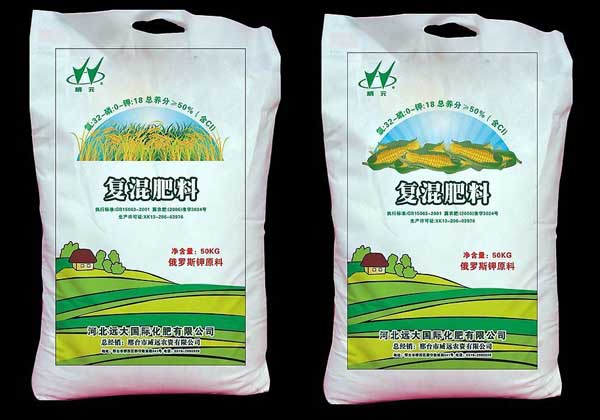
Chemical fertilizers produced by legitimate manufacturers all have the fertilizer name, main ingredient content, standard code, factory name, and factory address marked on their packaging bags when they leave the factory. A factory inspection certificate is enclosed inside. If the packaging markings are unclear, or if it is a "three-no" fertilizer (no factory name or address, no product license or registration certificate, no product quality certificate), then it is very likely a counterfeit or substandard product, and the broad farming community must pay close attention. In recent years, some manufacturers and a small number of lawbreakers, disregarding the interests of the state and consumers, have used deceptive and disguising tactics to manufacture and sell substandard fertilizers. Under such circumstances, because there are many types of fertilizers with different characteristics and varying nutrient contents, some fertilizers look very similar from the outside and are hard to distinguish. If fertilizers are applied incorrectly at random, it can cause very serious adverse consequences, so learning some basic knowledge about fertilizers and understanding and mastering their properties and identification methods is very necessary.
We can identify fertilizers from the following aspects:
1. Identify by appearance. For example, nitrogen fertilizers are generally white or pale yellow crystals, and potassium fertilizers are white or flesh-red crystals, all of which are slightly hygroscopic;
2. Identify by the reaction or solubility of the fertilizer in water;
3. Identify by the burning reaction. Generally, fertilizers show some changes when burned, such as giving off odors;
4. Identify by the reaction of the fertilizer in an alkaline solution, such as releasing an ammonia odor or forming a precipitate.
In order to give the broad farming community a systematic understanding of the properties and identification methods of common fertilizers and for easy reference, the identification methods for various common fertilizers are listed below:
1. Urea: Urea appears white, in spherical granules, with a total nitrogen content of ≥46.0%. It easily absorbs moisture, with hygroscopicity between that of ammonium sulfate and ammonium nitrate. Urea is easily soluble in water and liquid ammonia. Pure urea, when heated under normal pressure to near its melting point, begins to show instability, undergoes condensation reactions, and produces biuret, which causes it to lose fertilizer effectiveness for crops. If a clean piece of iron is placed on a stove and urea granules are put on it, the urea can be seen to melt quickly and volatilize, while giving off a small amount of white smoke, and an ammonia smell can be detected.
2. Ammonium sulfate: Agricultural ammonium sulfate is white or light-colored crystals, with a nitrogen content of ≥20.8% (Grade II). Ammonium sulfate easily absorbs moisture, is easily soluble in water, and its aqueous solution is acidic. It reacts with alkalis to release ammonia gas. When ammonium sulfate is heated over a fire, it can be seen to melt slowly, accompanied by the release of an ammonia odor.
3. Ammonium nitrate: Ammonium nitrate appears white, with no impurities visible to the naked eye; agricultural-grade product is allowed to have a slight yellow tint. Total nitrogen content ≥34.4% (Grade II). Ammonium nitrate has strong hygroscopicity and caking tendency. When the temperature of its aqueous solution changes, recrystallization occurs. It is very sensitive to heat. A large amount of ammonium nitrate easily decomposes when heated and can combust, even explode, accompanied by white smoke, and an ammonia odor can be detected. Its aqueous solution is acidic.
4. Ammonium chloride: Ammonium chloride is a white crystal; agricultural-grade product is allowed to have a slight yellow tint, with a nitrogen content of ≥25.39%. It is easily soluble in water, and its solubility in water increases significantly with rising temperature. Its aqueous solution is acidic. Ammonium chloride has strong water absorption and easily cakes. When a small amount of ammonium chloride is heated over a fire, a strong pungent odor can be detected, accompanied by white smoke. Ammonium chloride will quickly melt and disappear completely, and during the melting process, the unmelted portion can be seen to be yellow.
5. Agricultural ammonium bicarbonate: It appears as white or slightly gray crystals, with an ammonia odor, and a nitrogen content of ≥16.80% (Grade II). It has strong hygroscopicity, is easily soluble in water, and its aqueous solution is weakly acidic. To simply identify ammonium bicarbonate, take a small amount of the sample with your fingers and rub it, and a relatively strong ammonia odor can be detected.
6. Superphosphate: It appears as a loose powdery substance in dark gray, grayish white, light yellow, etc., and the lumps contain many tiny pores, commonly known as "honeycomb eyes." Available phosphorus pentoxide content ≥12.0% (Qualified Product Grade II). It has a slight acidic smell and is an acidic chemical fertilizer. It is sensitive to the action of alkalis and easily loses its fertilizer effectiveness. A portion is soluble in water, and its aqueous solution is acidic. Under normal conditions, its hygroscopicity is relatively low; when air humidity reaches above 80%, it absorbs moisture and forms hard lumps. It is unstable when heated; slight smoke can be seen, along with an acidic smell. When the temperature is above 120°C, monocalcium phosphate dihydrate loses its water of crystallization and transforms into anhydrous monocalcium phosphate, and water-soluble phosphorus pentoxide gradually decreases. When the temperature is above 150°C, anhydrous monocalcium phosphate further loses water and transforms into calcium pyrophosphate, which has no fertilizer effectiveness for crops. At even higher temperatures, calcium pyrophosphate transforms into citrate-soluble calcium metaphosphate.
7. Calcium magnesium phosphate fertilizer: It appears as grayish white, grayish green, or grayish black powder and looks extremely fine. Under sunlight, pulverized glass-like substances can generally be seen, glinting. Available phosphorus pentoxide content ≥12.0% (Qualified Product). It is insoluble in water, not easily lost, not moisture-absorbing, non-toxic, and non-corrosive. When heated over a fire, no change can be seen.
8. Compound fertilizer: It should appear as grayish brown or grayish white granular or columnar products, with no visible mechanical impurities. Some compound fertilizers contain white granular crystals of incompletely crushed urea, or urea exists separately as whole crystals in the compound fertilizer. Three-element low-concentration compound fertilizer has a total nutrient content of ≥25%; two-element low-concentration compound fertilizer has a total nutrient content of ≥20%, in which the content of any single nutrient must not be lower than 4%. Compound fertilizer has slight hygroscopicity; after absorbing moisture, the compound fertilizer granules easily crumble. It is non-toxic, odorless, non-corrosive, and only partially soluble in water. When compound fertilizer is heated, white smoke can be seen, an ammonia odor can be detected, and it cannot melt completely.
9. Agricultural zinc sulfate: It appears as white or slightly colored needle-like crystals. The zinc content of zinc sulfate heptahydrate should be ≥21.8%. Zinc sulfate is easily soluble in water, and its aqueous solution is acidic. At present, there are many quality problems with zinc sulfate, and farmers must be very cautious when purchasing. The "magnesium-zinc fertilizer" and "iron-zinc fertilizer" currently sold in large quantities on the market contain only about 20% of the zinc content of genuine zinc fertilizer. They are a type of zinc fertilizer with poor quality, high price, and low fertilizer effectiveness. Please be sure to clearly recognize the product name when purchasing.
10. Potassium dihydrogen phosphate: It appears as white crystals. The content of agricultural potassium dihydrogen phosphate should be ≥92.0% (calculated on a dry basis). Potassium dihydrogen phosphate is easily soluble in water, and its aqueous solution is acidic.