Detailed Explanation of Key Points of Agricultural Machinery Safety Production Common Knowledge
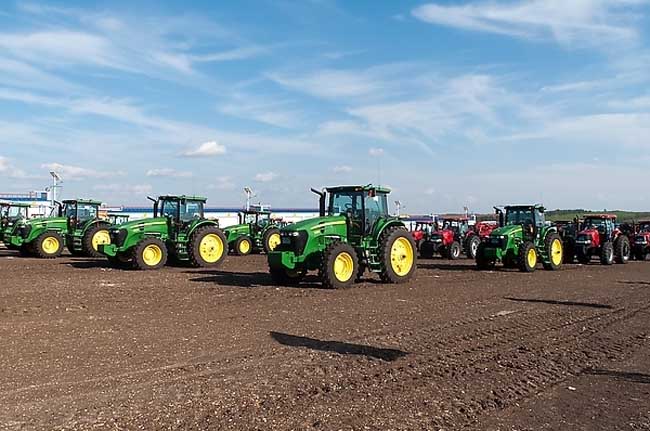
In order to prevent agricultural machinery accidents, hidden dangers must be eliminated from the source. This requires drivers to earnestly study the laws and regulations concerning agricultural machinery safety production, strive to improve safe driving skills, and abide by the regulations. The following common safety operation knowledge must be adhered to:
Common Knowledge of Safe Operation for Agricultural Machinery Drivers
1. Do not drive a machine with problems, and do not use a tractor with problems for operations. This is an extremely important factor among the unsafe factors in agricultural machinery production and is easily overlooked by drivers and machine owners.
2. Do not drive a tractor in violation of regulations. Most agricultural machinery accidents are caused by driving in violation of regulations.
3. Do not drive a tractor without a license. A driving license is proof of legal driving qualification obtained by a driver after training and passing an examination. Unlicensed personnel often lack driving experience, become panicked when encountering dangerous situations, and often make wrong judgments, thus causing agricultural machinery accidents.
4. Trailers are strictly prohibited from carrying passengers and from mixing passengers with cargo. A tractor is an agricultural production tool. Unlike other motor vehicles, its design structure is not suitable for carrying people, and mixed passenger and cargo transport is more prone to accidents. During driving, when braking in an emergency, the cargo continues to move forward under inertia and can easily crush people, even fatally. In addition, when a person sits on top of the cargo, they are easily thrown off when encountering pits or bumps, and the cargo may sometimes press them underneath, causing too many deaths or serious injuries.
5. Driving and operating after drinking alcohol are strictly prohibited. Under normal driving conditions, a driver's reaction time is 0.6-0.9 seconds, while after drinking alcohol the reaction time is 1.5-2.0 seconds. In other words, drinking alcohol not only reduces reaction time but also causes a loss of adaptability.
6. Pay attention to driving safety in blind spots. When driving through blind spots, the driver must slow down, remain ready to take contingency measures at any time, and prevent accidents.
7. Safety precautions for night driving. To ensure safe driving at night, the following should be done:
① Comply with relevant regulations; do not drive at night without lights or with incomplete lights.
② When driving at night and approaching an intersection, slow down, turn off the high beams, turn on the low beams, and turn on the turn signal when turning.
Operating Regulations for Tractors in Field Operations
1. The driver must have received technical training at an agricultural machinery training school and obtained a driver's license for medium and large tractors; the tractor must have obtained a driving license and license plates.
2. Before and after driving, the driver must strictly carry out inspection and maintenance work. The tractor must maintain normal technical condition and avoid the "three leaks" (air leakage, oil leakage, and water leakage).
3. Before starting, check whether the engine cooling water is sufficiently filled, whether the external bolts of the vehicle's running system are tightened, whether the gearshift lever is in neutral, and whether the hydraulic lift handle is in the lower position.
4. During field operations, do not leave the vehicle; stay at your post, and jumping on and off is prohibited. Agricultural implements must be securely hitched. Do not turn when the implements have not been fully raised, and reversing during operations is strictly prohibited. When the machine requires temporary maintenance, adjustment, repair, or removal of tangled grass, it must be stopped and the engine turned off.
5. When stopping, the gearshift lever should be placed in neutral, and long-term disengagement of the clutch is prohibited. Before the engine is turned off, the driver must not leave the machine.
6. When the machine crosses field ridges or ditches, first level the slope or dig out a gap, and pass at low speed. Once the vehicle becomes stuck, do not increase the throttle and rush forcefully. The floating mud around and beneath the machine must be dug away, straw, wooden boards, and other materials filled in, and the machine pulled out at low speed or by another vehicle.
Safety Production Operating Regulations for Threshing Operations
1. Before operation: carefully inspect all parts of the machinery, adjust and lubricate them, and install protective devices around the transmission belts.
2. During operation: unauthorized personnel are not allowed near the machinery; open flames are not allowed; smoking is not allowed; loose large clothing and trousers are not allowed; feeding straw into the machine by hand or with a wooden stick is not allowed; inspection, adjustment, lubrication, and troubleshooting are not allowed; stones and iron objects must not be fed into the drum.
3. After operation: promptly clean the machinery, remove debris, and carry out repair and maintenance. "Safety first" is the safety production policy that China has consistently adhered to. Agricultural machinery is a means of labor in agricultural production. Under the situation of continuously increasing use of machinery, busy and heavy agricultural transport, and continuously expanding areas of agricultural machinery operations, safety is especially important. It is hoped that the broad ranks of agricultural machinery operators will attach importance to agricultural machinery safety production and learn and master more agricultural machinery safety knowledge, so as to ensure that no accidents occur in agricultural machinery production.