How much is black rice per jin?
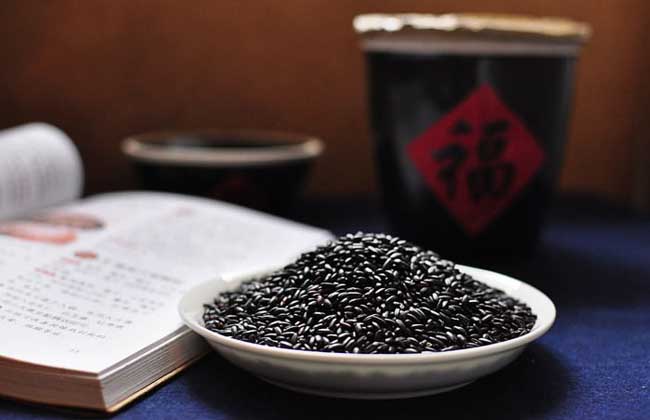
Black rice is a distinctive variety developed over long periods of cultivation from rice, a plant of the grass family (Poaceae). It is a processed product of black rice plants and belongs to the japonica rice category. It has a long oval appearance, grayish-brown husks, and comes in both indica and japonica grain types. It is rich in nutrients and has long been known as the "black pearl" and the "king of the world's rice." The most representative type is black rice from Yang County, Shaanxi. Let's take a look below at how much black rice costs per jin!
How much is black rice per jin?
The price of black rice is generally around 5 to 7 yuan per jin. Black rice is black or dark brown, rich in nutrients, and has high food and medicinal value. Besides being used to make porridge, it can also be used to make various nutritious foods and to brew wine. Porridge cooked with black rice is fragrant and glossy, soft and glutinous, pleasant to the taste, and rich in nutrients, with excellent nourishing effects. It is therefore called "blood-nourishing rice" and "longevity rice." There is a folk saying in China that "whatever is black is nourishing," and black rice also helps darken the hair.
Where is black rice produced?
Black rice is produced in many places in China, with representative types including Shaanxi black rice, Guizhou black glutinous rice, and Hunan black rice. It is said that the black rice discovered by Zhang Qian is the black rice of Yang County, Shaanxi, that has been passed down to this day. Because black rice is delicious, from the reign of Emperor Wu of Han in the Western Han dynasty until the late Qing dynasty, Yang County black rice was a tribute rice presented to emperors. During the Gengzi Incident, although Empress Dowager Cixi was like a stray dog, she still could not forget the fragrance of Yang County black rice and ordered it to be presented to her.
How to identify black rice
1. White vinegar test: Take some black rice and drip white vinegar onto it separately. After a few minutes, if a red color appears, this proves it is real black rice, because the anthocyanins in the outer layer of black rice react chemically with acid, producing a color similar to red wine.
2. Smell test: Take a small amount of black rice in your hand, breathe a mouthful of hot air onto it, and then immediately smell it. High-quality black rice has a normal, fresh fragrance, while rice with slight off-odors, sour or foul smells, moldiness, or a rotten smell is generally substandard or inferior black rice.
3. Scrape the surface layer: If you do not know whether black rice is genuine and suspect it has been dyed, the identification method is to scrape off the entire outer layer of the black rice and observe the color of the grain. If it is white, then it is real black rice; otherwise, it may be dyed black rice.
How to eat black rice
1. Black rice and lotus seed porridge
[Ingredients] 100 grams of black rice, 20 grams of lotus seeds.
[Method] Cook them together into porridge, then add rock sugar to taste after it is done.
[Benefits] Nourishes yin and the heart, tonifies the kidneys and strengthens the spleen. Suitable for pregnant women, the elderly, and those weakened after illness. Healthy people can also eat it to help prevent disease.
2. Black rice and longan porridge
[Ingredients] 50 grams of glutinous rice, 30 grams of black rice, 10 red dates, 20 longans, and an appropriate amount of brown sugar.
[Method] (1) Soak the red dates in clean water; also soak the rice and black rice in clean water and wash them; peel the longans and wash them for later use. (2) Add an appropriate amount of clean water to the inner pot and bring to a boil, add the red dates and longans, then add the glutinous rice and black rice, cover, and cook over high heat for 10 minutes. (3) Then place the inner pot into the outer pot, cover, and simmer for 40 minutes. When eating, brown sugar can be added as desired.
[Benefits] This porridge is suitable for women and has a very good blood-nourishing effect. Adding brown sugar when eating makes the effect even better.
3. Black rice and osmanthus porridge
[Ingredients] 100 grams of black rice, 50 grams of red beans, 30 grams of lotus seeds, 30 grams of peanuts, 20 grams of osmanthus, and an appropriate amount of rock sugar.
[Method] (1) Wash the black rice and soak for 6 hours; wash the red beans and soak for 1 hour; wash the lotus seeds; wash the peanuts and drain them for later use. (2) Place a pot on the heat, put the black rice, red beans, and lotus seeds into the pot, add 1000 grams of water, bring to a boil over high heat, then reduce to low heat and cook for 1 hour. Add the peanuts and continue cooking for 30 minutes. (3) Add the osmanthus and rock sugar, mix well, and cook for 3 minutes.
[Benefits] Nourishes yin and tonifies the kidneys, strengthens the spleen and warms the liver, improves eyesight, and invigorates blood circulation.
4. Pumpkin and black rice porridge
[Ingredients] 200 grams of pumpkin, 150 grams of black rice, 60 grams of large dates.
[Method] Wash the pumpkin, remove the stem, cut it open, take out the seeds, and slice it. Wash the black rice and large dates, put them all into a pot, add 1000 milliliters of water, first bring to a boil over high heat, then switch to low heat and cook until the rice is soft.
[Benefits] Nourishes yin and tonifies the kidneys, strengthens the spleen, and warms the liver.