How much does a purebred Pomeranian cost? A full breakdown of market prices
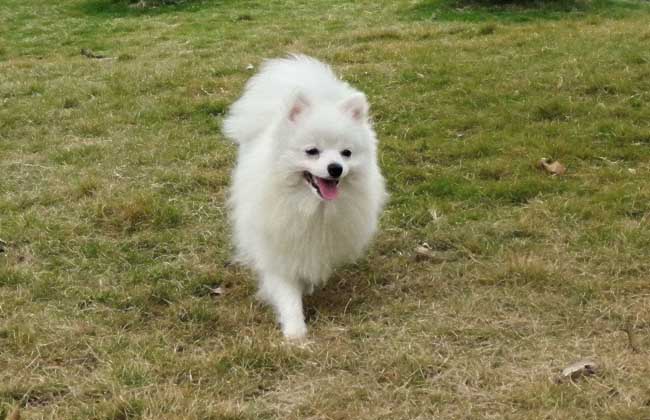
The Pomeranian is a compact, short-backed, active toy dog with a proud, dignified yet lively gait. Its temperament and behavior are positive and upbeat, which makes it an excellent companion dog and also a very competitive show dog. It is also very smart, ranking 5th in intelligence among small dog breeds, so it is easy for owners to teach and train. Let's take a look below at how much a purebred Pomeranian costs!
How much does a purebred Pomeranian cost?
The price of a purebred Pomeranian depends on its coat color. Generally, a golden yellow that is not very vivid costs just 500-600 yuan. If the coat color is good, a pure golden yellow with a good build, it will be much more expensive, possibly tens of thousands of yuan. Brown ones are within 1500-2000 yuan, and pure white Pomeranians should be above 2000 yuan. Pure Harbin-line Pomeranians are very rare, with hardly a few to be found in China, and they cost at least 7000-8000 yuan. However, there are quite a few lovely American-line Pomeranians in China, priced from 2000-3000 yuan. Generally speaking, the market price of pet-grade Pomeranians is between 1000-2000 yuan. Buying from a dog market is cheaper but offers no guarantee; it is recommended to buy from a family breeder, which is more worthwhile, as 600-800 yuan can get you a fairly good dog.
How to choose a purebred Pomeranian
1. Head: A purebred Pomeranian has a very pronounced stop, with the muzzle-to-head angle maintaining a right angle of 90 degrees or more. The mouth is thin, short and pointed, forming a small triangle. The ears are very small, with a moderate distance between them that must not be too wide. In puppies (3-4 months), the ears are almost buried in the head hair and invisible. A crossbred Pomeranian, however, has a less obvious stop and cannot reach a 90-degree right angle. Overall, the purebred Pomeranian has a thick, long, wedge-shaped mouth, large ears and a very wide ear spacing.
2. Skeleton: A purebred Pomeranian's front legs are slightly higher than the hind legs, and the back is straight and short (short distance between front and hind legs). This point is very important, because a good Pomeranian's overall build is spherical, with a high tail set, a broad and deep chest, and an upright stance. A crossbred Pomeranian generally has front and hind legs of the same height, a longer back, a long distance between front and hind legs, and an overall slender build (very obvious once adult).
3. Coat quality: A purebred Pomeranian's coat consists of two layers. The undercoat is very soft, densely packed like a spider web, and the topcoat is straight and coarse, covering the whole body and around the head, with the chest full of decorative hair; the decorative hair on the front chest is very long and very wide. A crossbred Pomeranian, however, has a sparse coat, and the decorative hair on the front chest is very short and very narrow.
How should a Pomeranian be raised well?
1. Food management: Dog food mainly falls into two categories, dry food and canned food, plus another category of snacks such as large biscuits, deodorizing biscuits, beef jerky and so on. The main nutritional content of various brands is similar. The higher-priced ones have special food formulas with different considerations for various ages and breeds, so you can compare many options beforehand.
① Dry food: Although dry food is not as tasty as canned food, its nutritional content is relatively fixed and balanced, it is easier to digest, and the stool is not smelly. While the dog chews, it can also help clean off dental tartar. But if a Pomeranian has urinary stone problems, it should avoid eating dry food as much as possible, unless it is a prescription diet specifically for stones.
② Canned food: Canned food comes at various price points, and nutritional content also differs. Its advantage is that vitamin content is less likely to be lost and it is more palatable; its disadvantages are that it contains more meat, the stool has a stronger odor, and eating it for a long time makes it easy to develop dental tartar.
③ Snacks: Snacks can be used during life training and basic training as rewards when the dog does the right thing. But do not often give dogs the snacks that people eat, as this easily spoils their appetite. It is best to avoid sweets such as chewing gum, ice cream and cake: on one hand they easily cause cavities and stomach upsets, and on the other hand they easily cause weight gain.
2. Shedding care: Puppies begin their shedding period at three months, at which point they develop a monkey-like face, and gradually the body hair also begins to fall out, looking like a pitiful ugly duckling. At this time, in terms of management, you must brush out the dead hair every day to give the new hair better room to grow. The hair that grows back this way will be full and gorgeous. By 7-8 months, the new hair gradually becomes fuller, and the dog sheds its puppy look and gradually becomes a charming adult dog.
3. Exercise requirements: Lay a towel on the bottom of the dog crate, and when walking and playing, use the floor or carpet, so as not to injure the puppy's limbs. The Pomeranian is an extremely small breed, so its exercise needs are relatively small. In daily life, just a small area for it to run and jump around is enough. If it is a dog that will compete, usually walk it on a leash, always pay attention to whether its gait is beautiful, and also take it to crowded, noisy places or grass, gravel ground, carpet, etc., to adapt to various environments and build endurance. Training time is determined by age and physique.
4. Reducing body odor: Overall, the Pomeranian has relatively less body odor than all other dog breeds, which is why many dog owners choose to keep Pomeranians. But after keeping one, some people find that some Pomeranians still have a smelly odor. In fact, this odor does not come from the dog's body, but from the dog's bad breath and areas such as the ears, and this is something the owner can prevent and reduce.
① Bad breath: A dog's bad breath is an important source of odor, so pay attention to checking problems caused by dental tartar. Therefore, owners should regularly help the dog brush its teeth; effectively controlling dental tartar will give the dog good breath.