How much does a Samoyed dog cost? Market price reference
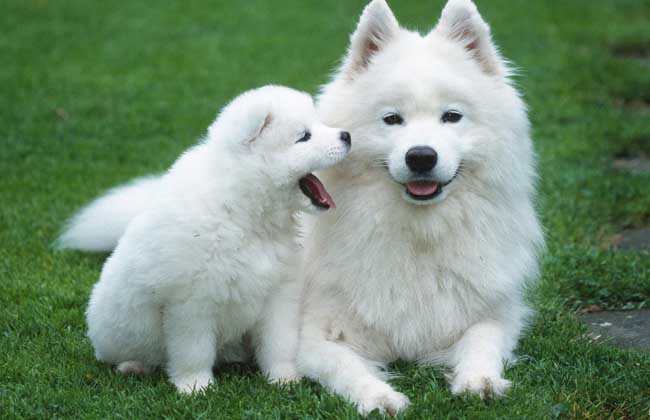
The Samoyed dog, also known as the Samoyed dog, Samoyed, etc., was originally a breed developed by the Samoyed people, the indigenous inhabitants of Siberia. It is alert, strong, agile, beautiful, noble and elegant, well-behaved and cute, with a very eye-catching appearance. It is called the "smiling angel", and also has the reputation of "an angel's smiling face with a devil's mischievous heart". Now let us take a look at how much a Samoyed dog costs!
How much does a Samoyed dog cost?
The price of a Samoyed dog is usually 500 to 1500 yuan. Prices for Samoyed dogs vary from region to region; prices are higher in more developed cities and lower in remote areas, and choosing one kept by an individual is cheaper than one professionally bred at a kennel. The price of Samoyeds of different quality is certainly different as well; purebreds are more expensive, and crossbreeds come next. Good ones can cost over ten thousand yuan; usually one priced around 1500 to 2000 yuan has very good conformation, and home-bred ones can also be around 1000 yuan. Generally, for over 3500 yuan you can buy the offspring of show-class dogs, a Samoyed with a pedigree, while those costing a few hundred yuan are mostly crossbreeds.
How to choose a Samoyed dog
1. A male Samoyed's appearance should look majestic without unnecessary aggression, while a female's appearance is delicate and soft but her temperament should not seem weak. Regardless of male or female, the appearance should show great endurance, but not appear coarse.
2. A Samoyed puppy should have a body that is not long but muscular, and it requires a very deep chest along with well-sprung ribs; the neck must be strong, the forequarters straight, and the loin very strong.
3. A good Samoyed's legs must be long enough. Because the Samoyed's chest is very deep, the legs need sufficient length, and a Samoyed puppy with very short legs is very undesirable.
4. A good Samoyed puppy's hindquarters should appear very well developed, with the stifle moderately angulated, and any problem with the stifle or cow hocks is a serious fault.
5. The Samoyed has a double coat: the body is covered with a short, dense, soft, cotton-like undercoat that lies close to the skin, and the outer coat is the coarser, longer hair that comes through the undercoat. The outer coat stands straight off the body surface and must never curl. The outer coat forms a "ruff" around the neck and shoulders. The quality of the coat is related to whether the dog can withstand various climates, so quality is more important than quantity; a drooping coat is not desirable.
How to identify a purebred Samoyed dog
1. Coat quantity: To judge whether a Samoyed puppy is purebred, coat quantity is very important. The heavier and thicker the coat, the better the Samoyed puppy. At the same time, the coat quality of a Samoyed puppy is more important than coat quantity; the best effect is to grab a handful, let go, and the coat immediately springs back and spreads out like a spray (indicating excellent fiber quality).
2. Coat color: The Samoyed dog's color is white, some with very light light brown, cheese color, or light brown; black Samoyed dogs are extremely rare. The color on a purebred Samoyed puppy should be pure white or white with light yellow, cream, or pale yellow; other colors are not very good.
3. Skeleton: A very important factor in choosing a purebred Samoyed is the skeleton. If a dog has a large skeleton, it can grow tall and beautiful later on. Therefore, when choosing a Samoyed puppy, pay close attention to the dog's skeleton; if you cannot tell by looking, you can also feel it. Another point is to look at the Samoyed puppy's paws: the bigger the paws, the taller it can grow later. Naturally, such a Samoyed puppy is better.
4. Head: A purebred Samoyed's muzzle accounts for 40% of the head. The eye rims are almond-shaped and the color should be relatively dark, the eyes are set slightly apart, and the outer corners of the eyes point toward the base of the ears. At the same time, a purebred Samoyed's ear tips are thin and round, and the ears are thick. One more thing to note: the smile. The smile is the trademark of a purebred Samoyed. That is, the corners of the Samoyed dog's mouth turn up, making it look as if it is smiling at all times.
5. Posture: A purebred Samoyed puppy has a very graceful body type, so when choosing you can look at the dog's gait when walking and trotting. A good Samoyed puppy should have a firm, solid gait and run easily and gracefully, full of a sense of agility. At the same time, the puppy's limbs should be relatively long, and well-developed hind legs are also one of the Samoyed's characteristics.
6. Temperament: Temperament testing of a purebred Samoyed puppy is also very important. There are some simple methods to test a puppy's future sociability and aggression, but generally speaking, temperament is determined by heredity. Of course it can also be trained later, but the difficulty is relatively great. Simply put, a Samoyed puppy that is more lively and not afraid of people will be a bit better.