How much is an avocado per jin? An introduction to market prices
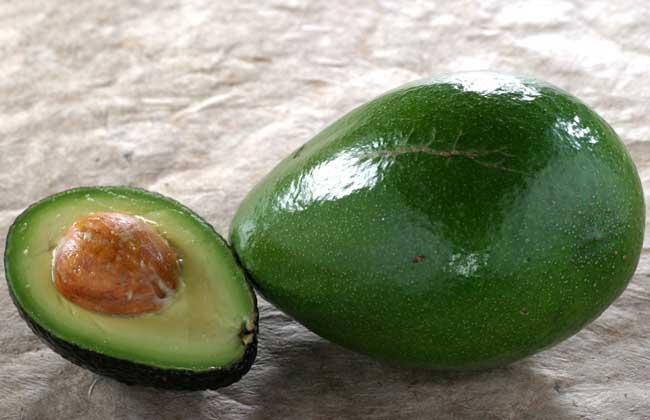
Avocados are a prized fruit, and generally speaking their price is never very cheap, but nutritional value and price are directly proportional. Their nutritional content is far higher than that of ordinary fruits, which is also the reason they can hold a large market share despite their relatively high price. At present, our country does not have many places producing avocados in large quantities. Let us take a look below at how much avocados cost!
How much do avocados cost?
Avocados are generally not sold by the "jin". Whether in supermarkets or online stores, they are mostly priced by the piece. They are usually not domestically produced in China, and small shops generally do not carry them. At present, online stores generally sell them for 10 yuan each, but some are around 9 yuan, while physical stores sell them for about 15 yuan each. Also, avocados in physical stores may be of better appearance, and you can pick and choose on the spot.
Where are avocados produced?
Avocados originated in Mexico and Central America, and were later widely planted in California, which is why California became the world's largest avocado producing area. They are cultivated throughout the world's tropical and subtropical regions, but are grown most abundantly in the southern United States, Guatemala, Mexico and Cuba, and have formed three major groups: the Mexican race, the Guatemalan race and the West Indian race. In China, Guangdong, Hainan, Fujian, Guangxi, Taiwan, China, Yunnan and Sichuan and other places all have small-scale cultivation.
How to choose avocados
1. Look at the color: when buying avocados, do not buy ones that are too green. Choose a medium color, then leave them for a few days and the color will darken. Once they have darkened, they are ready to eat. If you buy dark ones, then eat them as soon as you get home, and do not leave them for too long.
2. Look at the skin: although an avocado's skin is bumpy and covered in small lumps, when choosing you should still pay attention to whether there is any damage or any split areas. Look at all of these.
3. Touch it: lightly pinching the surface of an avocado and feeling some elasticity is best. If you press in and it does not spring back, then it is an overripe avocado. Do not buy ones that are not fresh; it is better to buy fresh ones and leave them at home for a few days.
4. Look at the stem: an avocado has a stem at the top. If you pull it open and the inside is black, then this fruit cannot be chosen, as it has been off the tree too long and is not fresh. If the inside is yellow, it is relatively fresh, and this kind of fruit can be chosen.
5. Look at the whole thing: finally, do an overall check. See whether there are any rotten or deteriorated spots on the surface and whether light pinching leaves any large dents. If basically none, then you can be sure it is a fresh avocado and can buy it with confidence.