Potted fruit trees can tolerate -9°C, grow in both northern and southern regions, and bear so much fruit that branches break under the weight
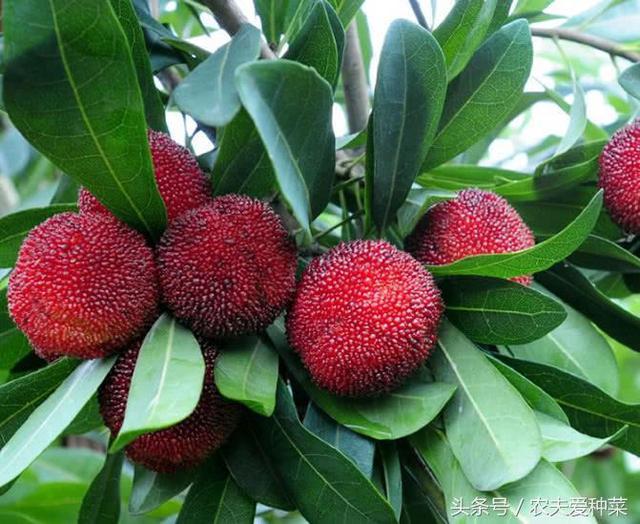
For potted fruit, choose "this one" - it can tolerate -9°C, grows in both northern and southern regions, and bears so much fruit that branches break under the weight!
Bayberry (waxberry) is in season in summer, and basically no one dislikes it. Ripe bayberries are red and large, sweet and tart. Such a wonderful fruit can actually be grown not only in the ground but also in pots.
However, once a bayberry tree grows too large, it is no longer suitable for potting. Its root system is well developed and its canopy is tall, so for potting you should still choose one at the seedling stage. Growing it from seed is also possible, but it is more difficult, and you would have to wait until who-knows-when to eat the fruit. It is better to directly buy a grafted seedling for potting.
For the bayberry seedling, choose a good variety of dwarf seedling. When planting it in the pot, you can also apply some chlormequat (plant growth retardant), which is more beneficial for potting.
Bayberry is grown in most areas of China. The suitable average annual temperature is between 15-21°C. It is relatively cold-tolerant and can withstand low temperatures not below -9°C. If indoors in the north can meet this requirement, it can be grown there too.
But bayberry is a sun-loving plant. Whether in the south or the north, when growing bayberry in a pot, it must be placed in a sunny spot for care. With enough sunlight, the tree grows and develops well, and the fruit is sweet, soft and juicy.
The bayberry tree likes moisture, tolerates shade and also likes fertilizer. Its root system is well developed. Water when the soil is dry and let it dry out between waterings. For potting, besides applying enough base fertilizer, when the peak growing season arrives each year, apply more organic liquid fertilizer.
Reasons a potted bayberry only grows taller and does not bear fruit
Insufficient light:
Insufficient sunlight easily causes poor tree development, making it very hard to bear fruit.
Tree age not yet reached:
Bayberry basically needs about 3 years of cultivation to obtain a dwarf bayberry tree with a canopy height of around 50 cm, and only in the fourth year at maturity can it begin to bear fruit.
Soil lacks fertilizer:
Bayberry's fertilizer needs differ from those of other fruit trees. If fertilizer is insufficient, it affects not only bayberry yield but also quality. Bayberry fertilization mainly focuses on the intake of nitrogen and potassium fertilizers. Generally, in order to harvest high-quality fruit, potted plants need an appropriately increased intake of potassium fertilizer.