How Much Is Turquoise per Gram? Latest Market Trends and Price Analysis
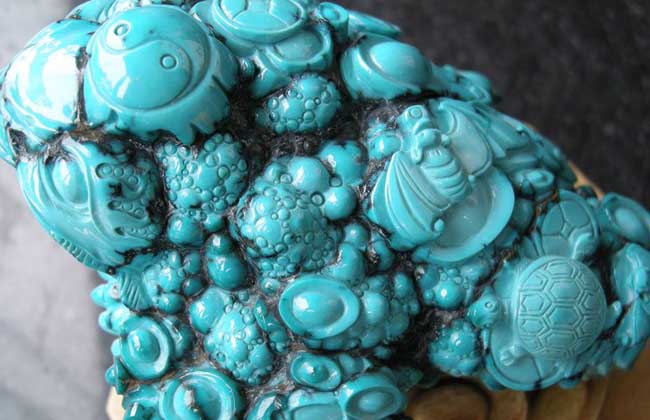
The craft name for turquoise is "songshi" (pine stone), so named because its shape resembles a pine cone and its color is close to pine green. It has a splendid history of several thousand years and is deeply loved by people of all times and all countries. Because raw turquoise resources are relatively scarce, and as the saying goes, things are precious for being rare, the price of turquoise is close to that of gold. So how much is turquoise per gram? Let's take a look together below!
How much is turquoise per gram?
Turquoise has the smallest known reserves among China's four famous jades, and its price differs from the international jewelry market price by nearly 10 times, so turquoise should have great room for appreciation in China. At present, the market price of turquoise ranges from 40 yuan to 80 yuan per gram. Natural turquoise of the finest quality can reach 200 to 300 yuan per gram, or even over a thousand. Artificially optimized and treated turquoise generally has little collectible value, because its price is very cheap, so it is only suitable for processing into decorative items.
How to identify turquoise
1. Color identification: The colors of turquoise include blue, light blue, blue-green, green, yellow-green and pale tones. Because it is naturally formed, the color distribution is generally not particularly even, and it usually has iron lines. Turquoise without flaws is very rare and very expensive. Generally, to cater to consumers' preferences, merchants often dye it to make turquoise look very even. You can wipe the turquoise with a cloth dipped in ammonia water; if the color comes off, it is fake.
2. Hot needle test: Many merchants sell turquoise made of glue-injected material and plastic to deceive customers. You can try touching the surface of the turquoise with the tip of a heated needle. If there is a pungent plastic smell, it is fake.
3. Water measurement: Because the surface of turquoise has many pores, when placed in water it will absorb water, and the color will deepen at the same time. Fake turquoise will not absorb water due to the treatment of its surface. Similarly, on rainy days, because there is more moisture in the air, turquoise will also deepen in color.
4. Distinguishing glass: Turquoise made of glass will have bubbles inside and obvious glass patterns, while turquoise does not. Moreover, glass is relatively easy to break and is not as sturdy as turquoise.
5. Identifying iron lines: Does having iron lines mean it is real turquoise? Actually, not necessarily, because some top-grade turquoise has no iron lines, and some artificial turquoise can also create the effect of iron lines. However, the iron lines of real turquoise are concave inward, while those of artificial products protrude outward.
What effects does turquoise have?
1. Feng shui effects: Turquoise has the of guarding the home, warding off evil and blocking negative energy. Placing a turquoise ornament in the house or hanging several pieces of turquoise can serve to guard the home, ensure a harmonious and peaceful atmosphere for your whole family, and also protect wealth, gather wealth and promote prosperity, and bring prosperity to the household. In addition, turquoise can also be worn as a talisman or safety charm, helping you turn bad luck into good, preventing disturbances from evil and negative energy, and blessing you with peace and smoothness in all things, good health and a happy mood.
2. Psychological effects: Turquoise can harmonize people's emotions and psychological state, give people courage and confidence, encourage kindness toward others, harmonize interpersonal interactions, and promote a calm and stable mindset, thereby maintaining a healthy and cheerful state of mind and keeping people always full of positive energy.
3. Spiritual effects: Turquoise has a wide range of spiritual effects and is highly regarded in many countries.
① In medieval Germany, when a man and woman became engaged, the man would give the woman a turquoise ring. It was said that if the turquoise changed from blue to green, it hinted that the woman had lost her chastity. To this day, turquoise is also regarded as a special gem for testing a lover's loyalty, and lovers and married couples can give it to each other.
② In the eyes of Native Americans, turquoise, because of its azure color, is regarded as the spirit of blue seas and blue skies, symbolizing infinite luck and good fortune. Today it is internationally designated as the "December birthstone," implying success and victory, and is the "stone of success" and "stone of luck." People born in December who wear turquoise can ensure a lifetime of peace and good luck.
③ Tibetans in China believe that turquoise has unparalleled divine power and it is often used in the making of Buddhist items, such as turquoise prayer beads. Of course, turquoise is regarded as a sacred object, and this is true among many ethnic groups in the world.
4. Physiological effects: Wearing turquoise is greatly beneficial to human health.
① Like other jades, turquoise contains many trace elements beneficial to the human body. As the saying goes, "jade nourishes people." Long-term wearing of turquoise can strengthen the body and has a very good health-care effect.
② Turquoise also has a certain therapeutic effect on epilepsy and mental illness.
③ When used as medicine, turquoise can dispel wind-cold, dissolve blood stasis, clear heat and detoxify, reduce inflammation and stop bleeding, and lower blood pressure.
④ Turquoise can promote cell regeneration and enhance human immunity.
⑤ Turquoise can treat eye diseases and can also protect against radiation. For office workers who face computers all day long, wearing a piece of turquoise jewelry is undoubtedly an excellent choice.
⑥ Turquoise can also treat a series of diseases such as ulcers, heart pain and liver disease.