What is the market price of Anji white tea?
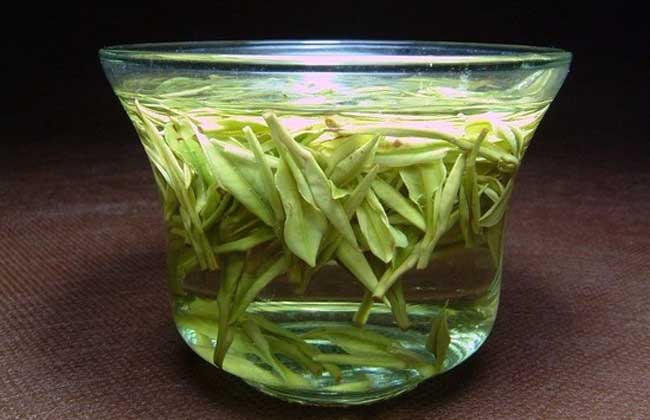
Anji white tea is a very distinct tea variety, a mutated tea plant produced under specific superior ecological conditions. It belongs to the green tea category and is a different concept from the "white tea category" among China's six major tea categories, such as Baihao Yinzhen and Bai Mudan. Its whiteness comes from the fact that its processing material is picked from a tea plant whose tender leaves are entirely white. Let's take a look below at how much Anji white tea costs!
How much does Anji white tea cost?
Authentic Anji white tea refers to tea produced in Anji County, Zhejiang. Prices range from over 200 per jin to 1,000 per jin. Premium Anji white tea is generally over 1,000 yuan/jin, special-grade Anji white tea is around 800 yuan/jin, first-grade Anji white tea is around 500, and second-grade is over 200. If it is Anji white pian, the price will not exceed 200 yuan. Tea produced in other regions will be much cheaper.
How to select Anji white tea
1. Appearance: For Anji white tea, the tenderness is judged as top grade when there are many fine hairs and the buds are plump and strong, and the leaves are thick and tender. If the buds are thin, small and sparse, the quality is lower; if the leaves are uneven in tenderness or mixed with old leaves or waxen leaves, the quality is poor.
2. Leaf form: Anji white tea is of the best quality when the leaves lie flat and spread out, the leaf edges curl heavily, the leaf surface has raised wrinkles, the buds and leaves are attached to the stem and slightly close together, and the leaf tips turn upward without being constantly broken. Leaves that are spread open, folded, or bent are of lower quality.
3. Color: Anji white tea is top grade when the fine hairs are silvery white and glossy, and the leaf surface is grayish green (the leaf underside is silvery white) or dark green or emerald green. Iron-plate color is of lower quality, and grass green-yellow, black, red, and waxy luster are the poorest quality.
4. Cleanliness: Anji white tea is required not to contain trifoliate orange, old stems, old leaves, or waxen leaves. If the tea contains impurities, the quality is poor.
5. Taste: Anji white tea is top grade when it is fresh and brisk, mellow and thick, and clean and sweet; it is poor when it is coarse and astringent or thin and bland.
6. Aroma: Tender fragrance is one of the characteristics of Anji white tea. Whether in dry tea or in the brewed tea liquor, the stronger and more lasting the tender fragrance, the higher the quality. Thin, greenish-odorous, stale, or fermentation-like notes are inferior.
7. Liquor color: Anji white tea is top grade when the liquor is apricot yellow or apricot green and clear and bright; reddish or dull and cloudy is poor.
8. Brewed leaves: Anji white tea is top grade when the brewed leaves are even and neat, plump and soft, with many strong fine bud hairs and bright leaf color; hard and stiff, broken, dull and mixed, reddish, yellow and spread out, scorched leaves, or red edges are poor.
The effects and benefits of Anji white tea
1. Anji white tea contains complexes of multiple amino acids and diphenylamine in tea lipids, which can protect the liver and stomach, promote the liver's synthesis of prothrombin, have anti-aging effects, protect nerve cells, and may help with brain damage and Alzheimer's disease.
2. Anji white tea is rich in gamma-aminobutyric acid, which can generally regulate the concentration of neurotransmitters in the brain and help patients with high blood pressure lower blood pressure, blood lipids, and blood sugar.
3. Anji white tea has the effect of relieving nervous tension and calming the nerves.
4. Anji white tea contains trace elements manganese, zinc, and selenium as well as tea polyphenols, which can enhance memory, protect nerve cells, and are of great help for brain damage.
5. Anji white tea can improve premenstrual syndrome in women.
6. The tea polyphenols in Anji white tea can prevent cancer and fight cancer.
7. Women who drink Anji white tea for a long time have a slim figure, whitened and moisturized skin, and good health. Practice has shown that drinking Anji white tea continuously for fifteen days can reduce body weight by two jin.
8. The lipopolysaccharides contained in Anji white tea have anti-radiation effects, and the tea tannin it contains can improve blood vessel toughness, making blood vessels less likely to rupture.