Latest 2016 Price List of Traditional Chinese Medicinal Herb Seeds
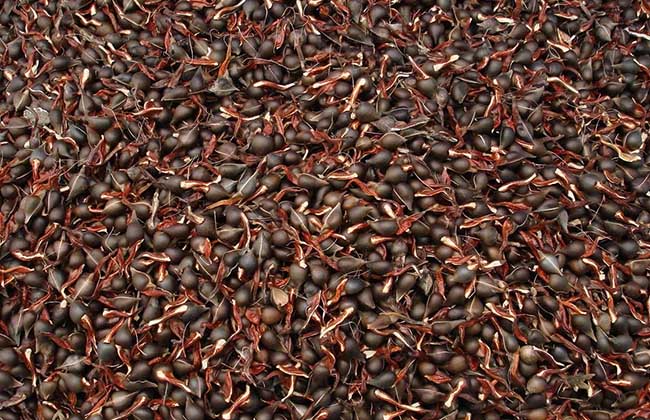
Medicinal herbs are the raw materials that can be used for making medicine, that is, the unprocessed or unfinished raw materials for traditional Chinese medicine. Nowadays, various resources are shrinking sharply, and at the same time the call for environmental protection is rising day by day, so many traditional Chinese medicinal herbs can no longer rely on wild collection and must be considered for artificial cultivation. Before planting medicinal herbs, choosing suitable seeds is especially important. Below, let us take a look at the latest 2016 price list of traditional Chinese medicinal herb seeds!
Latest 2016 Price List of Traditional Chinese Medicinal Herb Seeds
Units: price (yuan/kg), sowing rate per mu (kg), dry yield per mu (kg), average market price (yuan/kg).
Product name, price, sowing rate per mu, sowing period, growth period, medicinal part, dry yield per mu, average market price. Angelica dahurica seeds 30, 2.5, spring and autumn, one year, root, 550-600, 10-17. Belamcanda chinensis seeds 40, 6, spring, summer and autumn, two or three years, root, 300-350, 45-65. Atractylodes macrocephala seeds (ordinary), currently unavailable, 5, spring and autumn, one or two years, root, 200-250, 17-24. Atractylodes macrocephala seeds (improved) 40, 5, spring and autumn, one or two years, root, 350-450, 32-45. Platycodon grandiflorus seeds 50, 2, spring, summer and autumn, one or two years, root, 300-350, 17-28. Astragalus membranaceus seeds (Tie) 60, 2, spring, summer and autumn, one year, root, 350-450, 17-24. Astragalus membranaceus seeds (Mian) 130, 2, spring, summer and autumn, two years, root, 350-450, 22-30. Isatis indigotica seeds (narrow leaf) 20, 5, spring and summer, half a year or one year, root and leaf, 150/root 300, 2-5/8-15. Isatis indigotica seeds (broad leaf) 28, 5, spring and summer, half a year or one year, root and leaf, 300/root 250, 2-5/8-15. Chinese yam seed bulbs 15, 70, spring and autumn, one year, root, 500-600, 15-20. Pinellia ternata seed bulbs 60, 90, spring, summer and autumn, one year, root, 300-350, 85-125. Saposhnikovia divaricata seeds (Guan) 220, 4, spring, summer and autumn, one or two years, root, 400-450, 44-65. Saposhnikovia divaricata seeds (Inner Mongolia) 70, 4, spring, summer and autumn, one or two years, root, 400-450, 22-35. Saposhnikovia divaricata seeds (local) 65, 4, spring, summer and autumn, one or two years, root, 250-320, 14-18. Achyranthes bidentata seeds (Inner Mongolia) 70, 5, spring and summer, half a year, root, 400-450, 15-22. Achyranthes bidentata seeds (local) 60, 5, spring and summer, half a year, root, 300-350, 11-17. Scutellaria baicalensis seeds 100, 2, spring and summer, one year, root, 300-350, 22-36. Carthamus tinctorius seeds (high yield) 25, 3, spring and summer, three months, seed and flower, 100-120, 65-95. Polygala tenuifolia seeds 100, 3, spring, summer and autumn, two or three years, root, 350-400, 100-115. Glehnia littoralis seeds 30, 5, autumn, one year, root, 450-500, 30-40. Glehnia littoralis seeds (sand-stored) 10, 50, spring, one year, root, 450-500, 30-40. Dandelion seeds (large leaf) 110, 1, spring and summer, continuous harvest for many years, leaf, 300-350, 5-8. Sophora flavescens seeds 60, 5, spring, summer and autumn, two or three years, root, 400-450, 15-22. Dianthus superbus seeds 40, 3, spring and summer, one year, whole plant, 350-400, 7-12. Codonopsis pilosula seeds 80, 2, spring, summer and autumn, two or three years, root, 400-450, 32-55. (European) Angelica sinensis seeds 120, 4, spring, summer and autumn, one or two years, root, 350-450, 17-25. (Min) Angelica sinensis seeds 900, 4, spring and autumn, one or two years, root, 400-450, 45-65. Arctium lappa (Dali seed) 70, 4, spring and summer, one year, seed, 250-300, 15-18. Arisaema seeds 280, 6, spring, summer and autumn, one year, root, 400-450, 40-55. Viola philippica seeds 35, 2, spring and summer, one year, whole plant, 350-450, 8-13. Perilla frutescens seeds 40, 3, spring and summer, one year, whole plant/seed, 400-450, 10-15. Coix seed 25, 5, spring, summer and autumn, one year, seed, 300-450, 10-14. Impatiens balsamina seeds 110, 3, spring and summer, one year, seed, 280-350, 40-65. Adenophora stricta seeds (authentic) 400, 4, spring, summer and autumn, two or three years, root, 400-500, 45-60. Jinfeng No. 1 Bupleurum 360, 5, spring, summer and autumn, 2 or 2+ years, root, 350-400, 65-75. Bupleurum seeds (black) 90, 4, spring, summer and autumn, one or two years, root, 100-150, 65-70. Bupleurum seeds (southern/northern) 40, 4, spring, summer and autumn, one or two years, root, 80-120, 40-55. Bupleurum seeds (silver) 350, 5, spring, summer and autumn, two or three years, root, 350-450, 150-180. Glycyrrhiza uralensis seeds 90, 6, spring, summer and autumn, two or three years, root, 500-600, 17-26. Rheum officinale seeds 80, 3, spring, summer and autumn, one year, root, 300-400, 4-6. Schizonepeta tenuifolia seeds 40, 2, spring and summer, one year, whole plant, 350-400, 22-29. Anemarrhena asphodeloides seeds 40, 6, spring, summer and autumn, two or three years, root, 300-350, 10-15. Trichosanthes kirilowii seeds 120, 10, spring and summer, two or three years, root and fruit, 400-500, 9-16. Vaccaria hispanica seeds, unknown, 2, winter, three months, seed, 150-200, 5-11. Agastache rugosa seeds 55, 3, spring and summer, one year, whole plant, 350-400, 13-16. Celosia cristata seeds 60, 2, spring, summer and autumn, one year, flower, 300-350, 17-20. Cassia obtusifolia seeds 40, 4, spring and summer, one year, seed, 300-350, 5-13. Leonurus japonicus seeds 100, 3, spring and summer, one year, whole plant, 400-450, 5-11.Reminder: For choosing a planting direction, still focus mainly on bulk varieties. After several years of low prices, the trend is beginning to rise. Understanding price trends and thinking in reverse is also a choice method. When medicinal herbs are scarce, they are treasures; when there are too many, they are weeds. When planting traditional Chinese medicinal herbs, you must choose good varieties according to local conditions, buy seeds carefully, learn the techniques well, and connect with the market to ensure sales channels, so that you can obtain returns.
Which medicinal herbs are most profitable to plant?
1. Isatis indigotica: The root is used as medicine. It has the functions of clearing heat and detoxifying, and cooling the blood. It is a bulk traditional Chinese medicinal herb and a commonly used cold medicine, and its leaves can be drunk as a health tea. It has no strict requirements for soil and strong adaptability, and can be planted in mountainous areas, hills and flat land. It is relatively cold-tolerant, can overwinter naturally in the south, and can be continuously cropped. Sow from February to May, dig from August to November, and the whole growth period is 6-7 months. The annual yield per mu is 350-400 kg, and the current market purchase price is 25-28 yuan/kg.
2. Honeysuckle: The flower is used as medicine. In recent years, not only have pharmaceutical companies increased the use of this product as an ingredient, but the demand for tea beverages such as “Wanglaoji” that use it as the main raw material has also continued to increase, leading to greater commercial usage. It has no strict requirements for soil and can be cultivated in high mountains, hills and flat land, with strong adaptability. Plant from March to April in spring; a small amount blooms in the same year, and it enters full production the next year. Plant once and harvest for many years. The “tree-type” honeysuckle variety has higher yield. The annual yield per mu is 150-200 kg, and the current market purchase price is 150-180 yuan/kg.
3. Pinellia ternata: The tuber is used as medicine. It has the functions of drying dampness and resolving phlegm, and lowering adverse qi and stopping vomiting. It is the main raw material for pharmaceutical factories producing many kinds of cough-relieving and phlegm-resolving Chinese patent medicine tablets, preparations and syrups. It has no strict requirements for soil, but sandy loam is best for planting. It is most suitable for growing in a half-shaded and half-sunny environment, and can be intercropped with fruit trees or tall crops. Avoid waterlogging. Sow from February to April, dig from August to October, and the whole growth period is 6-7 months. The annual yield per mu is 120-150 kg, and the current market purchase price is 70-85 yuan/kg.