What is the market price of puffer fish per jin?
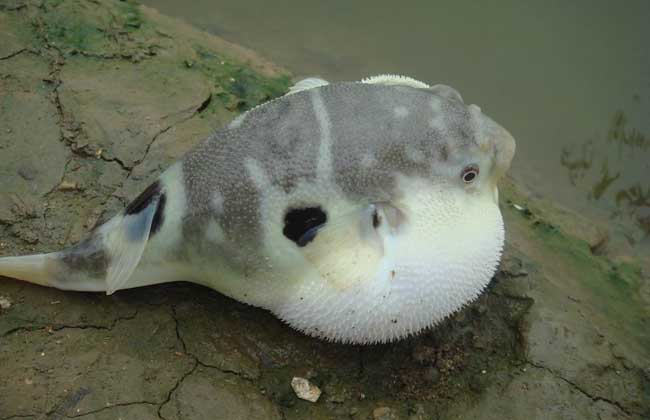
The puffer fish is also known as bubble fish, blow-belly fish, gas-bellied fish, etc. Eating it has effects such as dispelling cold and removing dampness and lowering blood pressure, and it also has a certain effect on treating soreness and pain in the lower back and legs and restoring vital essence. Moreover, its flesh is especially tender, fresh and smooth, which is also the reason many people still like to eat it even though they know puffer fish is somewhat toxic. So how much is this nutritious and delicious puffer fish per jin? Let us take a look below!
How much does puffer fish cost
The market price of puffer fish is related to the variety and place of origin. It is usually about 35-80 yuan per jin. In the Nanjing market it is about 35-48 yuan per jin, in Guangzhou about 45-60 yuan per jin, and in Beijing about 40-80 yuan per jin. The orange-yellow puffer fish is more expensive, at about 100 yuan per jin.
How to choose puffer fish
1. The redfin puffer (Takifugu rubripes) is not suitable for cooking whole. Braising or cooking it in a white sauce also gives a poor texture. The best way to handle it is to cook it by parts according to the different cuts. The best cooking methods for the obscure puffer (Takifugu obscurus) are braising and stewing in milk soup. In addition to braising and stewing in milk soup, the yellow puffer (Takifugu xanthopterus) can also be prepared by stewing with coarse grains, yellow-braising, sauce-braising, clear stewing, poaching in soup, and slippery stir-frying. The flesh and fresh flavor of the striped puffer (Takifugu bimaculatus) are slightly inferior to those of the yellow puffer and the obscure puffer, so it is more suitable for scallion-braising, yellow-braising, and sauce-braising.
2. In the seafood markets of Hebei, Tianjin, Liaoning and other places, hybrid striped puffer fish have appeared. Compared with farmed and wild striped puffer fish, their color is brighter and more yellow, and the variation in their stripes is wider and more obvious. This kind of puffer fish is produced by crossing the striped puffer with the redfin puffer, so the muscle fibers are relatively coarse, the texture is poor, and the fresh flavor is greatly inferior. If what you buy is a young fish weighing about 300 grams each, you can still cook it by braising, scallion-braising, steaming with chopped chili, or dry-frying. If it is an adult puffer fish, then it must be handled by parts just like the redfin puffer, but the flesh of this puffer fish is not suitable for making sashimi dishes.
3. There is a hybrid yellow puffer whose black spots above and behind the pectoral fins and on the dorsal fin are larger and more obvious than those of wild and farmed yellow puffer fish. As for cooking methods, they are similar to those for the hybrid striped puffer. If what you choose is a young fish weighing about 300 grams each, you can also cook it by braising, scallion-braising, yellow-braising, clear steaming, sauce-braising, clear stewing, poaching in soup, slippery stir-frying, and milk-soup cooking. If it is an adult puffer fish, then it must be handled by parts just like the redfin puffer, and likewise the flesh of this puffer fish is not suitable for making sashimi dishes.
Precautions for eating puffer fish
1. Puffer fish is rich in nutrients and delicious in taste, and is known as the first freshness of the Yangtze River. The consumption of puffer fish has a long history in China, Japan and other Asian countries, and has gradually formed a distinctive puffer fish food culture. Japan even regards puffer fish banquets as state banquets to entertain distinguished guests. However, even if puffer fish cooks receive professional training and restaurants obtain permission from health departments and implement franchised operations, improper processing can still cause food poisoning and accidents leading to disability or death, seriously threatening people's lives. According to statistics, from 1972 to 1993, there were 1,258 cases of puffer fish poisoning in Japan alone, causing as many as 279 deaths. There have been many puffer fish poisoning incidents in China, with the highest in 1993, when 147 people died.
2. Puffer fish toxin is stable to heat. It can be completely destroyed only by treatment at 100°C for 24 h or at 120°C for 20-60 minutes. Ancient Chinese books once recorded, “The puffer fish comes from rivers and seas, is highly toxic, and can kill people.” Huang Xingzeng of the Ming Dynasty said in the Classic of Fish: “In all cooking, the roe in the belly, the essence of the eyes, and the blood of the spine must all be discarded.” “All washing should be extremely clean, and cooking should be extremely thorough. If it is not handled properly and not thoroughly cooked, it will poison people.” This shows that puffer fish toxin is very difficult to remove during cooking.
3. Since the promulgation of the Measures for the Hygienic Management of Aquatic Products in 1990, Chinese law has prohibited the consumption of fresh puffer fish. This is a preventive regulation made on the basis that the muscles of the highly toxic puffer fish growing in the deep sea are poisonous. The Jiangsu Provincial Local Standard DB32/T543-2002 “Safe Processing Operation Specifications for Pollution-Free Domesticated Obscure Puffer” stipulates that the TTX content in the muscle of this species should not exceed 10 MU/gram, while the remaining parts, including the ovaries, liver, spleen, kidney, blood, eyeballs, gallbladder, stomach, intestines, heart, and gills, are all treated as toxic waste.