What is the market price of roe deer meat per jin?
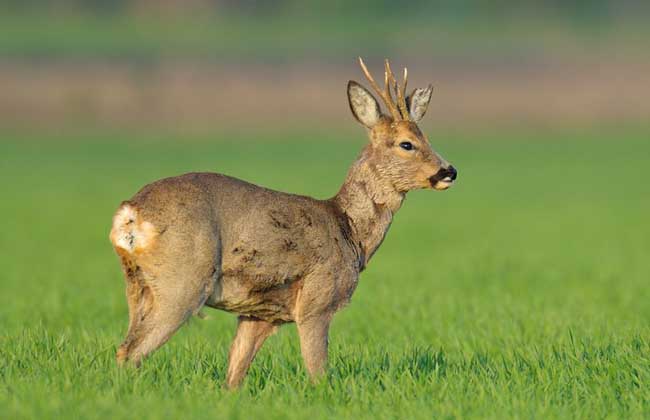
The roe deer, also known as the dwarf deer and wild sheep, is a herbivorous animal of the genus Capreolus in the family Cervidae, order Artiodactyla. Its body is grass-yellow, with white hair at the base of the tail. Male roe deer have antlers, while females do not. It is one of the fur-bearing animals with relatively high economic value and one of the most common wild animals in the forest regions of Northeast China. It has been included in the "List of Terrestrial Wild Animals under State Protection That Are Beneficial or Have Important Economic or Scientific Research Value." Now let us take a look at the market price of roe deer.
The market price of roe deer
Roe deer are divided into wild and farmed, and also into gross weight and net weight. Wild adult roe deer at net weight sell for 500-800 per animal at the place of origin, while farmed roe deer meat sells for 50-70 yuan per jin, but prices vary considerably from place to place. Note that any hunting or capturing of roe deer is illegal, and hunting, trading, or eating wild roe deer is strictly prohibited.
The distribution of roe deer habitats
Roe deer mostly inhabit open woodland belts and are often active in river valleys and on gentle slopes (generally at elevations not exceeding 2400 m). They are timid by nature, mostly sheltering in dense forests during the day and only moving about in open grasslands or shrub thickets at dawn and dusk. Their places of origin are mainly distributed across Europe, Russia, Central Asia, Mongolia, the Democratic People's Republic of Korea, and China's North China, Northeast, Northwest, and Southwest regions.
The living habits of roe deer
1. Diet: Roe deer like to eat the tender twigs, buds, and leaves of shrubs, as well as various green grasses, small berries, mushrooms, and so on. In spring, like deer, they often go to saline-alkali ground to lick salt and alkali. They generally form family groups made up of a mother roe deer and her offspring, usually 3-5 animals. They are active at dawn and dusk and feed on grass, mushrooms, and berries.
2. Reproduction: Male roe deer join the herd only in midsummer, one male to one female. Mating occurs in July-August. During the breeding season, the male chases the female in circles, leaving wreath-shaped tracks on the ground. The gestation period is 8 months. Before giving birth, the mother drives away the young roe deer born the previous year and enters dense forest to give birth. The young are born in March-June, with 1-2 fawns per litter. If 2 fawns are born in one litter, the birth sites are 10-20 m apart, and they are nursed separately. Ten days after birth, the mother leads the newborn fawns back to the herd. Sexual maturity is reached at 1.5-2 years.
3. Lifespan: In the wild, roe deer live 10-12 years, with a maximum of up to 17 years. Each year in November-December the antlers shed, in February-March new velvet grows, and in April-May the antlers are fully formed.