What is the market price of the Chinese medicinal herb astragalus per jin
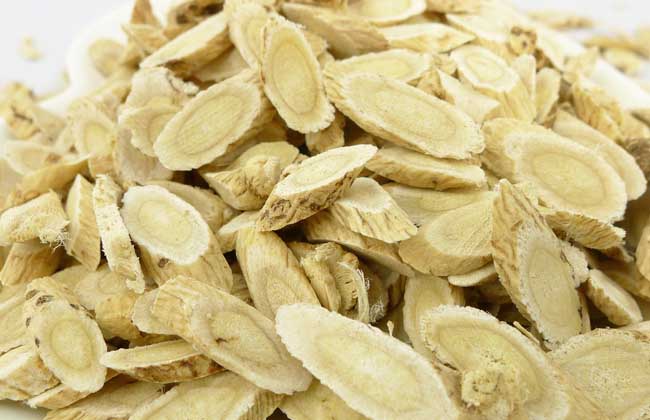
Astragalus is a pure natural product that people commonly consume, and a folk saying circulates: "Drink astragalus soup often, prevent illness and stay healthy." It is a bulk Chinese medicinal herb in great market demand and has high cultivation value. Wild astragalus is a national third-class protected plant. Now let us take a look at the market price of astragalus!
The market price of astragalus
The price of astragalus varies with quality and market. The market price of whole roots is about 20 yuan to 25 yuan, and the market price of whole slices is about 25 yuan to 30 yuan. The market price of cultivated whole astragalus roots is about 16 to 18 yuan, and the market price of cultivated whole astragalus slices is about 165 to 18 yuan. Whole mianqi roots are about 83 yuan to 86 yuan, small oblique slices of mianqi are about 90 to 95 yuan, and large oblique slices of mianqi are about 130 to 140 yuan.
The production area distribution of astragalus
The main production areas of astragalus are Ulanqab League, Hulunbuir League, Baotou and Chifeng in Inner Mongolia; Yanbei and Xinzhou in Shanxi Province; and Zhangjiakou in Hebei Province. It is also produced in Shaanxi, Jilin, Heilongjiang, Shandong, Liaoning and Sichuan. The "hometown of astragalus" is Wuchuan County in the Inner Mongolia Autonomous Region, and the "hometown of Chinese astragalus" is Longxi County, Dingxi, Gansu.
The grade classification of astragalus
1. Special grade: dried goods, single cylindrical roots, with the knobby head or trumpet head cut off, sometimes hollow at the top end, surface grayish white or light brown, hard and tough in texture, outer layer of the cross-section white, middle part light yellow or yellow, starchy, sweet in taste, with a raw bean odor, more than 70 cm long, diameter of the upper and middle parts more than 2 cm, diameter of the end not less than 0.6 cm, no root fibers, old skin, insect damage or mildew.
2. First grade: dried goods, single cylindrical roots, with the knobby head or trumpet head cut off, sometimes hollow at the top end, surface grayish white or light brown, hard and tough in texture, outer layer of the cross-section white, middle part light yellow or yellow, starchy, sweet in taste, with a raw bean odor, more than 50 cm long, diameter of the upper and middle parts more than 1.5 cm, diameter of the end not less than 0.5 cm, no root fibers, old skin, insect damage or mildew.
3. Second grade: dried goods, single cylindrical roots, with the knobby head or trumpet head cut off, sometimes hollow at the top end, surface grayish white or light brown, hard and tough in texture, outer layer of the cross-section white, middle part light yellow or yellow, starchy, sweet in taste, with a raw bean odor, more than 40 cm long, diameter of the upper and middle parts more than 1 cm, diameter of the end not less than 0.4 cm, occasionally with old skin, no root fibers or mildew.
4. Third grade: dried goods, single cylindrical roots, with the knobby head or trumpet head cut off, sometimes hollow at the top end, surface grayish white or light brown, starchy, sweet in taste, with a raw bean odor, regardless of length, diameter of the upper and middle parts 0.7 cm, diameter of the end not less than 0.3 cm, occasionally with broken short sections, no root fibers, insect damage or mildew.