How much does cordyceps sinensis cost per gram?
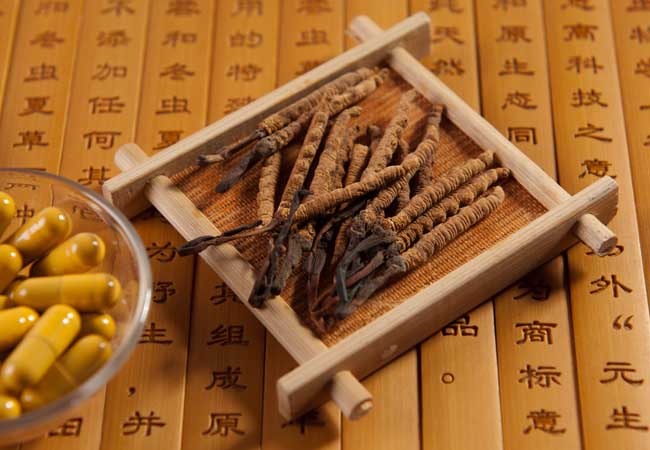
Cordyceps sinensis, also known as cordyceps, is a precious tonic medicinal herb commonly used in Chinese folk medicine. Its nutritional components are higher than those of ginseng. Many quoted prices for cordyceps sinensis are not quite genuine, most are outdated, and there are also sellers of counterfeit goods quoting prices that are too low, which ordinary people find hard to distinguish. Let us take a look below at exactly how much cordyceps sinensis costs per gram!
How much does cordyceps sinensis cost per gram
Cordyceps sinensis specifications and market reference prices: 6-8 pieces/gram: 115 yuan per gram; 5-6 pieces/gram: 130 yuan per gram; 2-5 pieces/gram: 160 yuan per gram; 3.5-4.2 pieces/gram: 180 yuan per gram; 2.5-3.5 pieces/gram: 200 yuan per gram; 2.2-2.5 pieces/gram: 250 yuan per gram; 1.8-2.2 pieces/gram: 280 yuan per gramIs bigger cordyceps sinensis better?
Cordyceps sinensis comes in large and small sizes. A large one weighs more than 0.4 grams per piece, a small one weighs less than 0.2 grams per piece, and 0.2-0.4 grams per piece counts as medium size. The advantage of large cordyceps is that the caterpillar body is thick and plump, there are few shriveled or underfilled specimens, the stroma (grass head) accounts for less of the weight while the caterpillar body accounts for more, and at the same weight it contains more active ingredients than small cordyceps (note: this is provided the place of origin is the same and all other quality-affecting factors besides size are the same). After being taken, the therapeutic and health benefits it produces are better. However, the larger the cordyceps, the higher the price, and larger cordyceps do not necessarily mean better value for money. If it is for yourself or your family to take, especially when suffering from a relatively serious illness, it is recommended to buy medium-sized cordyceps sinensis if your financial circumstances allow: the price is not too high, the effects are well guaranteed, and the value for money is very good. Of course, cordyceps that are too small are not very suitable either. The smaller the cordyceps, the relatively lower the content of active ingredients, and the weaker the effects after taking it. Generally, it is not recommended for treating illness, but it can be used for long-term health care.
Factors affecting the price of cordyceps sinensis
1. The price of cordyceps sinensis depends on its size, and its size mainly depends on the growth time and growth environment of the larvae infected by the cordyceps fungus. How long each larva grows before being infected by the cordyceps fungus is not fixed, but the region where cordyceps grows and the environment that region should have are fixed. Among all places of origin for cordyceps sinensis, the most suitable environments are mainly distributed in northeastern Tibet and southeastern Qinghai.
2. When cordyceps has just been dug up, Tibetans habitually call the newly harvested cordyceps “first grass”, while the mid-to-late stage cordyceps dug up afterwards is collectively called “second grass”. Generally, first-stage cordyceps refers to cordyceps sinensis dug up in the early growth stage, when the stroma of the cordyceps is generally relatively short and small, having just emerged from the ground, and the length of the stroma in most cases does not exceed the length of the caterpillar body; its commercial appearance is the best and ranks as superior grade. Mid-to-late stage cordyceps refers to cordyceps sinensis dug up in the middle growth stage, when the stroma of the cordyceps (commonly known as the grass head, grass bundle, or tail) is moderate in length, in most cases slightly longer than the caterpillar body, generally not exceeding twice the length of the caterpillar body or longer; its commercial appearance is medium or above medium, and there is no difference in nutritional value.
Methods for identifying cordyceps sinensis
1. Specifications: The caterpillar body of cordyceps sinensis is 3-5m long and 0.3-0.8m in diameter, shaped like a three-times-molted old silkworm. Of course, within this range, the longer and thicker the cordyceps sinensis, the better the quality.
2. Number of feet: Genuine cordyceps sinensis has 8 pairs of feet on its ventral surface, and the 4 pairs located at the middle of the caterpillar body are very obvious. The stroma grows out from the head of the caterpillar body, is slightly swollen at the upper part, can reach 4-7 cm in length, and is about 0.3 cm in diameter.
3. Appearance: After breaking open genuine cordyceps sinensis, there are obvious lines, and there is a black core resembling a “V” shape in the middle of the cordyceps, or in some cases it may be a black dot. This black core is actually the digestive tract of the insect.
Can cordyceps sinensis treat impotence?
Cordyceps sinensis has an auxiliary therapeutic effect on impotence. Cordyceps sinensis enters the lung and kidney meridians and can tonify lung yin and kidney yang. It mainly treats symptoms such as kidney deficiency, impotence, and seminal emission, and also has a good effect on soreness and pain in the waist and knees. We all know that male impotence is mainly related to kidney deficiency and depleted kidneys, and cordyceps sinensis happens to have the effect of tonifying the kidneys.
Efficacy and effects of cordyceps sinensis
1. Immune system: The effect of cordyceps sinensis on the immune system is like adjusting the volume, keeping it in the best state. It can increase the number of immune system cells and tissues, promote antibody production, increase the number of phagocytic and killer cells and enhance their function, while also lowering the function of certain immune cells.