Complete Osmanthus Tree Price List, Latest Market Prices at a Glance
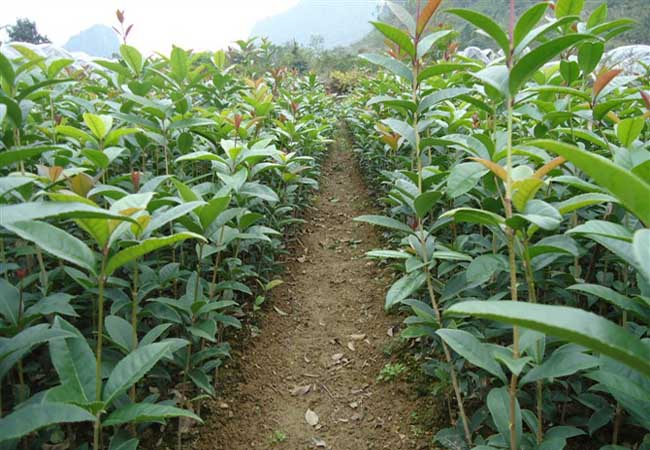
Osmanthus, also known as sweet osmanthus or rock osmanthus, is an evergreen shrub or small tree of the family Oleaceae. It is one of China's traditional top ten flowers and an excellent landscape tree that combines ornamental and practical value, integrating greening, beautification and fragrance. Osmanthus is clear enough to banish all dust and rich enough to carry its scent far, making it truly one of a kind. Let's take a look at the variety classification and market price list of osmanthus trees below!
Osmanthus Tree Price List
Osmanthus Tree Variety/Specification/Market Reference Price Osmanthus tree crown 100 cm: 60 yuan/plant Osmanthus tree crown 200 cm: 300 yuan/plant Osmanthus tree crown 350 cm: 4000 yuan/plant Osmanthus tree diameter 10 cm: 1200 yuan/plant Osmanthus tree diameter 3 cm: 35 yuan/plant Osmanthus tree diameter 4 cm: 65 yuan/plant Osmanthus tree diameter 5 cm: 140 yuan/plant Osmanthus tree diameter 6 cm: 240 yuan/plant Osmanthus tree diameter 7 cm: 320 yuan/plant Osmanthus tree diameter 8 cm: 350 yuan/plantDistribution Range of Osmanthus Trees
The garden osmanthus is native to the eastern section of the Himalayas in southwestern China, and is also distributed in India, Nepal and Cambodia. Wild osmanthus grows in southwestern China, Sichuan, southern Shaanxi, Yunnan, Guangxi, Guangdong, Hunan, Hubei, Jiangxi, Anhui, Henan and other places. It is now widely planted in the Huaihe River basin and areas to the south. Its suitable growing area reaches as far north as the lower reaches of the Yellow River and as far south as Guangdong, Guangxi and Hainan.
The growing regions have good water and heat conditions, suitable rainfall, and soils that are mostly yellow-brown earth or yellow-cinnamon soil, with vegetation dominated by subtropical broadleaf forest types. Nurtured and influenced by these conditions, osmanthus grows well, and several nationally famous osmanthus commercial production bases have formed in Lu'an, Anhui; Xianning, Hubei; Taoyuan, Hunan; Suzhou, Jiangsu; Guilin, Guangxi; Wuhan, Hubei; Hangzhou, Zhejiang; and Chengdu, Sichuan.
Variety Classification of Osmanthus Trees
Through long-term artificial cultivation, natural hybridization and artificial selection, osmanthus has developed rich and diverse cultivated varieties. After extensive surveys of osmanthus resources and varieties in major cities across the country, on-site records of osmanthus flowering traits, and analysis and comparison of the traits of various osmanthus types, relatively stable genetic traits were selected. Using traditional classification methods and applications in landscape production, four cultivar groups of osmanthus were identified and organized:
1. Four Seasons Osmanthus: This variety is a clumping shrub with a low tree form, short and dense branches, and a round spherical crown. New leaves are dark red, while mature leaves are green or yellow-green; the leaf blade is elliptical to broadly ovate, with entire or sparsely serrate margins, and the leaf margin is not obviously wavy; the leaf texture is relatively thin, the mesophyll on the leaf surface is slightly raised, and the reticulate veins are relatively obvious. The petiole averages about 1 cm long. An important feature is that the angle between the main vein and the lateral veins is very large, approaching perpendicular. The flower buds of “Four Seasons Osmanthus” are often solitary or stacked in groups of 2-3, blooming in batches from September each year to March of the following year. The flower color is relatively pale, ranging from cream yellow to lemon yellow, and the fragrance is not as rich as that of Silver Osmanthus, Golden Osmanthus or Red Osmanthus. Varieties include Large-leaf Four Seasons Osmanthus and Small-leaf Four Seasons Osmanthus. It blooms in all four seasons, and varieties include “Yueyue Gui”, “Rixiang Gui”, “Daye Fodingzhu”, “Chiye Four Seasons Osmanthus” and others.
2. Red Osmanthus: An evergreen shrub, dioecious, with a round spherical crown. The bark is light gray, relatively smooth, with sparse lenticels. Leaves are leathery, long elliptical or elliptical, 6-12 cm long and 2.5-5 cm wide; the leaf surface is relatively flat, the leaf margin is recurved, entire, occasionally with sparse teeth at the apex, and the base is broadly cuneate; the apex is obtuse-acute or shortly acute; there are 8-10 pairs of lateral veins, and the reticulate veins are obvious on both sides; the petiole is 8-10 mm long. The flower color is orange-red, the corolla is slightly inward-curved; the fragrance is faint. The flowering period is from late September to early October. It blooms in autumn, the flower color is relatively deep, from orange-yellow and orange-red to vermilion, the scent is rich, and the leaves are thick. Varieties include “Large-flower Red Osmanthus”, “Chi Red Osmanthus”, “Cinnabar Red Osmanthus”, “Broad-leaf Red” and others.
3. Golden Osmanthus: An evergreen small tree with a round spherical crown; the tree vigor is strong, the branches are upright and very dense. The bark is gray, with round or elliptical lenticels. Spring shoots are relatively thick and stout, averaging 15.9 cm in length; the leaves are dark green, leathery and glossy; the leaf blade is elliptical, the leaf surface is uneven, the leaf margin is slightly wavy and obviously recurved; the margin is entire, occasionally with serrations at the apex; the flower color is yellow, with a rich fragrance, and it does not set fruit. It blooms in autumn, with flowers from lemon yellow to pale golden yellow. Varieties include “Large-flower Golden Osmanthus”, “Large-leaf Yellow”, “Huangchuan Golden Osmanthus”, “Late Golden Osmanthus”, “Round-leaf Golden Osmanthus”, Xianning Late Osmanthus, Ball Osmanthus, Round-petal Golden Osmanthus, Willow-leaf Su Osmanthus, Jinshi Osmanthus, Wave-leaf Golden Osmanthus and others.
4. Silver Osmanthus: An evergreen small tree with a round spherical crown, large branches spreading, dense branches and leaves, and good growth. The bark is light gray, and the lenticels are numerous and large, shaped like snowflakes, very obvious. Spring shoots average 15.5 cm in length, and new shoots are brown-red, very eye-catching. The leaves are green or dark green, thickly leathery and glossy; long elliptical or elliptical; the leaf blade is relatively broad and thick; the leaf surface is relatively flat; the leaf margin is shallowly wavy, recurved, entire, occasionally with sparse teeth at the apex; flowering occurs in early to mid-September, the corolla spreads obliquely, the lobes are ovate, the flower color is cream yellow to lemon yellow, and the fragrance is rich; it does not set fruit after flowering. It blooms in autumn, and the flower color is pure white, milky white, yellow-white or pale yellow. Varieties include Broad-leaf Seed Silver Osmanthus, Willow-leaf Silver Osmanthus, Hard-leaf Silver Osmanthus, “Seed Silver Osmanthus”, “Jiulong Osmanthus”, “Early Silver Osmanthus”, “Late Silver Osmanthus”, “White Clean”, “Pure White Silver Osmanthus”, “Qingshan Silver Osmanthus” and others.