A Quick Look at Reference Prices and Market Conditions for Japanese Boxwood
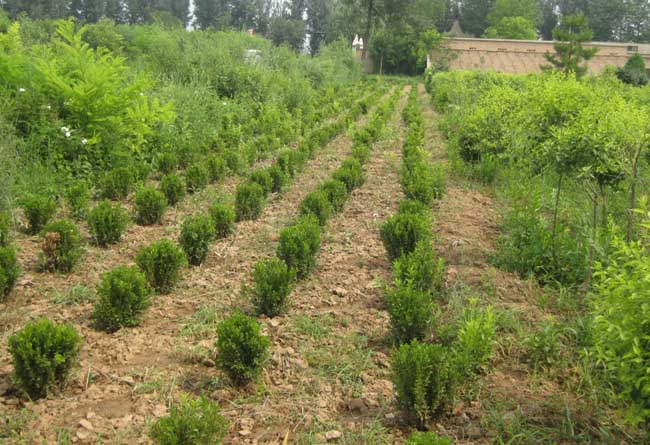
Japanese boxwood is an evergreen shrub, also known as doupo boxwood, guazi boxwood, or small boxwood. Japanese boxwood is inexpensive and gives excellent greening results. Japanese boxwood has the advantages of extremely strong tillering ability, tolerance to pruning, tolerance to drought, and good cold hardiness. It is also very widely used in landscaping, and can be used to set up hedges, green streets, roads, parks, factory areas, and so on.
Growing Environment of Japanese Boxwood
The Japanese boxwood ball, also called guazi boxwood, has a plant height of 0.5-2 m. Its leathery leaves are elliptical, yellow-green on the surface, 2-4 cm long and 1-2 cm wide. Boxwood blooms in April. Its pollution resistance is very strong, and it can tolerate commuting pollution, growing normally in heavily polluted places along roadsides. It likes a semi-shaded, warm environment. The soil where it is cultivated must drain well, because the Japanese boxwood ball is very afraid of waterlogging. When heavy summer rains come, drainage and waterlogging prevention work must be done in advance. Its root system is well developed and its growth is slow, but its lifespan is very long.
It likes fertile, moist soil and avoids acidic soil. It has strong stress resistance, tolerates water and fertilizer, resists pollution, and can absorb toxic gases such as sulfur dioxide from the air. It also has many characteristics such as cold tolerance, salt-alkali tolerance, and resistance to pests and diseases. The flowering period is March to April, and the fruiting period is August to September.
Japanese Boxwood Reference Price Table
Seedling Name Height (cm) Crown Width (cm) Price (yuan) Remarks Japanese boxwood 12-15 - 0.08 Small seedling Japanese boxwood 25-30 - 0.3 Small seedling Japanese boxwood 35-40 20 0.6 Conventional color-block seedling Japanese boxwood 45-50 25 0.7-0.9 Conventional color-block seedling Japanese boxwood 55-60 30 1-1.3 Conventional color-block seedling Japanese boxwood 50 50 6 Boxwood ball Japanese boxwood 50 60 10 Boxwood ball Japanese boxwood 70 80 25 Boxwood ball Japanese boxwood 80 100 55 Boxwood ball Japanese boxwood 100 120 120 Boxwood ball Japanese boxwood 100 150 300 Boxwood ballMain Value of Japanese Boxwood
1. Ornamental landscaping: Japanese boxwood has dense branches and leaves, and its leaves are glossy and evergreen. It is a commonly used foliage tree species. Not only is it an evergreen tree species, but it is also pollution-resistant. It can absorb toxic gases such as sulfur dioxide from the air and has a purifying effect on the atmosphere, making it especially suitable for planting for greening along roads with high vehicle traffic. It can generally grow to more than 1 m tall, lush and green, and is truly beautiful. In Qinghai, it began to be grown indoors in pots, and when needed it is placed on both sides of a conference rostrum to add a green atmosphere. In recent years, it has been widely cultivated in Xining courtyards. Because of its small leaves, dense branches, bright green color, cold tolerance, salt-alkali tolerance, resistance to pests and diseases, and many other characteristics, Japanese boxwood has for many years been a major shrub variety for urban greening and hedge installation in North China.
2. Medicinal value: It is used in folk medicine to treat cardiovascular disease, malaria, syphilis, rheumatism, dermatitis, rabies, and so on. Using an infusion of this medicine in a sitz bath to treat early-stage syphilis, inflammation of the vagina, and vaginal tightening has achieved relatively good results. Research on the alkaloid components of boxwood wood (stems and branches) found that it has relatively good effects on angina pectoris, arrhythmia, and cardiac insufficiency. Other studies have shown that this medicine treats skin diseases such as erythema nodosum, psoriasis, and urticaria, and can also treat infected diabetic foot.