What is the price of wild Dendrobium officinale? Market analysis
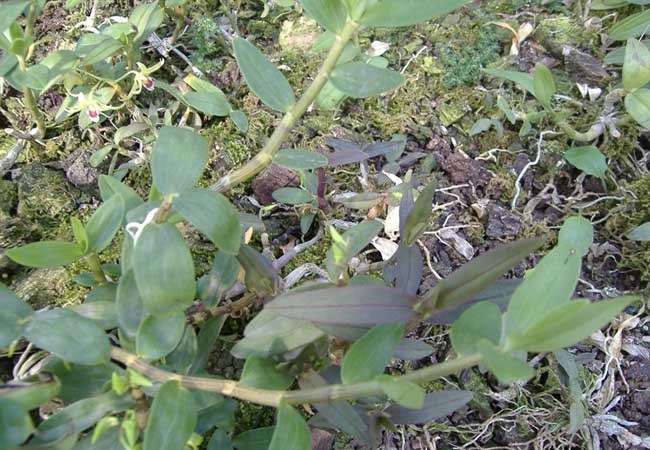
What is the price of wild Dendrobium officinale? What factors affect its price? Because Dendrobium officinale has extremely demanding growing conditions, its natural yield is extremely scarce, and wild Dendrobium officinale fengdou is a national first-class protected plant, so it cannot be harvested now. The price is not just ordinarily expensive; it is even more expensive than gold. Below, let us take a look at the price of wild Dendrobium officinale and its influencing factors!
The price of wild Dendrobium officinale
The price of wild Dendrobium officinale has continued to climb in recent years, with the average market price above 1000 yuan/kg. Specific situations require specific analysis; this also depends on the relevant variety of Dendrobium officinale and the region. Prices in different regions differ significantly. Looking across the national Dendrobium officinale market, prices range from 3 yuan per gram to more than 100 yuan per gram. Sometimes, as a consumer, you do not even know what to do! So is expensive dendrobium better, or is cheaper more affordable? There is a saying: cheap things are not necessarily good, and expensive things are not necessarily bad.
The prices of fengdou on the market vary unevenly, which is mainly determined by different purchasing channels and quality grades. Pregnancy and childbirth experts say that because wild Dendrobium officinale is rich in high-quality protein and various minerals, it can indeed help improve the immunity of mothers and infants and supplement trace elements lacking in food. However, when choosing wild Dendrobium officinale, consumers face these “three chaoses”, namely chaotic prices, chaotic quality, and chaotic promotion.
Factors affecting the price of wild Dendrobium officinale
1. Color: The price of Dendrobium officinale is related to its appearance and color. The dried product processed from Dendrobium officinale, often made into curled clusters, is Dendrobium officinale fengdou. Dendrobium officinale mainly grows on high mountains, steep cliffs and in rock crevices, or on tall trees. It is a rare and endangered plant under national second-class key protection. It gets its name because its surface is iron-green. Therefore, the more iron-green the appearance and color of Dendrobium officinale look, the higher the price will naturally be;
2. Content: At present, Dendrobium officinale with high mucilage content is the best, feeling sticky to the mouth and teeth when chewed. Dendrobium with high polysaccharide content has a better nourishing effect. Therefore, when selecting Dendrobium officinale, carefully confirm the polysaccharide content of the dendrobium.
3. Specifications: The larger the Dendrobium officinale, the less there is of it; things are precious when they are rare. The medicinal part of Dendrobium officinale is the stem, and its quality is judged as follows: few fibers and rich in mucilage. Therefore, the thicker the Dendrobium officinale stem, the higher the price. There are many kinds of dendrobium on the market. To choose dendrobium, check its color, observe its shape, smell its aroma, and chew its gelatinous substance. The one with an iron-green color is the superior grade; because Dendrobium officinale has limited output and is expensive, the market is flooded with large amounts of Dendrobium officinale passed off as water grass, especially in pharmacies. Only a few are authentic Dendrobium officinale, such as Fulenmen Dendrobium officinale, Tongrentang and other large brands, where true Dendrobium officinale can be bought.
4. Variety: Speaking of the types of Dendrobium officinale, there are more than 1500 kinds worldwide, and about 76 kinds in China. Dendrobium officinale is a precious medicinal material, and its price is not cheap. What hospitals prescribe is Dendrobium officinale, the most precious and medicinally valuable variety among dendrobium, while ordinary types of dendrobium differ greatly in medicinal effect. Examples include Dendrobium officinale, Dendrobium huoshanense, Dendrobium nobile, Dendrobium moniliforme, Dendrobium officinale, and Dendrobium loddigesii. Wait, Dendrobium officinale has high sugar content and a strong health-cultivating and yin-nourishing effect; of course, the prices of these varieties of dendrobium are also relatively high. What is mostly sold at herbal stalls in vegetable markets is Dendrobium moniliforme and Dendrobium loddigesii, which at most have a cooling-blood and diuretic effect, with no yin-nourishing effect. The dendrobium sold at herbal stalls is equivalent to the effect of herbal tea; long-term use can cause deficiency-cold of the spleen and stomach and make diarrhea likely.
5. Texture: Dendrobium officinale fengdou is a dried product processed from authentic Dendrobium officinale. Dendrobium officinale fengdou is a processed product of the Chinese medicine dendrobium, originating from the fleshy stem of the orchid plant Dendrobium officinale. After collection, the fibrous roots are cut off, the leaf sheaths are rubbed off while frying, and it is twisted into a spiral or spring shape while frying. This item in the wild is mainly distributed in the Xishuangbanna area of Yunnan, generally growing on cliff rock walls or on tall tree branches. Collection is quite difficult, requiring thick ropes tied around the waist and hanging down to the shady mountainside to dig it out. It is relatively dangerous, and the wild yield is very small, so this type of fengdou is expensive. In order to protect the ecology, local collection is restricted. What is currently sold more on the market is artificially cultivated, and compared with natural wild Dendrobium officinale, its efficacy cannot be mentioned in the same breath. Of course, this type is quite cheap.
6. Place of origin: Baicao Jing says: “Dendrobium, recently there is a kind, only about one cun in length, as thin as a lamp wick, green-yellow in color, sweet when chewed, slightly slippery, produced in Lu'an Prefecture and Huoshan County of Yingzhou Prefecture, named Huoshan Dendrobium. The best. Those produced in Yunnan and Guangxi are of inferior grade.