How much does a yew tree cost on the market?
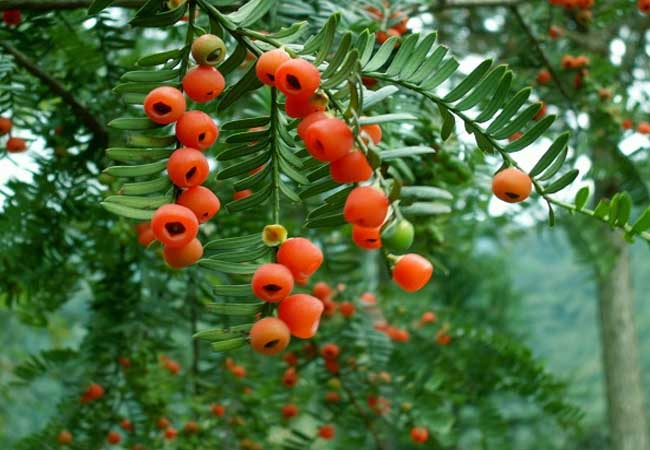
The yew is a shallow-rooted plant with an inconspicuous taproot and well-developed lateral roots. It is recognized worldwide as an endangered natural rare anti-cancer plant, an ancient relict tree species left over from the Quaternary glaciation, with a history of 2.5 million years on Earth. Under natural conditions, the yew grows slowly and has poor regenerative capacity. Below, the editor of Qiangnong Network introduces the market reference prices for yew trees!
Yew tree market prices
Category Size Price Category Size Price Southern yew tree 1 cm 18.00 yuan/plant Southern yew tree 2 cm 20.00 yuan/plant Southern yew tree 3 cm 28.00 yuan/plant Southern yew tree 4 cm 45.00 yuan/plant Southern yew tree 5 cm 90.00 yuan/plant Southern yew tree 6 cm 180.00 yuan/plant Southern yew tree 7 cm 380.00 yuan/plant Southern yew tree 8 cm 650.00 yuan/plant Southern yew tree 9 cm 980.00 yuan/plant Southern yew tree 10 cm 1200.00 yuan/plant Southern yew tree 11 cm 1800.00 yuan/plant Southern yew tree 12 cm 2200.00 yuan/plant Southern yew tree 13 cm 2800.00 yuan/plant Southern yew tree 14 cm 3200.00 yuan/plant Southern yew tree 15 cm 4500.00 yuan/plantThe main values of the yew
1. Economic value: According to a report on page 5 of the People's Daily on October 17, 2001, in 2000 the price of high-quality paclitaxel on the international market had already reached as high as 180,000 US dollars per kilogram. The heartwood is orange-red, the sapwood pale yellow-brown, the grain straight, the texture fine, the specific gravity 0.55-0.76; it is solid and durable, and cracks little after drying. It can be used as timber for construction, vehicles, furniture, utensils, farm tools and stationery.
2. Medicinal value: The medicinal value of the yew is mainly embodied in its extract — a secondary metabolic derivative — paclitaxel. Paclitaxel was first isolated from the bark of the Pacific yew as an anti-tumor active ingredient. It is one of the best drugs for treating metastatic ovarian cancer and breast cancer, and also has significant efficacy against lung cancer and esophageal cancer, and clearly inhibits nephritis and parvovirus inflammation. The roots, stems and leaves of the yew can all be used as medicine; they can treat difficult urination and eliminate swelling and pain, and have therapeutic effects on diabetes, irregular menstruation in women, and increased blood volume. The yew can also be used for postpartum conditioning and has a certain therapeutic effect on women's conditions.
3. Landscape and ecology
① Landscaping: In landscaping and indoor bonsai, it also has very broad development prospects, such as high-grade bonsai made from rare yew trees. Northeast yew bonsai treated with dwarfing techniques have a simple and elegant shape, with compact but not dense branches and leaves, spreading but not loose; the red stems, red branches, green leaves and red berries give it multiple ornamental values of stem, branch, leaf and fruit viewing.
② Air purification: The yew can purify indoor air very well, absorbing toxic gases indoors such as formaldehyde from newly decorated homes, which can be well absorbed, lowering the content of toxic gases indoors. The yew itself can absorb carbon dioxide and release oxygen; it is a natural oxygen bar that can be used both day and night, belongs to the CAM category of tree species, can prevent respiratory diseases, and maintains the cleanliness and safety of the air. Modern environmental monitoring has proven that the yew can absorb many toxic gases such as sulfur dioxide and carbon monoxide into its body, purifying indoor air.
The conservation status of the yew
Because the bark of the yew contains an anti-cancer substance —— paclitaxel, many people enter the forests to strip the bark, causing the yew population to decline sharply.
The reason the yew suffered this catastrophic fate is that in the early 1990s, a certain American company discovered that paclitaxel in yew bark had anti-cancer effects. When the news spread to China, and to Yunnan, people suddenly realized that treasure was right beside them. People frantically stripped the bark of yew trees, and no one took the detailed Regulations on the Protection of Precious Tree Species in Yunnan Province to heart. As a result, more and more yew lives came to an abrupt end overnight.
The State Forestry Administration once issued clear instructions on the carried-out "Yew Project": "The yew is a Class I protected tree species in China, with both good ecological benefits and extremely high economic value. The state supports vigorously establishing yew forests within an appropriate scope, and all sectors of society participating in afforestation through contracting, leasing, auction, joint-stock cooperation and other forms should be advocated and encouraged."
Growth habits of the yew tree
The yew is suitable for planting throughout northern and southern China. It has the characteristics of shade preference, drought tolerance and cold resistance, and requires soil pH of 5.5-7.0. It is shade-tolerant in habitat and can also grow under dense forest; it is perennial and does not form forests. It is mostly seen in mixed coniferous and broad-leaved forests dominated by Korean pine. It grows on rocky or thin soil on mountain tops, mostly in shrub form. It is mostly scattered under moist, fertile mixed coniferous and broad-leaved forests on shady or semi-shady slopes. It likes cool, humid climates and can tolerate low temperatures below minus 30°C; it is strongly cold-resistant, with an optimum temperature of 20-25°C, and is a shade-loving tree species. It likes moisture but fears waterlogging, and is suitable for planting in loose, moist, well-drained sandy loam.