How much does agate cost? Latest market price analysis
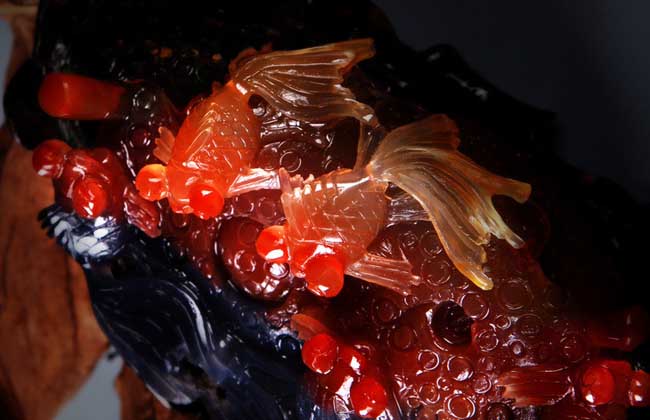
Agate is a type of mineral in the chalcedony family, often occurring as banded masses mixed with opal and cryptocrystalline quartz. Its colors are quite layered, usually including green, red, yellow, brown, white and many other colors. It is commonly used as a plaything, ornament, decorative object and so on. Strings of agate beads can often be seen among ancient burial items. Let us take a look below at how much agate costs!
How much does agate cost?
Agate belongs to the low-grade gemstones, and its price is generally not calculated by the gram, but by the ton or kilogram. At the same time, prices vary depending on the variety, material quality and processing technique. Southern Red Agate generally ranges from several tens of yuan to over a hundred yuan per gram. Ordinary agate is very cheap; 12 mm beads can cost anywhere from a few mao to a few yuan each, and more than 99% of what is sold on the market is dyed. If it is a carving, hand piece or similar made from purely natural red agate, the price is much higher, ranging from several hundred yuan to over a thousand yuan. The raw material price of Xunke red agate is relatively high, with red carving material costing over 100 yuan per jin. Alxa agate has also been hyped to high prices in recent years; casually stringing a few beads together costs several hundred yuan.
How to identify agate
1. Craftsmanship: Generally speaking, the production process for high-quality agate is extremely strict and advanced, and its surface gloss is very good, with inlays firm and well-proportioned, and no scratches, cracks or the like. So if you want to identify whether agate is genuine, you can carefully examine its surface craftsmanship.
2. Grade: Water-pouch agate is the most precious variety of agate, characterized by an enclosed cavity inside that contains water. Among agates of various grades, red, blue, purple and pink are considered top grade, and they are generally transparent, free of impurities, without sandy cores and without cracks. Among them, agate pieces weighing more than 4.5 kg are special grade, those weighing more than 1.5 kg are first grade, and those weighing 0.5-1.5 kg are second grade.
3. Color: Agate has natural colors, and of course there is also dyed agate processed afterward. Natural colors are often red, amber and white, among which red is the best. The blue and purple agate jewelry sold on the market is not its natural color; it is all dyed on after processing, and it will fade after a few years of use. Dyed agate is mostly naturally mottled and not easy to process directly into jewelry.
4. Luster: Generally speaking, genuine agate has a bright and vivid luster, while fake agate is inferior in both color and light. With a comparison between the two, you can tell at a glance which is real and which is fake. Natural agate has distinct colors and very obvious banded patterns, while most imitation fake agate has bright but uniform colors, giving a fake impression at first glance.
5. Texture: Most imitation fake agate is made by copying stone material, and its texture is somewhat softer than that of real agate. Jade can easily leave scratches on fake agate, while real agate will not produce any scratches no matter how you scratch it. Looking at the surface again, because real agate is a naturally formed object, it rarely has flaws, while counterfeit agate products have more flaws.
6. Transparency: The transparency of real agate is not as bright as that of artificially synthesized agate. It is usually said to be slightly cloudy, and you can also see natural water lines or “clouds”, which is very elegant, stylish and beautiful. The transparency of artificially synthesized agate, however, is very high, as transparent as a glass ball, and this is also very easy to identify.
7. Temperature: Real agate, like crystal, is a kind of silicon ore, and its chemical composition is silicon dioxide. It is warm in winter and cool in summer, and very comfortable to wear on the body. It is said that wearing it in the hot summer also has the function of relieving heat and cooling. Synthesized agate, however, changes with the outside temperature: when the weather is hot it is hot, and when the weather is cold it is cold.
How to care for agate
1. Agate jewelry should be handled gently and placed gently, avoiding collisions with hard objects. Although agate has relatively high hardness, it can also break easily under impact, and openwork agate pieces in particular are also easily damaged. Usually, when displaying or carrying it, it should be placed securely and firmly, or stored in a box with a soft lining.
2. Agate jewelry should avoid oil stains and dust as much as possible. If there is dust in daily life, use a soft bristle brush to clean it. If oil stains or dirt adhere to the surface, it can be scrubbed in warm mild soapy water and then rinsed clean in clear water.
3. Agate jewelry should be wiped with a soft white cloth, because agate has a very fine texture and is easily scratched. In order to help maintain it and preserve its original quality, a soft white cloth must be used when wiping.
4. Agate jewelry should avoid direct exposure to strong sunlight, or being placed in an environment that is too cold or too hot, so as to avoid damage from thermal expansion and contraction.
5. Agate jewelry should avoid contact with perfume, shampoo, chemicals and similar reagent items as much as possible, to avoid corroding its surface and affecting its vividness and brightness.
6. The storage space for agate jewelry should maintain appropriate humidity, especially in the relatively dry winter, when the air should be kept moist. For example, when making water-pouch agate, the thinner the agate layer is made the better, and the water-pouch part should be revealed, which in the trade is called “revealing the pouch”, in order to improve its ornamental value. Although agate is dense, it still has certain tiny pores. Because the outer wall becomes thinner, moisture will also dissipate over time, so water-pouch agate should often be soaked in water to maintain the balance of moisture within it.
7. Agate jewelry is not suitable for the sunlight demagnetization method. If it is exposed to the sun for too long, it is easy for the agate color to fade, while water-pouch agate will lose moisture through evaporation, thereby losing its artistic and economic value for collection.