What are the effects and actions of Fritillaria thunbergii?
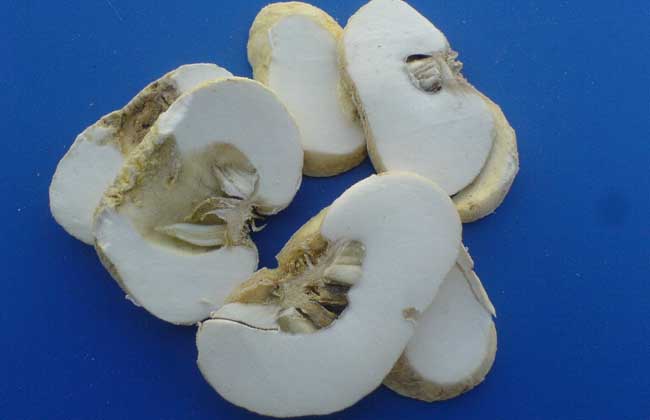
Fritillaria thunbergii, also known as Zhebei and Xiangbei, is the dried bulb of Fritillaria thunbergii, a plant of the genus Fritillaria in the lily family. It is produced in southern Jiangsu, northern Zhejiang, Hunan and other places. As a medicine, it has the effects of clearing heat, resolving phlegm, stopping cough, removing toxin, dissipating nodules and reducing abscesses, and it has therapeutic effects on wind-heat cough, phlegm-fire cough, lung abscess, breast abscess, scrofula, sore toxin and other conditions. Let us take a look at the effects and actions of Fritillaria thunbergii below!
The medicinal effects of Fritillaria thunbergii
[Nature and flavor] Bitter in flavor, cold in nature.
[Meridians entered] Lung and heart meridians.
[Effects] Clearing heat and resolving phlegm, stopping cough and removing toxin, dissipating nodules and reducing abscesses. It mainly treats wind-heat cough, phlegm-fire cough, lung abscess, breast abscess, scrofula and sore toxin.
Related discussions on Fritillaria thunbergii
1. "Bencao Qiuzhen": Xiangbei is best for treating wind-fire phlegm cough. If it is a deficiency-cold cough, Fritillaria cirrhosa is more suitable.
2. "Yaoxing Qieyong": Xiangbei is firm in shape and bitter in flavor, and is superior in draining heat; it cannot relieve depression.
3. "Bencao Huiyan": Fritillaria also grows in Xiangshan, but its flavor is bitter and unpleasant, and it can only be used in medicines for breaking blood and removing toxin.
Compatibility and applications of Fritillaria thunbergii
1. With mulberry leaf: Fritillaria thunbergii can diffuse and open lung qi, clear the lung and resolve phlegm, while mulberry leaf disperses wind-heat. The combination treats wind-heat cough with phlegm.
2. With Xuanshen: Fritillaria thunbergii is good at draining heat and resolving phlegm, while Xuanshen clears heat and dissipates nodules. Used together, they treat scrofula and tuberculosis caused by phlegm-fire binding and stagnation.
3. With seaweed and kelp: Fritillaria thunbergii diffuses the lung and resolves phlegm, relieves depression and dissipates nodules, while seaweed and kelp soften hardness and dissipate nodules and are good at transforming stubborn phlegm. Used together, they strongly relieve depression, resolve phlegm and dissipate nodules, and are used to treat scrofula.
4. With forsythia: Fritillaria thunbergii has the action of relieving depression and dissipating nodules, and can also remove toxin and reduce abscesses, while forsythia is skilled at clearing heat and removing toxin, reducing abscesses and dissipating nodules. Used together, they jointly have the effects of clearing heat, removing toxin and reducing abscesses, and are used to treat abscesses, sores and swelling, both internally and externally.
Medicinal formula selections for Fritillaria thunbergii
1. To treat abscess toxin and swelling pain: Fritillaria thunbergii and forsythia 3 qian each, honeysuckle 6 qian, dandelion 8 qian, decocted in water.
2. To treat breast abscess and breast boil: Zicaochecao and Zhebei 3 qian each, ground into powder, mixed with yellow sugar and aged wine, taken until drunk, then covered to induce sweating.
3. To treat breast abscess and breast boil: fried white angelica, frankincense and myrrh (each processed and cleaned), Zhebei and angelica body in equal parts, ground into powder, 5 qian per dose taken with wine.
4. To treat wind-fire throat closure and lockjaw wind: perilla seed, peucedanum root, red peony root, licorice and platycodon root 2 qian each, Yuanshen, forsythia and Zhebei 1.5 qian each, decocted and taken.
5. To treat common cold and cough: Fritillaria thunbergii, Anemarrhena, mulberry leaf and apricot kernel 3 qian each, perilla 2 qian, decocted in water.
6. To treat scrofula: large Fritillaria and fragrant white angelica (must not be fried) 5 qian each, ground into powder, 2 qian per dose mixed with aged wine and white sugar and taken after meals. If it has ulcerated, this medicine is not the treatment for it.