Use this common little thing on your kalanchoe, and the results are outstanding, with 100 blooms at once
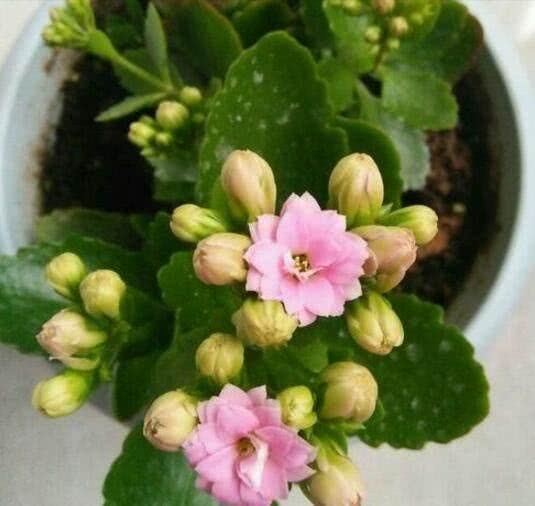
Kalanchoe is a fairly common potted plant. Its leaves are lush, it stays evergreen in all 4 seasons, blooms in winter and spring, and has bright flower colors. It is a great helper for flower lovers decorating their homes in the cold winter, and its blooms come in clusters, ball after ball, festive and lively. It has so many advantages that more and more people like growing kalanchoe. Flower lovers, do you grow it? Is your kalanchoe growing well?
Today I am sharing a little method for growing kalanchoe. Use this common little "thing" to grow kalanchoe, and the effect is superb, with 100 blooms at once!
What is this thing? It is actually banana peel. Flower lovers, you must often eat bananas too, so you can surely find banana peels as well. Why can banana peel grow kalanchoe?
This is mainly because banana peel contains very rich elements, such as magnesium, potassium, phosphorus, etc., and is also rich in a variety of amino acids. These are all very beneficial to flowers, so it can be made into flower fertilizer, which is very good for growing flowers. Its fertilizer effect is mild, which is exactly suitable for kalanchoe, which does not require too much fertilizer.
The methods of use are as follows:
1. You can directly cut banana peels into pieces, then put them into a plastic bottle, add water to 8 parts full, cover the lid (it does not need to be too tight), and then place it under the sun to expose it. At the current temperature, it can be used in about 20 days, with not much odor. Flower lovers can use it with confidence. When using, take the clear liquid and mix it with water at a ratio of 1:10 to water the flowers. Generally use it once every 7-10 days
2. Prepare a bucket or foam box, put some soil into it, cut the banana peels into pieces (after chopping, they ferment more easily and become fertilizer), and put them in, one layer of soil and one layer of banana peel, seal the top with soil, water thoroughly, and then place it under the sun to expose and ferment. Generally it can be used in about 60 days. After waiting for fermentation to finish, it is very good for fertilizing flowers. There is no need to add other fertilizers at all.
3. Put banana peels into an oven and roast them like roasting sweet potatoes. After taking them out, place them under the sun to expose them for about 4 days, and make them into powder. When using, dig a few small holes along the edge of the pot, put one spoonful into each small hole, and cover with soil. It can also be mixed into the potting soil to directly grow flowers
With sufficient fertilizer, kalanchoe has the strength to bloom. Grown this way, kalanchoe can burst into full bloom every time, and more than 100 blooms at once is nothing. Now let us look at other care for kalanchoe
1. Potted kalanchoe is relatively sensitive to light. It can be exposed to the sun, but it cannot be exposed to strong sun or long-term sun. Too much light will also inhibit flowering. Generally, if it keeps 8 or 9 hours of light per day, it can bloom in abundance.
2. After being potted, in a slightly humid environment, it grows relatively vigorously, and during this period it can continuously produce light red roots. If it is too dry or the temperature is on the low side, its growth will slow down and the leaves will turn red, causing the flowering period to be delayed. In summer, watering must be controlled, and attention must be paid to ventilation. If the temperature is high or it is humid, the leaves will rot and fall off.
3. Kalanchoe's soil requires looseness and air permeability, and water accumulation should be avoided. It is suitable to use leaf mold and slightly acidic sandy loam. It needs pinching. After pinching, the plant shape is better. After flowering, spent flowers need to be trimmed in time to ensure nutrients are not lost, so that it can bloom again