What are the benefits and effects of mugwort leaf? Explained in one article
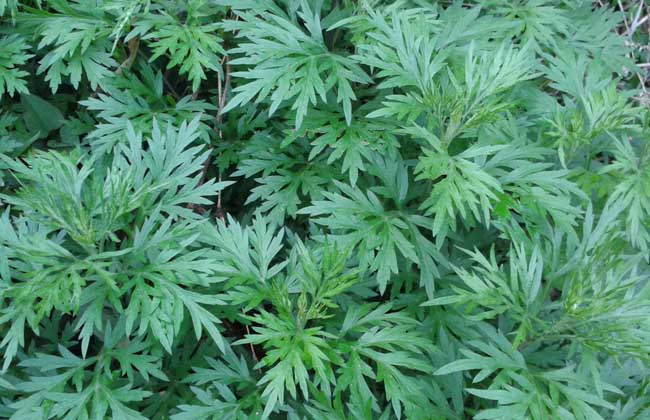
Mugwort leaf, also known as mugwort and domestic mugwort, is the dried leaf of Artemisia argyi, a plant of the genus Artemisia in the Asteraceae family. It is mainly produced in Hubei, Anhui, Shandong and Hebei, and is harvested in summer before the flowers open. As a medicine it has the effects of warming the meridians and stopping bleeding, dispelling cold and relieving pain, and removing dampness and relieving itching. It is used to treat conditions such as vomiting blood, nosebleed, abnormal uterine bleeding, heavy menstruation, threatened miscarriage with bleeding, cold pain in the lower abdomen, menstrual irregularities due to cold, and infertility due to a cold womb; externally it treats skin itching. Let us now take a look at the benefits and effects of mugwort leaf.
The medicinal benefits of mugwort leaf
[Nature and flavor] Pungent and bitter in flavor, warm in nature.
[Meridian entry] Enters the liver, spleen and kidney meridians.
[Effects] Warms the meridians and stops bleeding, dispels cold and relieves pain, removes dampness and relieves itching. It mainly treats vomiting blood, nosebleed, abnormal uterine bleeding, heavy menstruation, threatened miscarriage with bleeding, cold pain in the lower abdomen, menstrual irregularities due to cold, and infertility due to a cold womb; externally it treats skin itching. Vinegar-processed mugwort charcoal is used for bleeding of the deficiency-cold type.
Related discussions on mugwort leaf
1. "Compendium of Materia Medica": warms the middle, expels cold, removes dampness.
2. "Bencao Qiuzhen": enters specifically the liver and spleen, and also the kidney.
3. "Bencao Congxin": expels cold-dampness, warms the uterus, stops all kinds of bleeding, warms the middle and relieves stagnation, regulates menstruation and calms the fetus.
The pharmacological effects of mugwort leaf
1. Antibacterial effect: fumigation with the leaves of Artemisia argyi var. gracilis inhibits many pathogenic fungi, and its water infusion and decoction also have a certain inhibitory effect on many pathogenic fungi in test tubes.
2. Anti-asthmatic effect: an infusion of wild mugwort has a dilating effect on the bronchi of guinea pigs.
3. Cholagogic effect: mugwort leaf oil also has a clear cholagogic effect in mice, increasing bile flow by 26%.
4. Hemostatic effect: gavage of an aqueous infusion of mugwort leaf promotes blood coagulation in rabbits. It is a commonly used hemostatic in clinical practice, and its hemostatic effect is enhanced after being made into charcoal.
Medicinal formulas using mugwort leaf
1. To treat sudden heart pain: take three sheng of mature white mugwort, boil it in three sheng of water down to one sheng, remove the dregs, and take it all at once. If it is caused by an attack of external pathogenic qi, worms or other matter should be vomited out.
2. To treat enteritis, acute urinary tract infection and cystitis: two qian of mugwort leaf, two qian of water pepper, and one liang six qian of plantain. Decoct in water and take, one dose per day, once in the morning and once in the evening.
3. To treat abdominal pain from qi dysentery with restless sleep: equal parts of fried mugwort leaf and aged tangerine peel (soaked in water to remove the white inner layer, then roasted). Grind the above two ingredients into powder, cook a soft rice mash with wine, and form pills the size of parasol tree seeds. Take twenty pills per dose on an empty stomach.
4. To treat damp-cold dysentery with pus and blood, abdominal pain, and uterine bleeding in women: four liang of dried mugwort leaf (fried until scorched but retaining its nature) and one liang of Sichuan white ginger (roasted). Grind the above into powder, cook a flour paste with vinegar, and form pills the size of parasol tree seeds. Take thirty pills per dose with warm rice water.
5. To treat sudden vomiting of one or two mouthfuls of blood, or nasal bleeding, or internal collapse: about three eggs' worth of processed mugwort, boil in five sheng of water down to two sheng and take.
6. To treat unstoppable nosebleed: blow mugwort ash into the nose, or decoct mugwort leaf and take it.
7. To treat bleeding after defecation: mugwort leaf and ginger. Decoct into a thick juice and take three ge.
8. To treat uterine bleeding in women that continues for days without stopping: processed mugwort the size of an egg, half a liang of donkey-hide gelatin (fried and ground into powder), and one qian of dried ginger. In five cups of water, first boil the mugwort and ginger down to two and a half cups, then add the gelatin and let it melt; divide into three doses, take on an empty stomach, finishing it all in one day.
9. To treat functional uterine bleeding and postpartum bleeding: one liang of mugwort leaf charcoal, and five qian each of cattail pollen and dandelion. One dose per day, decocted and taken twice.
10. To treat sudden fetal restlessness during pregnancy, or simply low back pain, or the fetus pressing upward toward the heart, or unstoppable bleeding: mugwort leaf the size of one egg, boil in four sheng of wine down to two sheng, and divide into two doses.
11. To treat postpartum abdominal pain that is almost unbearable and arises from exposure to cold: two jin of aged Qiai mugwort, roast it dry, pound it and spread it over the navel, cover it with silk, and iron it with a flatiron until the smell of mugwort comes from the mouth; the pain will then stop by itself.
12. To treat unstoppable night sweats: two qian of processed mugwort, three qian of white poria spirit, and three black plums. In one cup of water, decoct down to eight tenths and take warm at bedtime.
13. To treat unhealed carbuncles and abscesses with cold, stagnant sore openings: wash with a decoction of northern mugwort, then fumigate with white gelatin.
14. To treat head wind and facial sores that itch and exude yellow fluid: two liang of mugwort and one sheng of vinegar, decoct in a clay pot to obtain the juice, and apply it on thin paper, two to three times a day.
15. To treat eczema: equal parts of mugwort leaf charcoal, burnt alum and Phellodendron amurense. Grind together into a fine powder, mix with sesame oil into a paste, and apply externally.
What side effects does mugwort leaf have?
1. Allergic reactions: allergic reactions to mugwort leaf occur mainly during moxibustion. It has been reported that a female patient developed an allergic reaction of acute urticaria after moxibustion, mainly manifested as wheal-like papules and itching on the chest, back, waist and limbs, and swelling and itching of the eyelids, lips and face. The allergic symptoms disappeared after moxibustion was stopped and Chinese medicine was taken. Therefore, people with an allergic constitution should be as cautious as possible before moxibustion.
2. Digestive tract reactions: if mugwort leaf is eaten in too large an amount, gastrointestinal reactions such as nausea, vomiting and stomach discomfort may occur, and occasionally there is also dizziness. Therefore, the side effects of mugwort leaf are related to the amount eaten.