How much do you know about the benefits and effects of Yuliren (Chinese bush cherry seed)?
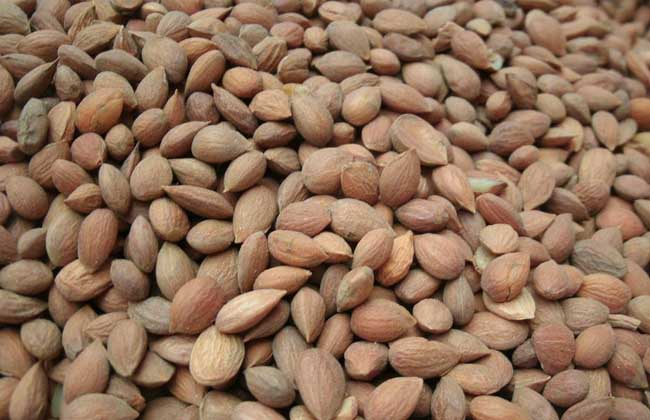
Yuliren, also known as Shanmeizi, Xiaoliren, Yuliren, and other names, is the seed kernel of plants in the Rosaceae family such as Yuli (Chinese bush cherry), Ouli (Chinese dwarf cherry), Yuyemei (flowering almond), and Changgengbiantao (long-stalked peach). Used as medicine, it has the effects of moistening dryness and lubricating the intestines, descending qi and relieving stagnation, and promoting diuresis to reduce swelling. It has therapeutic effects on conditions such as qi stagnation in the large intestine, dry and obstructed bowels, difficult urination, abdominal edema, edema of the limbs, and beriberi, but pregnant women should use it with caution. Let us now take a look at the benefits and effects of Yuliren!
The Medicinal Value of Yuliren
[Nature and Flavor]Pungent, bitter, and sweet in flavor, neutral in nature.
[Meridian Tropism]Spleen, large intestine, and small intestine meridians.
[Effects]Moistening dryness and lubricating the intestines, descending qi and relieving stagnation, promoting diuresis to reduce swelling. It mainly treats depletion of fluids with intestinal dryness, food stagnation with qi stagnation, abdominal distension and constipation, edema, beriberi, and difficult urination.
The Medicinal Effects of Yuliren
1. Lubricating the intestines and relieving constipation: Yuliren is moist in nature and rich in oil, pungent and bitter in flavor, so it can descend, and it also enters the large and small intestine meridians, so it can lubricate the intestines and relieve constipation. It is commonly used for patterns such as intestinal dryness with constipation.
2. Promoting diuresis and reducing swelling: Yuliren is sweet, bitter, and moistening, and its nature is descending. It enters the spleen, large intestine, and small intestine meridians, so it can promote diuresis and reduce swelling. It is commonly used for patterns such as edema with abdominal fullness and beriberi with swollen feet.
3. Breaking blood and reducing swelling: Yuliren is pungent and bitter. Pungent can disperse, bitter can break, and it enters the spleen meridian, so it can break blood and moisten dryness. It is commonly used for patterns such as abdominal distension, constipation, and edema.
4. Descending qi and aiding digestion: Yuliren is pungent, sweet, and bitter, and enters the qi aspect of the spleen meridian, so it can descend qi and aid digestion. It is commonly used for patterns such as constipation with dry stool, abdominal distension and fullness, and pain with the urge to defecate that lessens after defecation.
The Pharmacological Effects of Yuliren
1. Purgative effect: The yuliren glycoside contained in Yuliren has a strong purgative effect on experimental animals. Its purgative mechanism is similar to sennoside, and both belong to large-intestine-acting laxatives. However, experiments have also shown that the water extract of Yuliren and its fatty oil administered by gavage to mice have a highly significant effect in promoting small intestine movement, and a 50% water decoction of Yuliren seeds can significantly shorten the defecation time of mice in a dry-type constipation model, with a marked increase in the number of defecations.
2. Analgesic effect: The protein components IR-A and IR-B extracted from Yuliren have anti-inflammatory and analgesic effects when administered intravenously. Regarding carrageenan-induced toe swelling, the inhibitory EB of IR—A was 14.8 mg/kg, and that of IR-B was 0.7 mg/kg. In addition, the mouse writhing test showed that both IR—A and IR—B had obvious analgesic effects when injected intravenously at 5 mg/kg.
3. Other effects: Yuliren can promote increased secretion of the bronchial mucosa, has antitussive and expectorant effects, and also has anticonvulsant, diuretic, and blood pressure-lowering effects.
Related Discussions on Yuliren
1. "Compendium of Materia Medica": Yuliren is sweet, bitter, and moistening, and its nature is descending, so it can descend qi and promote water metabolism. According to the "History of Song: Biography of Qian Yi," a nursing woman became ill due to fright, and after she recovered, her eyes remained open and she could not close them. Qian Yi said that boiling Yuliren wine and having her drink it until drunk would cure her. The reason for this is that the eye system internally connects with the liver and gallbladder, and fright causes qi to bind. Yuliren removes binding, and with the wine it enters the gallbladder. Once the binding is removed, the eyes can close. This truly captures the subtlety of the key point.
2. "Commentary on the Classic of Materia Medica": Yuliren mainly treats abdominal edema and swelling of the face, eyes, and limbs. The Classic says that all damp swelling and fullness belong to the spleen earth, and also says that all abdominal distension and enlargement belongs to heat. When the spleen is deficient and damp-heat invades it, the small intestine is not free, and water qi overflows into the face, eyes, and limbs. Pungent and bitter can moisten heat bindings, and descending and lowering is good at guiding urinary retention. Once urination is free, all water qi will be discharged accordingly. Yuliren is specifically descending in nature and is good at guiding out dry bindings in the large intestine and promoting water qi throughout the body. However, after purgation it often causes depletion of body fluids, making dry bindings even worse. It is a medicine for treating the branch and providing emergency relief.
3. "New Compilation of Materia Medica": Yuliren enters the liver and gallbladder meridians and removes headache from wind. It also enters the lung and stops nasal discharge from sinusitis. Reducing floating swelling, promoting urination, opening obstructions and blockages, and breaking blood and moistening dryness are among its other skills. Although it is not a commonly used item, it is truly needed for emergency relief. Obstruction and blockage patterns are the hardest to open. Yuliren is good at entering the liver to regulate rebellious qi, so it can reach both above and below, and it must not be omitted.
4. "Seeking the Truth of Materia Medica": Yuliren is often combined with sesame by people to meet the need for moistening dryness and relieving constipation. However, sesame only moistens dryness, warms the middle, and invigorates blood; it is not like Yuliren, whose nature is moistening, whose flavor is pungent, sweet, and bitter, and which can enter the spleen, descend qi, and move qi and break blood. Therefore, whenever there is edema, acute urinary retention, constipation, or obstruction and blockage that is not open, obtaining this substance makes it slippery because it is moist in nature, dispersing because it is pungent, and descending because it is bitter. It is truly different from sesame, and yet the two can be used together to complement each other.
Medicinal Prescriptions Involving Yuliren
1. To treat wind-heat and qi constipation: Yuliren (peeled, tipped, and stir-fried), aged tangerine peel (white inner layer removed, boiled dry in one cup of wine), and Jing Sanleng (processed) 50 grams each. Grind the above three ingredients and sift into a powder. Take 15 grams per dose, mixed with freshly boiled water on an empty stomach.
2. To treat postpartum dryness-heat in the stomach and intestines with constipation and difficult defecation: Yuliren (ground into a paste) and Glauber's salt (ground) 50 grams each, Angelica sinensis (cut and roasted) and dried Rehmannia (roasted) 100 grams each. For the above four ingredients, coarsely grind and sift two of them, then mix evenly with the other two that were separately ground. Take 15 grams per dose with one cup of water, decoct until reduced to seven parts, remove the dregs, and take warm. If the bowels are still not open, take again.
3. To treat water qi with edema of the limbs, panting and acute shortness of breath, and inability to urinate or defecate: Use Yuliren, apricot kernel (roasted, peeled, and tipped), and Coix seed 50 grams each. Grind into powder, form pills with rice paste the size of firmiana seeds. Take forty pills per dose, regardless of time, with rice water.