What are the effects and actions of Zhishi (bitter orange immature fruit)? Read this one article to understand
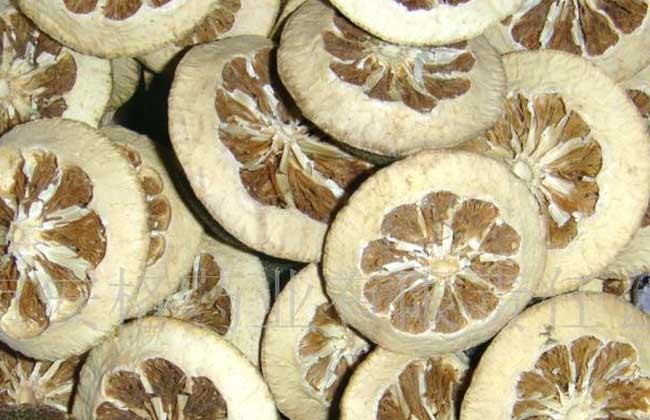
Zhishi is the dried immature fruit of the bitter orange (Citrus aurantium) and its cultivated varieties, or of the sweet orange (Citrus sinensis), plants of the genus Citrus in the family Rutaceae. It is mainly produced in Sichuan, Jiangxi, Hunan, Hubei, Jiangsu and other places. Used as medicine, it has the effects of breaking qi and dispersing accumulations, and transforming phlegm and dispersing distention. It has therapeutic effects on internal retention of food and stagnation, distention and fullness with swelling and pain, diarrhea and dysentery with tenesmus, constipation, phlegm stagnation and qi obstruction, chest impediment, clumped chest, organ prolapse and other conditions. Below let us take a look at the effects and actions of Zhishi!
The medicinal effects of Zhishi
[Nature and flavor] Bitter, pungent and sour in flavor, slightly cold in nature.
[Meridian entry] Spleen and Stomach meridians.
[Effects] Breaks qi and disperses accumulations, transforms phlegm and disperses distention. It mainly treats internal retention of food and stagnation, distention and fullness with swelling and pain, diarrhea and dysentery with tenesmus, constipation, phlegm stagnation and qi obstruction, chest impediment, clumped chest, and organ prolapse. Use with caution in pregnant women.
Related discussions on Zhishi
1. "Shennong Bencao Jing": Strong wind in the skin, like hemp seeds with severe itching, removes cold and heat accumulations, stops dysentery, grows muscles, benefits the five viscera, boosts qi and lightens the body.
2. "Bielu": Removes phlegm and masses in the chest and hypochondrium, expels retained water, breaks hard accumulations, disperses distention and fullness, relieves acute distending pain below the heart and rebellious qi, hypochondriac wind pain, calms stomach qi, stops loose diarrhea, and improves eyesight.
3. "Bencao Gangmu": Descends qi and breaks accumulations. Taken as pills with Gleditsia sinensis, it treats wind qi blockage.
Medicinal combinations of Zhishi
1. Gastrointestinal food stagnation: Zhishi is pungent in action and bitter in descending, and is good at breaking qi and removing distention, and dispersing accumulations and guiding out stagnation. To treat food stagnation with distention, fullness, swelling and pain in the epigastrium and abdomen, it is often used together with hawthorn, malt, medicated leaven and the like, as in Qumai Zhizhu Wan. If there is gastrointestinal stagnation with heat accumulation and constipation, abdominal fullness, distention and pain, then it is used together with rhubarb, mirabilite, magnolia bark and the like, as in Da Chengqi Tang.
2. Chest impediment and clumped chest: Zhishi can move qi and transform phlegm to disperse distention, and break qi and remove fullness to stop pain. To treat chest tightness and pain from weak chest yang and phlegm-obstructed chest impediment, it is mostly used together with Chinese garlic, cassia twig, trichosanthes and the like, as in Zhishi Xiebai Guizhi Tang. To treat phlegm-heat clumped chest, it can be used together with coptis, trichosanthes and pinellia, as in Xiao Xianxiong Jia Zhishi Tang. To treat distention and fullness below the heart with poor appetite, it can be used together with pinellia leaven, magnolia bark and the like, as in Zhishi Xiaopi Wan.
3. Breaking qi and stopping pain: Zhishi is good at breaking qi and moving stagnation to stop pain. To treat chest and hypochondriac pain from qi and blood stagnation, it can be combined with Chuanxiong, as in Zhixiong San. If it belongs to cold congelation and qi stagnation, it can be combined with cassia twig, as in Guizhi San.
4. Postpartum abdominal pain: Zhishi moves qi to help invigorate blood and stop pain. It can be taken as a powder with equal parts peony, to treat postpartum blood stasis abdominal pain and restlessness, as in Zhishi Shaoyao San, or it can be used together with angelica and motherwort.
The pharmacological actions of Zhishi
1. Effects on the cardiovascular system: Zhishi extract, Zhishi injection and its active ingredients synephrine and N-methyltyramine have the effects of strengthening the heart, increasing cardiac output, constricting blood vessels, and raising total peripheral resistance, thereby raising left ventricular pressure and arterial blood pressure.
2. Effects on the gastrointestinal tract: The water decoction, tincture and fluid extract of Zhishi and Zhiqiao all have inhibitory effects on the isolated intestinal tract of mice and rabbits and the in vivo intestinal tract of rabbits. The water decoction makes the gastrointestinal contractions of dogs with gastric and intestinal fistulas strong and rhythmic, showing an excitatory effect, but inhibits the in vivo gastrointestinal motility of dogs. Zhishi extract has a clear antagonistic effect on intestinal contraction caused by acetylcholine and histamine.
3. Effects on the uterus: The decoctions of Zhishi and Zhiqiao mainly show an inhibitory effect on the isolated uterus of mice, whether pregnant or not. On the isolated or in vivo uterus of rabbits, both show an excitatory effect whether pregnant or not. It also has a significant excitatory effect on uterine fistula, can make uterine contractions strong and increase tension, and may even cause tetanic contraction. Zhishi hot water extract has an antagonistic effect on rat isolated uterine contraction caused by 5-hydroxytryptamine.
4. Effects on the central nervous system: Zhishi extract has a clear sedative effect, making mice quiet and less active. It has no hypnotic effect, but has a synergistic effect with pentobarbital hypnosis. Zhishi extract can reduce the pain response of mice caused by acetic acid, and can lower the body temperature increase of rabbits caused by typhoid vaccine.
5. Diuretic effect: Intravenous injection of Zhishi and N-methyltyramine in dogs both significantly increase urine volume, while blood pressure and renal vascular resistance are clearly increased. This diuretic effect may be produced through other actions such as inhibiting renal tubular reabsorption, and is unrelated to changes in renal blood flow and renal filtration volume.
6. Other effects: Neohesperidin and citrus glycoside in Zhishi have anti-inflammatory effects, and have a synergistic effect with paeoniflorin in peony. d-Limonene in Zhishi has a contracting effect on the isolated large intestine, uterus and peripheral blood vessels, has a local irritating effect on mucous membranes, and can raise in vivo gallbladder pressure, promote bile secretion and increase Oddi sphincter activity.
Medicinal selected formulas of Zhishi
1. Zhishi to treat sudden chest impediment pain: Pound Zhishi (into powder), take one square-inch spoonful, three times a day and once at night.
2. Zhishi to treat sudden blocked and painful chest and diaphragm after typhoid: Zhishi, bran-fried into powder. Take two qian with rice water, twice a day.
3. Zhishi to treat distention, disperse food and strengthen the stomach: Two liang of Atractylodes macrocephala, one liang of Zhishi (bran-fried until yellow, remove the pulp). Grind the above together into an extremely fine powder, wrap in lotus leaf and fry, make into pills with rice, the size of wutong seeds. Take fifty pills each time, mostly taken with plain hot water, at any time.