What are the benefits and effects of Bergenia?
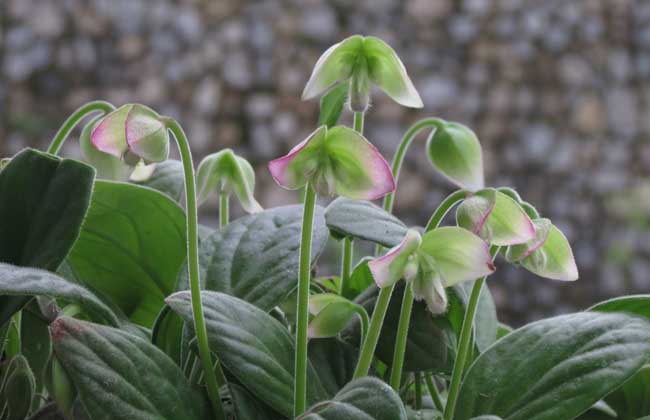
Bergenia, also known as cliff cabbage, stone cabbage, red rock seven and other names, is the whole plant of Bergenia purpurascens, a plant in the genus Bergenia of the saxifrage family. It is distributed in Sichuan, Yunnan, Tibet and other places. Used as medicine, it has the effects of nourishing and strengthening the body, relieving cough and stopping bleeding, and has therapeutic effects on symptoms such as weakness and dizziness, lung deficiency with coughing and asthma, hemorrhaging from overexertion, vomiting blood, strangury with turbid urine, and leukorrhea. Let us take a look at the benefits and effects of Bergenia below!
The Medicinal Effects of Bergenia
[Nature and Flavor] Sweet and astringent in flavor, cool in nature.
[Meridian Tropism] Lung, liver, and spleen meridians.
[Effects] Nourishes and strengthens the body, relieves cough and stops bleeding. Mainly treats weakness and dizziness, lung deficiency with coughing and asthma, hemorrhaging from overexertion, vomiting blood, strangury with turbid urine, and leukorrhea.
Related Discussions on Bergenia
1. "Illustrated Investigation of Plant Names and Realities": Treats vomiting blood.
2. "Classification of Medicinal Herbal Properties": Transforms phlegm and relieves cough. Treats all internal injuries with vomiting blood, asthma, and strangury.
3. "Emei Medicinal Plants": Treats dizziness and weakness, and is an important medicine for treating consumption.
The Pharmacological Effects of Bergenia
1. Antitussive effect: Bergenia has a certain antitussive effect on mice, and the effect produced by 300 mg/kg of rhizome is equivalent to 60 mg/kg of codeine phosphate. The bergenin contained in Bergenia also has an antitussive effect.
2. Antibacterial effect: The rhizome water decoction and ethanol extract have no antibacterial effect on Escherichia coli and Salmonella typhi and paratyphi. They have varying degrees of inhibitory effect on four kinds of Shigella dysenteriae (Flexner, Shiga, Sonne, and Boyd dysentery bacilli), among which the inhibitory effect on Flexner dysentery bacilli is the strongest. Bergenia infusion at a concentration of 1:320-480 in a test tube can inhibit dysentery bacilli.
3. Anti-inflammatory effect: The arbutin contained in Bergenia has an anti-inflammatory effect, and the tannins it contains have an astringent effect, so it is commonly used clinically to treat non-infectious inflammation of the digestive tract, and can also be used for cervical erosion.
4. Other effects: Long-term administration of Bergenia water extract to rats can increase capillary resistance.
Medicinal Prescriptions of Bergenia
1. To treat consumptive cough: Fresh Bergenia 60 grams, Siliquamomum tonkinense 10 grams, Alangium chinense 0.6 grams, boil 3 eggs and take.
2. To treat pulmonary tuberculosis cough: Bergenia, Stemona root, lily bulb, Glehnia root, old perilla root, Ophiopogon root, and Asparagus root 6-9 grams each. Stew with pig heart and lungs and take.
3. To treat vomiting blood: Bergenia 9 grams, an appropriate amount of lean pork, stew and take, or combine with Eclipta and cogongrass rhizome and decoct in water to take.