What are the effects and uses of freesia
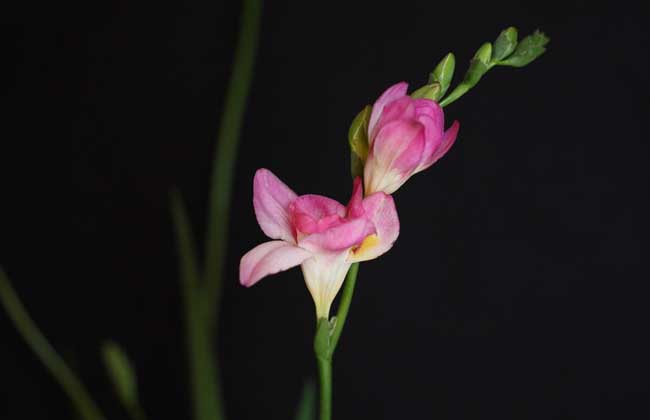
Freesia is also known as xiaochanglan, xiaohongsuan, changpulan, etc. It is the corm of Freesia, a plant of the genus Freesia in the iris family. Used as medicine, it has the effects of clearing heat and detoxifying, cooling blood and stopping bleeding, and has therapeutic effects on conditions such as blood-heat nosebleed, hematemesis, bloody stool, metrorrhagia and metrostaxis, dysentery, sores and swelling, traumatic bleeding, and snake bites. Now let us take a look at the effects and uses of freesia!
The medicinal effects of freesia
[Nature and flavor] Bitter in taste, cool in nature.
[Meridian entry] Heart, liver, and stomach meridians.
[Effects] Clearing heat and detoxifying, cooling blood and stopping bleeding. Mainly treats blood-heat nosebleed, hematemesis, bloody stool, metrorrhagia and metrostaxis, dysentery, sores and swelling, traumatic bleeding, and snake bites.
Related discussions on freesia
"Directory of Yunnan Traditional Chinese Medicine Resources": Clearing heat and detoxifying, cooling blood and stopping bleeding. Mainly treats blood-heat nosebleed, hematemesis, bloody stool, uterine bleeding, dysentery, sores and swelling, traumatic bleeding, and snake bites.
Medicinal selected formulas for freesia
1. For traumatic bleeding: Freesia, qitouhao flowers, and masson pine leaves in equal amounts, dried in the shade and ground into powder, or fresh materials pounded into a paste, applied to the wound.
2. For dysentery: Freesia, Phyllanthus urinaria, purslane, and liuhecao 15 grams each, decocted in water and taken orally.