Old regulations become a stumbling block for tourism development
Old regulations have become a stumbling block for boosting tourism!
In recent years the tourism industry has seen a "light travel" trend, and travelers love nothing more than weaving through the alleys of a city to experience "coming and going, staying a night in the city."
But, stuck on the limits of the outdated "Development of Tourism Regulations," "Hotel Management Rules," "Homestay Management Measures" and others, these homestays with old souls and new creativity, even though popular with travelers from home and abroad, can only receive guests in an ambiguous situation. The Homestay Management Measures were passed in 2001, when agriculture was gradually declining; to encourage people to transform and develop tourism, legislation was enacted to regulate that houses in scenic areas and remote areas could rent out rooms as a side business.
Fourteen years have passed, and the context of time and space is already very different. Taking Tainan as an example, tourism has been lively in recent years, everyone sees the value of old houses, and people are more willing to visit Tainan. Tainan has not only earned a lot of tourism money, but also attracted young people to return home for employment.
For example, hidden in an old alley in the Central West District of Tainan, there is a century-old house that is Boss Cai's family treasure. There is no flashy signboard, and both the exterior and interior retain the original flavor of the old house. Inside there is a stone wall built from old bricks of different periods such as the Dutch and Ming-Qing eras, which has become the "history teaching material" Boss Cai uses each time to explain Tainan to guests.
Another example is a forty-year-old old house in Anping District built with red bricks and wood, a treasure Ms. Lin inherited from her grandfather. In 2008 she renovated the old house into a homestay, yet it became the start of her daily anxiety.
Ms. Lin said she originally only wanted to share the beauty of the old house with travelers, but because homestays are not allowed in urban districts and hotel building materials cannot use wood, she was forced to become an illegal lodging house, and every day she has to worry about when she will be fined. She wants to be "legal," but there is no "law" she can apply under.
Ironically, if the old house were rebuilt into a brand-new building, it could be "legalized on the spot," but in that way it would lose the value of the old house and also lose Tainan's local character.
If Taiwan wants to move toward becoming a "tourism powerhouse," distinctive homestays deep in each locality are a major selling point, and even more so the starting point for letting domestic and foreign travelers visit Taiwan in depth, but old regulations have become a stumbling block, requiring the government's innovative thinking and meticulous methods.
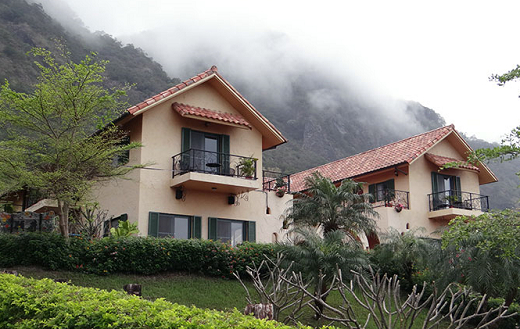
▲Old regulations have become a stumbling block for boosting tourism!