What are the effects and functions of Tianmu viburnum
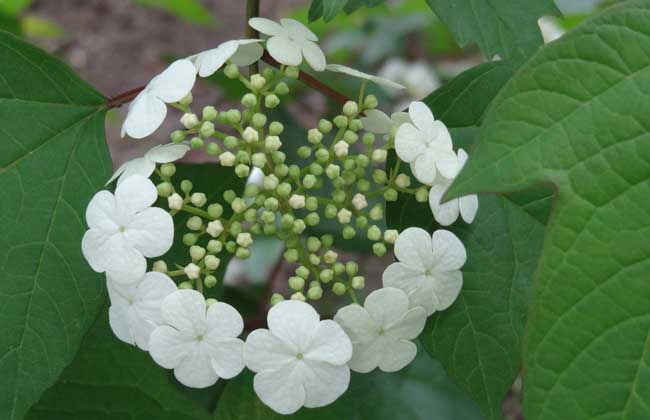
Tianmu viburnum, also known as chicken-tree knot, is a plant of the genus Viburnum in the honeysuckle family. Its young branches, leaves and fruits can be used as medicine. The branches can be used for rheumatoid arthritis, soreness and pain in the lower back and legs, and traumatic injuries; the leaves can be used externally to treat boils, ringworm and itchy skin; the fruits can relieve cough and are often used for acute and chronic bronchitis and cough. Let us take a look at the effects and functions of Tianmu viburnum below!
The medicinal value of Tianmu viburnum
[Nature and taste] Sweet and bitter in taste, neutral in nature.
[Meridians entered] Lung, heart and liver meridians.
[Effects] Activates blood circulation, relieves pain and stops itching. It mainly treats lumbar sprain, joint pain, sores, boils, scabies and ringworm itching.
The medicinal effects of Tianmu viburnum
1. Branches: unblock the meridians and activate collaterals, used for rheumatoid arthritis, soreness and pain in the lower back and legs, and traumatic injuries.
2. Leaves: detoxify and stop itching, used externally to treat boils, ringworm and itchy skin.
3. Fruits: dispel wind and relieve cough, used for acute and chronic bronchitis and cough.
Medicinal discussions of Tianmu viburnum
1. "Jilin Chinese Herbal Medicine": unblocks the meridians and activates collaterals, stops bleeding, relieves pain and relieves cough. Treats soreness and pain in the lower back and legs, and traumatic injuries.
2. "Northeast Commonly Used Chinese Herbal Medicine Manual": reduces swelling, relieves pain and kills parasites.
3. "Ningxia Chinese Herbal Medicine": activates blood circulation and relieves pain.
The pharmacological effects of Tianmu viburnum
1. Antispasmodic effect: scopoletin extracted from Tianmu viburnum has a significant antispasmodic effect in vitro on rat uterine excitation caused by estradiol perfusion or barium chloride, and the concentration required to reduce the contraction amplitude of one uterine horn by 50% is 0.09 mg/ml. In whole animals, it has a similar inhibitory effect on uterine contractions caused by oxytocin C (oxytocin) or ergometrine.
2. Hemostatic effect: the ethanol extract of Tianmu viburnum bark has the effect of enhancing contractile force in offspring, can also enhance blood coagulation in dogs, and can reduce blood loss in experimental rats. The strength of its 50% ethanol extract is 2 to 2.5 times that of the 70% ethanol extract. Rat experiments show that it has a vascular protective effect, among which the main active components are polycondensed tannins.
3. Anticholinesterase effect: the sesquiterpene dialdehyde compound fractidin dialdehyde isolated and extracted from Tianmu viburnum is a hypotensive agent and smooth muscle antispasmodic agent. When injected intravenously into rats, cats and dogs, it can slow the heart rate, lower blood pressure and weaken myocardial contractility in animals. Its mechanism of action may be anticholinesterase. In vitro experiments show that II is a competitive inhibitor of acetylcholinesterase and butyrylcholinesterase, and its strength of action is weaker than that of physostigmine.