What are the effects and functions of Jasmine?
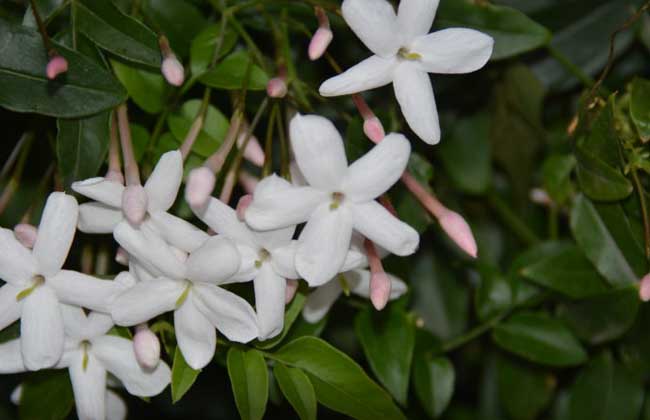
Jasmine, also known as Chicken Claw Flower, Many-flowered Jasmine, etc., is the whole plant of Jasmine of the Oleaceae family, Jasminum genus. As a medicine, it has the effects of promoting qi flow, relieving pain, regulating menstruation, clearing heat, and dispersing nodules. It has therapeutic effects on stomach pain, hepatitis, mastitis, irregular menstruation, dysmenorrhea, leukorrhea, stomatitis, orchitis, skin itching, lymph node tuberculosis, etc. Let's take a look at the effects and functions of Jasmine together below!
The medicinal effects of Jasmine
[Nature and flavor] Bitter in taste, neutral in nature.
[Meridian tropism] Liver meridian.
[Effects] Promoting qi flow, regulating menstruation, relieving pain, clearing heat, dispersing nodules. Mainly treats stomach pain, hepatitis, irregular menstruation, dysmenorrhea, leukorrhea, stomatitis, skin itching, orchitis, mastitis, lymph node tuberculosis.
Medicinal discussions on Jasmine
1. "Lingnan Medicine Collection Record": Relieves qi stagnation and heart pain, stops dysentery and abdominal pain.
2. "Common Chinese Herbal Medicine Manual": Treats liver area pain from hepatitis and cirrhosis. Chest and rib discomfort, heart and stomach qi pain, dysentery and abdominal pain.
The clinical effects of Jasmine
1. Nourishing and protecting the liver: Jasmine has a very good nourishing effect on the liver. After entering the human body, it can eliminate the damage caused by viruses to the liver and also accelerate the regeneration of liver cells. In daily life, it has good health care effects on chronic hepatitis and cirrhosis. In spring, when Jasmine is abundantly available in the market, it is also a good season for nourishing the liver. At this time, people can make soup with Jasmine and lean meat to eat.
2. Beauty and skin care: Jasmine has the effect of beautifying and nourishing the skin. It is said that as early as the Tang Dynasty, Wu Zetian often used it for beauty, which enabled her to achieve an ageless and alluring appearance. When people take a bath, they can directly add Jasmine to the bathtub for soaking, allowing the skin to slowly absorb it, or they can process Jasmine into bath water and apply it directly to the skin.
3. Treating stomatitis: Jasmine also has a certain therapeutic effect on stomatitis. During treatment, Jasmine needs to be decocted into a concentrated juice, and then this medicinal juice is used to gargle. Using it four to five times a day can make the symptoms of stomatitis disappear in two to three days. In addition, Jasmine also has a good washing therapeutic effect on skin pain and itching. An appropriate amount of Jasmine can be decocted with water into medicinal juice, and then directly wash the affected area, and the feeling of pain and itching will disappear.