What are the effects and uses of Lycopodium clavatum?
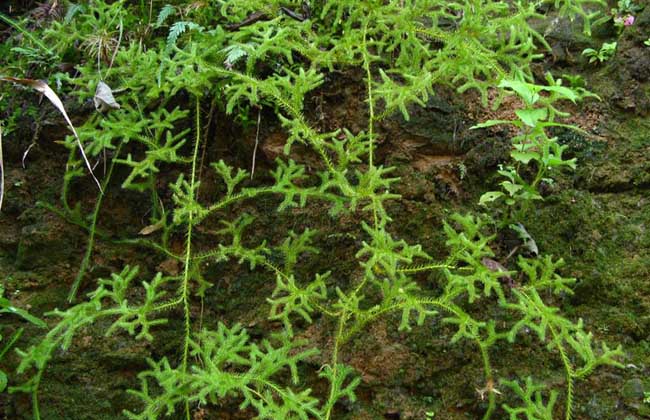
Lycopodium clavatum, also known as Niuweicai, Dashunjinteng, Shuiyaozhu and other names, is the dried whole plant of Lycopodium clavatum, a plant of the genus Lycopodium in the family Lycopodiaceae. It is harvested in summer and autumn when the stems and leaves are luxuriant, and impurities are removed. Used as medicine, it has the effects of dispelling wind and removing dampness, and relaxing the sinews and activating the collaterals. It has a therapeutic effect on symptoms such as joint aching and difficulty in flexion and extension. Let's take a look at the effects and uses of Lycopodium clavatum together below!
The medicinal effects of Lycopodium clavatum
[Nature and flavor] Bitter in taste, slightly pungent, warm in nature.
[Meridian entry] Liver, spleen and kidney meridians.
[Effects] Dispels wind and removes dampness, relaxes the sinews and activates the collaterals; mainly treats joint aching and difficulty in flexion and extension.
The clinical effects of Lycopodium clavatum
1. Relaxing the sinews and activating the collaterals: It can be used for skin, muscle and joint impediment patterns caused by cold, dampness and blood stasis. For numbness of the skin and muscles, which is mostly seen in people with a weak constitution who are externally attacked by pathogenic wind-cold-dampness evils that invade the blood vessels internally, this product is used to move qi and blood and unblock the meridians and collaterals. For wind-cold-dampness impediment with joint pain, this product is used to dispel wind and scatter cold, dry dampness and remove impediment, and relax the sinews and activate the collaterals. For traumatic injuries, this product is used to invigorate blood and remove stasis, and reduce swelling and relieve pain.
2. Lowering qi and removing dampness: Lycopodium clavatum is pungent, bitter and warm, and has the function of lowering qi and removing dampness. For stomach pain due to qi stagnation, it can soothe the liver and relieve depression, and lower qi and disperse accumulations. "Diannan Bencao" says, "It lowers qi, disperses the qi of stuffiness and fullness and obstruction in the chest, pushes down retained food in the stomach, removes long-standing hard accumulations in the abdomen, and reduces edema."
3. Removing dampness and detoxifying: Lycopodium clavatum is used for snake-like sores, namely herpes zoster, which is mostly caused by qi deficiency failing to move water and by blood stasis and dampness gathering. This product is used to move qi and blood, remove stasis, dry dampness and detoxify. Lycopodium clavatum is warm in nature; in traditional Chinese medicine there was no effect of clearing heat and lowering temperature, but pharmacological reports say its active ingredients have a body temperature-lowering effect, and therefore it can treat fever from rheumatic disease.
4. Lowering temperature and promoting urination: The water infusion of Lycopodium clavatum has a temperature-lowering effect on experimental fever in rabbits, and its active ingredients are lycopodine, clavatine and clavotoxin. Intravenous injection of lycopodine also has a temperature-lowering effect in cats. Lycopodium clavatum has the effect of promoting urination and increasing uric acid excretion. It can also relieve spasmodic urinary retention in children, and has a laxative effect.
Medicinal selected prescriptions of Lycopodium clavatum
1. To treat wind impediment with uncomfortable sinews and bones: Kuanjinteng, use 3 qian to 1 liang each time, decoct and take.
2. To treat joint aching: Lycopodium clavatum 3 qian, Huzhang root 5 qian, Daxueteng 3 qian. Decoct in water and take.
3. To treat numbness of the hands and feet: Fengwei Shenjincao 1 liang, loofah sponge 5 qian, Pashanhu 5 qian, Dahuoxue 3 qian. Decoct in half water and half wine and take.
4. To treat sequelae of infantile paralysis: Fengwei Shenjin, Nansheteng root, pine node, Xungufeng 5 qian each, Weilingxian 3 qian, madder 2 qian, Duxing 5 fen. Decoct and take.
5. To reduce edema: Guoshanlong 5 fen (ground into fine powder), Kangpiao 1 qian 5 fen (calcined over fire and preserving its nature), betel nut 1 qian. Simmer betel nut and Kangpiao into a decoction, take it with Guoshanlong powder, with diarrhea as the criterion. Use for those with excess qi; contraindicated for the deficient.
6. To treat herpes zoster: Lycopodium clavatum (roasted) ground into powder, mixed with green oil or sesame oil into a paste, applied to the affected area, several times a day.
7. To treat rheumatic joint pain: Lycopodium clavatum 30 g, Chuanshanlong 15 g, Laoguancao 15 g, Fangji 10 g, decoct in water and take.
8. To treat cervical spondylosis: Lycopodium clavatum 20 g, Qianghuo 12 g, Gegen 12 g, Sangzhi 15 g, decoct in water and take. Suitable for those with dizziness and blurred vision and numbness of the fingers.
The edible methods of Lycopodium clavatum
1. Lycopodium clavatum soup
[Materials] Lycopodium clavatum, Tougucao and safflower 3 g each.
[Formula explanation] In the formula, Lycopodium clavatum and Tougucao relax the sinews and activate the collaterals, combined with safflower to stop stasis and relieve pain, and furthermore using the method of soaking, the medicine acts directly on the local area, so the effect is relatively good.
[Effects] Relaxes the sinews, invigorates blood and unblocks the collaterals; mainly treats hand-foot contracture after stroke, with symptoms of contracture of the hands and feet, fingers clenched firmly, inability to extend, complete loss of function, obvious local swelling, pale red tongue, thin white coating, and string-like pulse.
2. Lycopodium clavatum wine
[Materials] Lycopodium clavatum 15 g, Chuanwu 15 g, Niuxi 15 g, Caowu 10 g, Jishiteng 15 g, baijiu 500 g.
[Method] Cut Lycopodium clavatum, prepared Chuanwu, Niuxi, Jishiteng and prepared Caowu into pieces and place them in a container. Add baijiu, seal and soak for 3 to 5 days, then filter and remove the residue, and it is ready.
[Effects] Dispels wind and scatters cold, removes dampness and reduces swelling, relaxes the sinews and invigorates blood; suitable for patients with rheumatic waist and leg pain, weakness of the waist and knees, and numbness of the limbs to drink.
3. Lycopodium clavatum stewed pig trotters
[Materials] Pig trotters 250 g, Lycopodium clavatum 10 g, ginger slices, salt and chicken essence as appropriate.
[Method] Wash the Lycopodium clavatum; remove the hair from the pig trotters, wash them and cut them into pieces. Boil water in a pot; after the water boils, put in the pig trotters and blanch to remove the blood on the surface, then take them out and wash them. Add an appropriate amount of clear water to the stewing pot, then put all the materials into a stewing cup. Add an appropriate amount of boiling water. Stew over a gentle fire with water separation for 4 hours, then season and it is ready.
[Effects] Lycopodium clavatum relaxes the sinews and activates the collaterals, and pig trotters are rich in calcium. It can relax the sinews and invigorate the bones, and is suitable for those whose joints are not nimble after injury to the sinews and bones.