An introduction to the efficacy and effects of the pokeweed plant
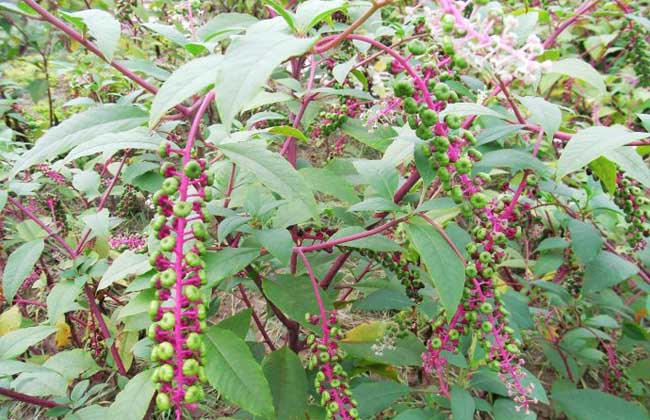
Pokeweed, also known as mountain radish, jianzhongxiao, daoshuilian, etc., is the dried root of the perennial robust herbaceous plant pokeweed or drooping pokeweed of the Phytolaccaceae family, genus Phytolacca. Used as medicine, it has the efficacy of expelling water and reducing swelling, promoting the free flow of urine and stool, and resolving toxins and masses. It has therapeutic effects on edema and distension, obstruction of urine and stool, carbuncles, swellings and sores, and more. Let us take a look together below at the efficacy and effects of pokeweed!
The medicinal value of pokeweed
[Nature and flavor] Bitter in taste, cold in nature.
[Meridian tropism] Lung, spleen, kidney and large intestine meridians.
[Efficacy] Expels water and reduces swelling, promotes the free flow of urine and stool, resolves toxins and masses. It mainly treats edema and distension, obstruction of urine and stool, and is used externally for carbuncles, swellings and sores.
The medicinal efficacy of pokeweed
1. Purging and promoting diuresis: Pokeweed is bitter in taste and cold in nature, and mainly has a descending and sinking action, promoting the free flow of urine and stool so that water-dampness is eliminated separately through both urine and stool. Therefore, it can be used to treat edema and distension, beriberi, jaundice and other syndromes.
2. Reducing swelling and resolving masses: Pokeweed is bitter in taste, cold in nature and toxic. Bitterness can purge and dry dampness, cold can clear heat and check fire, and toxicity can counteract toxicity with toxicity. Therefore, it can be used to treat carbuncles, swellings and sores, scrofula, throat obstruction and other conditions.
The pharmacological effects of pokeweed
1. Enhancing cellular immune function: Pokeweed saponins have a promoting effect on the phagocytic function of mouse leukocytes. Pokeweed saponin is a biologically active substance that activates nucleotide reductase, can stimulate the activity of B cells toward thymidine nucleotides, and promotes DNA metabolism, thereby having the function of enhancing cellular immunity. Under the assistance of T cells, PWM can also stimulate mouse splenic lymphocytes to produce IgM.
2. Promoting adrenocortical function: It can elevate adrenocortical function. It does not possess adrenocortical hormone-like effects, but instead affects the central nervous system to excite the pituitary-adrenal cortex system. Its ethanol extract, when administered by gavage to rats, can significantly reduce the vitamin C content in the adrenal glands. Ethanol extract administered by gavage to rats has a significant inhibitory effect on formaldehyde-induced paw swelling. Pokeweed triterpenic acid also has a significant anti-inflammatory effect.
3. Diuretic and purgative effects: Perfusion of toad kidneys with pokeweed root extract can cause capillary dilation, accelerate blood flow and significantly increase urine volume. The potassium it contains also promotes the diuretic effect. Small doses have a diuretic effect, while large doses instead reduce urine volume.
4. Antitussive, antiasthmatic and expectorant effects: The alkaloids have a significant antitussive effect, while pokeweed water decoction and tincture have no antitussive effect. The water decoction and tincture have a significant expectorant effect. The water decoction has the strongest effect. Pokeweed sapogenin also has a significant expectorant effect. Pokeweed alkaloids have no expectorant effect. Its expectorant mechanism is the result of directly stimulating the respiratory mucosa, causing increased glandular secretion and promoting ciliary movement. Subcutaneous injection of the decoction and tincture in guinea pigs has no antiasthmatic effect.
5. Antibacterial, anti-inflammatory and antiviral effects: The water decoction and tincture have an inhibitory effect on influenza virus. American pokeweed peptide is an antiviral protein that can inhibit the replication of mammalian poliovirus and can treat poliomyelitis. The water decoction and tincture have an inhibitory effect on Haemophilus influenzae, various dysentery bacilli and pneumococci, and also have an inhibitory effect on skin fungi. The triterpenic acid extracted from pokeweed has an anti-inflammatory effect, and its anti-inflammatory effect on rat paw swelling is similar to that of hydrocortisone.
Medicinal prescriptions of pokeweed
1. To treat water-qi swelling and fullness: Fresh pokeweed (cut into pieces the size of hemp seeds), equal parts of adzuki bean, and three crucian carp (remove the intestines and keep the scales). For the above three ingredients, stuff the two ingredients into the fish belly, bind it with silk floss, add three sheng of water, simmer slowly until the beans are soft, remove the fish, take only the two ingredients, eat them on an empty stomach, and swallow them down with the fish broth. In severe cases, repeat after two days; no more than three doses are needed.
2. To treat ten kinds of water-qi and remove water: Pokeweed root (take one cup of its natural juice) and one qian of kansui powder. Take one mole cricket, grind it finely, and mix it with the above medicines to make a single dose. Take it on an empty stomach, and swallow it with water at noon. Avoid salt for one hundred days and avoid licorice for three days.
3. To treat water-qi with generalized severe swelling, panting and rapid breathing, restlessness and excessive thirst, and difficult urination and defecation, where heating medicines cannot be taken: Alisma, pokeweed, adzuki bean (stir-fried), notopterygium (remove the reed), areca peel, zanthoxylum seed, akebia stem, large-leaf gentian (remove the reed), poria peel, and areca nut. Take equal parts, cut finely. For each dose, use four qian, one and a half cups of water, and five slices of fresh ginger; decoct to seven fen, remove the dregs and take warm, without restriction as to time.
4. To treat sudden severe abdominal masses: Pound pokeweed root, steam it, spread a new cloth over the abdomen, place the medicine on the cloth, cover it with clothing, and change it again when it cools. Use it for several days, morning and evening without rest.
5. To treat xuanpi that does not heal, with pain and hardness below the ribs like stone: One sheng of fresh pokeweed root juice and one liang of apricot seed (soaked in hot water, peeled and tipped). Grind the kernel until it is mushy, mix it with the pokeweed root juice, grind and filter to obtain the juice, and decoct it over fire until it is like syrup. For each dose, take an amount the size of a jujube, take it on an empty stomach mixed with warm wine, and gradually increase it, with the aim of promoting the discharge of the pathogenic matter.
6. To treat postpartum blood clots that sometimes attack the heart and abdomen, with unbearable pain: Pokeweed (dried) and angelica (cut and stir-fried) one fen each, and trumpetcreeper and cattail pollen one liang each. Grind the above four ingredients and sift into a powder. Take two qian-spoonfuls on an empty stomach mixed with warm wine.
7. To treat lymph node tuberculosis: Three qian of pokeweed, with brown sugar as a guiding ingredient, decoct in water and take.
8. To treat stone-like carbuncle that is hard as stone and does not form pus: Pound fresh pokeweed root and apply it; change it when dry, with the aim of softening it. It also treats various damp fistulas and boils.
9. To treat all swelling toxins: Pokeweed root with a little salt, pound and apply, changing it twice a day.
10. To treat sore injuries with water toxin: Pound and roast pokeweed root, wrap it in cloth and iron it on; change it when it cools.