What are the effects and uses of cinnamon?
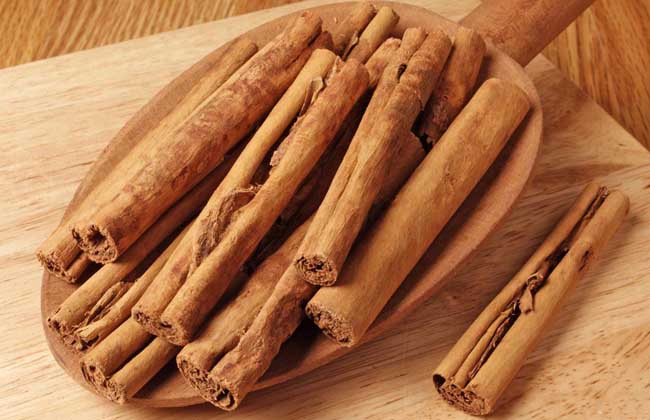
Cinnamon, also known as mudan cinnamon, purple cinnamon, large cinnamon, etc., is the dried bark of the plant cinnamon of the Lauraceae family and the genus Cinnamomum. When used as medicine, it has the effects of tonifying fire and assisting yang, guiding fire back to its origin, dispelling cold and relieving pain, and warming and unblocking the meridians. It has therapeutic effects on impotence and cold uterus, cold and painful waist and knees, wheezing due to kidney deficiency, deficiency yang floating upward, dizziness and red eyes, cold and painful heart and abdomen, vomiting and diarrhea due to deficiency cold, abdominal pain due to cold hernia, etc. Now let us take a look at the effects and uses of cinnamon!
The medicinal effects of cinnamon
[Nature and flavor] Pungent and sweet in flavor, greatly hot in nature.
[Meridian entry] Kidney, spleen, heart, and liver meridians.
[Effects] Tonify fire and assist yang, guide fire back to its origin, dispel cold and relieve pain, warm and unblock the meridians. Mainly treats impotence and cold uterus, cold and painful waist and knees, wheezing due to kidney deficiency, deficiency yang floating upward, dizziness and red eyes, cold and painful heart and abdomen, vomiting and diarrhea due to deficiency cold, abdominal pain due to cold hernia, painful menstruation and amenorrhea.
Related discussions on cinnamon
1. Shennong Bencao Jing: Mainly treats upward qi and cough with counterflow, bindable qi and throat impediment with exhalation and inhalation, benefits the joints, supplements the center and boosts qi.
2. Yaoxing Lun: Mainly treats nine kinds of heart pain, kills three worms, mainly breaks blood, unblocks and promotes menstruation, treats weak feet, impediment and numbness, retained placenta, eliminates cough with counterflow, bindable qi and congestive impediment, stops cold qi in the abdomen and unbearable pain, mainly treats dysentery and nasal polyps. Kills the toxicity of plants and trees.
3. Rihua Zi Bencao: Treats all wind qi, supplements the five taxations and seven injuries, unblocks the nine orifices, benefits the joints, boosts essence, improves vision, warms the waist and knees, breaks xuanpi and zhengjia, dissipates stagnant blood, treats wind impediment and contracted bones and joints, restores tendons and bones, and generates flesh.
4. Bencao Gangmu: Treats cold impediment, wind mutism, yin exuberance with blood loss, diarrhea and dysentery, and epilepsy. Treats yang deficiency with blood loss and internally supports carbuncles, gangrene, and smallpox sores. It can guide blood to transform into sweat and pus and neutralize snake and pit viper toxicity.
The pharmacological effects of cinnamon
1. Sedative effect: Cinnamaldehyde contained in cinnamon has a clear sedative effect on mice, manifested as reduced spontaneous activity, counteraction of excessive activity produced by methamphetamine, motor incoordination produced in the rotarod test, and prolongation of the anesthesia time of sodium cyclobarbital, etc. The method of applying tail pressure stimulation to mice or intraperitoneal injection of acetic acid to observe writhing movements proved that it has an analgesic effect.
2. Cooling effect: It has a cooling effect on the normal body temperature of mice as well as on artificial fever caused by mixed typhoid and paratyphoid vaccine. For rabbits with fever caused by warm stimulation, both cinnamaldehyde and sodium cinnamate have antipyretic effects. It can delay the time of tonic-clonic convulsions and death caused by strychnine, and can reduce the incidence of tonic-clonic convulsions and death caused by nicotine. It is ineffective against those caused by metrazol.
3. Blood pressure-lowering effect: The compound prescription of aconite and cinnamon has a blood pressure-lowering effect on rats with adrenocortical hypertension (a model formed by cauterizing one side of the adrenal gland), but has no effect on rats with renal hypertension (a model formed by figure-eight ligation of the kidney). This effect may be caused by aconite and cinnamon promoting the activity of the adrenal gland whose function has been reduced, causing it to tend toward normal.
4. Anticoagulant effect: In both in vitro and in vivo tests, cinnamon significantly inhibits ADP-induced rat platelet aggregation. In vitro tests show that cinnamon water decoction and the methanol-soluble portion have a relatively strong anticoagulant effect. The monomers extracted from cinnamon -- cinnamic acid and coumarin -- have no obvious anticoagulant effect. In in vivo tests, cinnamon water decoction also has no anticoagulant effect and does not affect rabbit fibrinolytic activity.
5. Emmenagogue effect: A large amount of cinnamon oil can cause uterine congestion, showing an emmenagogue effect. This provides an experimental basis for the abortion-inducing effect described in ancient materia medica.
6. Bactericidal effect: Cinnamon oil has a strong bactericidal effect, and its effect on Gram-positive bacteria is better than on Gram-negative ones. Because it is irritating, it is rarely used as an antibacterial drug, but external application can treat stomach pain, gastrointestinal bloating and colic, etc.
Selected medicinal formulas of cinnamon
1. Shiquan Dabu Tang: Boosts qi and supplements blood, nourishes the heart and calms the spirit. Mainly treats accumulated taxation and deficiency damage, shortness of breath, panting on movement, heart deficiency with palpitation, and dry throat and lips.
2. Renshen Yangying Tang: Warmly supplements qi and blood. Mainly treats insufficiency of qi and blood, consumptive cough, poor appetite and spermatorrhea, weakness of feet and knees, non-healing sores and ulcers, and uterine bleeding in women, etc.
3. Wuji San: Regulates qi and transforms phlegm, invigorates blood and dispels accumulation. Mainly treats externally contracted wind-cold, internal injury from raw and cold foods, feverish body without sweat, headache and body pain, stiffness of the neck and back, chest fullness and aversion to food, vomiting and abdominal pain, as well as women's disharmony of qi and blood, heart and abdominal pain, and irregular menstruation, etc., that belong to the cold nature.
4. Shaoyao Tang: Harmonizes qi and blood, clears heat and detoxifies. Mainly treats damp-heat dysentery.
5. Suzi Jiangqi Tang: Directs qi downward and calms panting, dispels phlegm and stops cough. Used to treat panting and cough patterns with excess above and deficiency below and abundant phlegm and saliva.
How to consume cinnamon
1. Mutton cinnamon soup: Put 6 grams of cinnamon into about 1 jin of stewed meat. After stewing until cooked, whether eating the meat or drinking the soup, it can warm the center and strengthen the stomach, warm the waist and knees, and treat abdominal cold and gas distention.
2. Cinnamon powder: Grind 3 grams of cinnamon into fine powder, take it twice a day with warm water. It can treat stomach gas distention and stomach cold pain. Adding cinnamon powder to dishes during cooking can help control blood sugar and cholesterol.