What are the effects and actions of Sinomenium acutum?
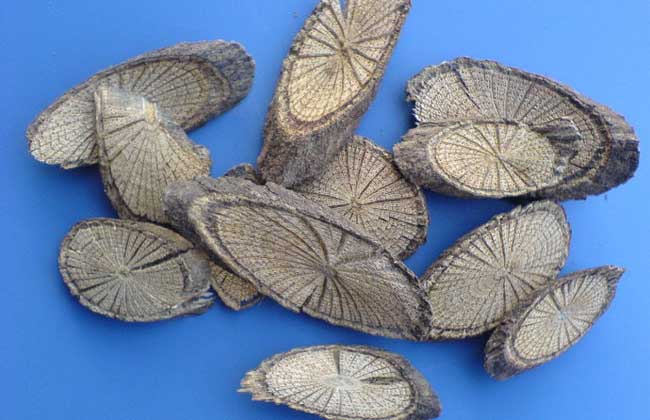
Sinomenium acutum, also known as Xunfengteng, Qingfengteng, Dianfangji and so on, is the dried vine stem of Sinomenium acutum and Sinomenium acutum var. cinereum, plants of the genus Sinomenium in the family Menispermaceae. As a medicinal herb it has the effects of dispelling wind-dampness, unblocking the meridians and promoting urination, and it has therapeutic effects on conditions such as wind-dampness bi pain, joint swelling, numbness and itching. Note that it must not be confused with Qingfengteng (Sabia japonica). Let us take a look at the effects and actions of Sinomenium acutum below!
Medicinal Effects of Sinomenium acutum
[Nature and Flavor] Bitter and pungent in flavor, neutral in nature.
[Meridian Entry] Liver and spleen meridians.
[Effects] Dispels wind-dampness, unblocks the meridians and promotes urination; mainly treats wind-dampness bi pain, joint swelling, numbness and itching.
Various Commentaries on Sinomenium acutum
1. "Bencao Huiyan": Qingfengteng is a medicine for dispersing wind-cold-dampness bi. It can relax the sinews and invigorate the blood, set the bones and benefit the marrow; therefore for wind disease with weakness and lack of strength, as well as stiffness and hemiplegia patterns, taking it over a long period or regularly achieves great and remarkable results. It must be used together with Angelica sinensis and Lycium chinense to be truly good.
2. "Bencao Biandu": All vine-like plants can unblock the meridians and enter the collaterals. This substance is good at treating wind diseases, so it treats all migratory joint pain and numbness. Soaking it in wine is especially effective. Because wind qi communicates with the liver, it enters the liver; wind overcomes dampness, and dampness qi also communicates with the spleen.
Medicinal Prescriptions of Sinomenium acutum
1. To treat wind-dampness bi pain: Sinomenium acutum root 3 liang, Fangji (Stephania tetrandra) 1 liang, put into one bottle of wine, boil and drink; Sinomenium acutum and Hongteng (Sargentodoxa cuneata) 15 grams each, decoct in water, add an appropriate amount of wine and take.
2. To treat wind qi pain of the bones and joints: an appropriate amount of Daqingmuxiang root or stems and leaves, decoct in water and frequently wash the painful area.
3. To treat all wind conditions: collect Sinomenium acutum in the second or third month, any amount, put into a cauldron, simmer over a low fire for seven days and nights until it becomes a paste, then store it in a porcelain bottle. When using, first prepare three to five combs; assess whether the person is deficient or excess, take one teaspoon with wine, then slap the patient's body once, after which the whole body will itch unbearably; quickly comb it with the comb. When the itching is to stop, drink one mouthful of cold water and it will be relieved. Avoid wind for several days.
Pharmacological Actions of Sinomenium acutum
1. Blood pressure-lowering effect: The total alkaloids of Sinomenium acutum have a rapid and strong blood pressure-lowering effect, and repeated administration is not likely to produce rapid tolerance. Regardless of the route of administration, there is a definite acute blood pressure-lowering effect in anesthetized or non-anesthetized animals. However, repeated use of sinomenine readily produces rapid tolerance.
2. Anti-inflammatory effect: Intragastric administration of sinomenine tablets can significantly inhibit adjuvant arthritis in rats, inhibit carrageenan-induced rat paw swelling and agar granuloma formation, has a clear antagonistic effect on 5-HT-induced increased vascular permeability, and can significantly inhibit acetic acid-induced writhing responses in mice.
3. Analgesic effect: The mouse hot plate method, electrical stimulation method and the rabbit photothermal stimulation method all prove that sinomenine has a significant analgesic effect. Its potency is about 1/2.5 to 1/10 that of morphine, its duration is relatively short, and continuous use can also produce tolerance, but more slowly than morphine, and the drug resistance disappears after stopping the drug for several days.
4. Sedative effect: Sinomenine significantly reduces spontaneous and passive activity in mice, has no obvious effect on barbiturate sleep time, has some antagonistic effect on strychnine (reducing the convulsion threshold of strychnine in mice), but cannot antagonize pentylenetetrazole. Oral administration of sinomenine 45 to 90 mg/kg in dogs and monkeys also has a significant sedative effect.
5. Antitussive effect: Sinomenine has an antitussive effect. In mice (S02 method) and cats (electrical stimulation of the superior laryngeal nerve method), its antitussive potency is comparable to that of codeine; in guinea pigs (S02 method), its potency is only 1/4 that of codeine. Promethazine can enhance its antitussive effect.
6. Other effects: Sinomenium acutum can inhibit the contraction of isolated rabbit intestinal smooth muscle and antagonize intestinal contraction caused by Ach, histamine and pilocarpine. The methanol extract can increase the contractile force and muscle tension of the in situ uterine smooth muscle of pregnant, non-pregnant and postpartum rabbits; as the dose continues to increase, semi-spasmodic contractions appear in sequence, until tonic contraction occurs. Sinomenium acutum has a certain cooling effect and a weak emetic effect.