What are the effects and uses of Denseflower Yam Rhizome?
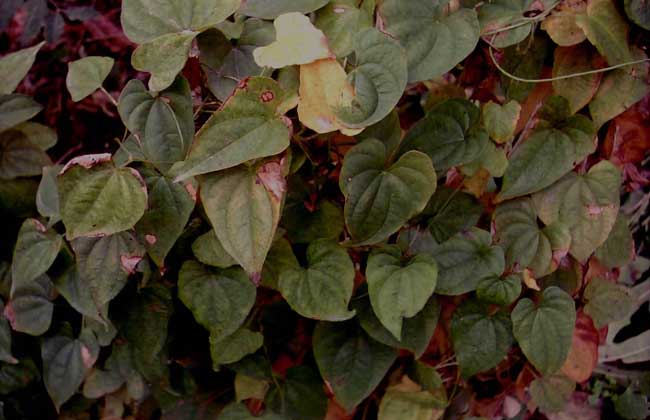
Denseflower Yam Rhizome, also known as Da Bi Xie, Shan Ben Ji, Shan Shu and so on, is the dried rhizome of Dioscorea spongiosa or Dioscorea futsingensis, plants of the genus Dioscorea in the family Dioscoreaceae. As a medicine it has the effects of draining dampness and removing turbidity, and dispelling wind and removing obstruction, and it has a therapeutic effect on conditions such as chylous strangury, white turbidity, excessive vaginal discharge, wind-dampness painful obstruction, restricted joint movement, and waist and knee pain. Now let us take a look at the effects and uses of Denseflower Yam Rhizome!
Medicinal Effects of Denseflower Yam Rhizome
[Nature and Flavor] Bitter in flavor, neutral in nature.
[Meridian Entry] Kidney and Stomach meridians.
[Effects] Drains dampness and removes turbidity, dispels wind and removes obstruction; mainly treats chylous strangury, white turbidity, excessive vaginal discharge, wind-dampness painful obstruction, restricted joint movement, and waist and knee pain.
Macroscopic Identification of Denseflower Yam Rhizome
1. Denseflower Yam Rhizome: regular slices, about three mm thick. The slices vary in width. The outer bark around the edge is grayish-yellow and curled. The cut surface is white or pale yellowish-white, rough in appearance, with vein dots; the texture is soft, cottony and light, and it breaks easily; it has no odor and a slightly bitter taste. Those that are white in color, soft and cottony, and neat without fragments are considered the best.
2. Powdery Yam Rhizome: irregular thin slices less than one mm thick, with brown outer bark around the edge, uneven and curved, varying in size and width. The cut surface is white or yellowish-white, sometimes with yellow-green ring markings. It appears slightly fine and smooth. The texture is somewhat hard and brittle, elastic, and breaks easily. It has no odor and a slightly bitter taste. Those that are white in color, large and relatively thin, and elastic are considered the best.
Clinical Applications of Denseflower Yam Rhizome
1. Used to treat frequent urination and urinary incontinence (especially in children), combined with Alpinia oxyphylla fruit and Lindera root.
2. Used to treat chylous strangury with damp-heat patterns, combined with Plantago seed, Phellodendron bark and so on to strengthen the dampness-draining and heat-clearing effects, as in Cheng's Bi Xie Fen Qing Yin. For those with yang deficiency and kidney deficiency patterns, combine with Lindera root, Alpinia oxyphylla fruit and so on, as in Bi Xie Fen Qing Yin.
3. Used to treat damp-heat painful obstruction, especially cold pain in the lower back, restricted movement of the lower limbs, and numbness; it does have a relieving effect on muscle pain caused by damp-heat and wind-dampness, and is often combined with mulberry twig, Chinese star jasmine stem, Achyranthes root and other medicines.
4. Used to treat skin eczema, chronic dermatitis, or impetigo and other conditions belonging to damp-heat patterns, combined with Phellodendron bark, coix seed and so on, as in Bi Xie Qu Shi Tang.
Medicinal Formulas of Denseflower Yam Rhizome
1. Cheng's Bi Xie Fen Qing Yin: Denseflower Yam Rhizome 9 g, Phellodendron bark 9 g, Acorus gramineus rhizome 4.5 g, Poria 12 g, Atractylodes macrocephala rhizome 9 g, lotus plumule 6 g, Salvia miltiorrhiza root 4.5 g, Plantago seed 12 g (decocted in a cloth bag), decocted in water for oral administration.
2. Bi Xie Fen Qing Yin: Denseflower Yam Rhizome 9 g, Alpinia oxyphylla fruit 6 g, Lindera root 9 g, Acorus gramineus rhizome 4.5 g, Poria 9 g, raw licorice 3 g, decocted in water for oral administration.
3. Bi Xie Qu Shi Tang: Denseflower Yam Rhizome 9 g, Phellodendron bark 9 g, raw coix seed 15 g, red peony root 9 g, moutan bark 9 g, Alisma rhizome 9 g, raw talc 12 g, Tetrapanax pith 3 g, decocted in water for oral administration.