What are the benefits and effects of basil? A detailed explanation
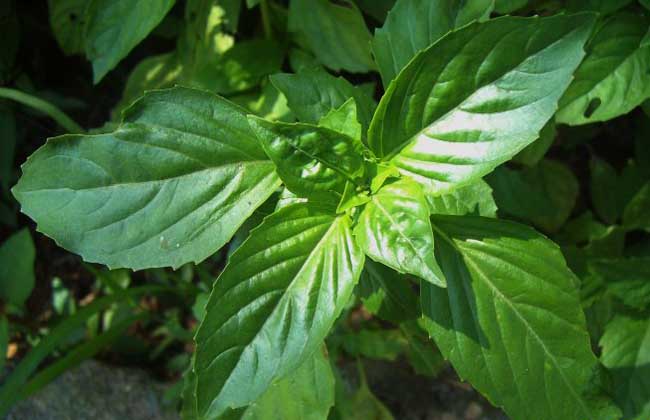
Basil, also known as nine-story pagoda, jinbuhuan, sweet basil, etc., is a perennial aromatic medicinal and edible plant of the genus Ocimum in the Lamiaceae family. As a medicine it has the effects of dispelling wind and moving qi, resolving dampness and promoting digestion, invigorating blood and removing toxins, and has therapeutic effects on externally contracted headache, food distension and qi stagnation, stomach duct pain, diarrhea, irregular menstruation, traumatic injuries, snake and insect bites, skin damp sores, urticaria with itching, etc. Let us take a look at the benefits and effects of basil below!
The medicinal value of basil
[Nature and flavor] Pungent and sweet in flavor, warm in nature.
[Meridian tropism] Lung, spleen, stomach, and large intestine meridians.
[Effects] Dispel wind and release the exterior, resolve dampness and harmonize the middle, move qi and invigorate blood, remove toxins and reduce swelling.
The medicinal effects of basil
1. Dispel wind and move qi, often used for externally contracted headache, cough, and similar patterns.
2. Resolve dampness and promote digestion, often used for food distension and qi stagnation, diarrhea, stomach pain, and similar patterns.
3. Unblock menstruation and invigorate blood, can be used for irregular menstruation, traumatic injuries, etc.
4. Remove toxins and relieve itching, can be used for snake and insect bites as well as skin conditions such as skin damp sores and urticaria itching caused by wind-dampness obstructing the skin.
5. Dispel wind and benefit cold, disperse cold and unblock impediment.
The compatible applications of basil
1. Combined with fresh ginger, it dispels wind and disperses cold, as in Waitai Miyao, which selects basil combined with fresh ginger to “treat cough with hiccup”.
2. Combined with Angelica dahurica, both medicines can dispel wind and disperse cold, are pungent and aromatic and moving and dispersing, and act upward together. They have an analgesic effect, but Angelica dahurica tends to ascend and disperse, while Ligusticum chuanxiong excels at moving qi and blood; used together, the two medicines can be used to treat wind-cold headache.
3. Combined with hawthorn, it can move qi stagnation and resolve food accumulation, and is used for food stagnation with stomach duct distension, acid regurgitation and eructation with putrid odor, abdominal pain and diarrhea.
4. Combined with prepared ginger, it can warm and unblock blood vessels and has the effect of invigorating blood and regulating menstruation, and can be used to treat deficiency cold of the lower burner, irregular menstruation, etc.
5. Combined with Qixingjian, the power to remove toxins and treat sores is strengthened, as in Lingnan Caiyao Lu, which selects basil combined with Qixingjian to treat “venomous snake bite”.
Medicinal selected formulas of basil
1. To treat cough with hiccup: fresh ginger 4 liang (mashed), add orchid fragrance leaves 2 liang, pepper powder one qianbi, salt and flour 4 liang, wrap into a baked cake, roast until cooked, and eat on an empty stomach.
2. To treat gan qi with red erosion below the nose: basil (burned to ash) 2 qian, copper green 5 fen, calomel 2 zi. Grind the above into a fine powder and mix evenly, and apply dry according to the size of the sore.
3. To treat venomous snake bite: Qiancengta, maoshexiang, xuejianchou, and Qixingjian, pound them into a paste and apply.