The Benefits and Effects of Iris lactea
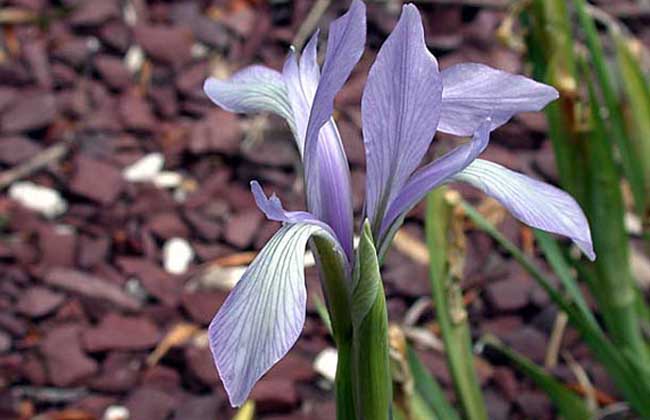
Iris lactea, also known as malian, malan, hanpu, licao and so on, is the whole plant of Iris lactea in the Iridaceae family, genus Iris. It grows in wasteland, hillside grassland or shrubland, and has the effects of clearing heat and detoxifying, promoting diuresis and treating strangury, and activating blood to reduce swelling. It has therapeutic effects on conditions such as throat obstruction, strangury and turbid urine, joint pain, painful boils and malignant sores, and incised wounds. Let us take a look at the benefits and effects of Iris lactea below!
The Medicinal Benefits of Iris lactea
[Nature and Flavor] Bitter and slightly sweet in flavor, slightly cold in nature.
[Meridians Entered] Kidney, bladder and liver meridians.
[Benefits] Clearing heat and detoxifying, promoting diuresis and treating strangury, and activating blood to reduce swelling. It mainly treats conditions such as throat obstruction, strangury and turbid urine, joint pain, painful boils and malignant sores, and incised wounds.
The Pharmacological Effects of Iris lactea
1. The alcohol extract of Iris lactea seeds has an anti-implantation effect in mice and an anti-ovulation effect in rabbits.
2. In the endometrial transformation test in rabbits, the alcohol extract of Iris lactea seeds showed no progesterone-like effect.
3. Iris lactea seeds can cause the endometrium of young rabbits to be in the proliferative phase, while the control group (treated with progesterone) caused the endometrium to be in the secretory phase.
4. The alcohol extract of the seed coat of Iris lactea seeds has an anti-implantation effect in mice, while the seed kernel has no obvious anti-implantation effect.
Medicinal Prescriptions of Iris lactea
1. To treat throat obstruction with inability to speak: Iris lactea flowers and Vitex trifolia seeds, 30 g each, grind together into a fine powder. Take 1 g each time, several times a day, swallowed with boiled water.
2. To treat urinary retention: Iris lactea flowers, fennel and Descurainia sophia seeds, 10 g each. Stir-fry all, then grind into a powder. Take 6 g each time, mixed with warm wine.
3. To treat hernia: Iris lactea flowers (stir-fried together with radish seeds) 60 g, Toosendan fruit (stir-fried together with tangerine seeds) 45 g, Evodia rutaecarpa (soaked in wine and stir-fried) 30 g, and costus root 6 g. Grind together into a fine powder. Take 3-6 g each time, mixed evenly with yellow rice wine, on an empty stomach.
4. To treat boils and carbuncles: Iris lactea flowers 6 g, dandelion 30 g, and Viola philippica 30 g. Decoct in water, 1 dose per day.
5. To treat bone tuberculosis: Dry Iris lactea seeds in an iron pan, grind into a powder, and take with water. 3 times a day, 5-7 g each time, with the dose reduced for children. Separately, use 2 parts of the powder and 5 parts petroleum jelly to make an ointment for external application.
6. Contraception: Iris lactea seeds 50 g, crush, add 2 bowls of water, boil down to 1 bowl, add 250-500 g of yellow rice wine, boil briefly, and divide the residue together with the liquid into 6 portions. Take twice a day during menstruation for 3 consecutive days.
7. To treat rheumatoid arthritis: Iris lactea roots and Xanthium sibiricum roots, 100 g each, and sugar 50 g. Add 2000 mL of water and boil down to 1000 mL. Take 70-80 mL each time, 3 times a day.
8. To treat chronic bronchitis: Iris lactea root 15 g. Decoct in water, 1 dose per day.
9. To treat excessive menstruation: Iris lactea seeds 9 g, Iris lactea flowers 9 g, and pomegranate peel 12 g. Grind together into a fine powder and take in 3 divided doses a day.