What are the effects and functions of nux vomica?
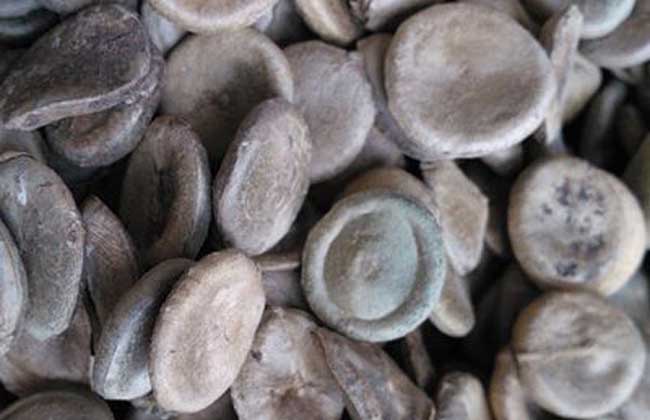
Nux vomica, also known as strychnine tree, semen strychni, and kushi badour, among other names, is the dried mature seed of the plant Strychnos nux-vomica of the family Loganiaceae, genus Strychnos. Used medicinally, it has the effects of dredging collaterals and relieving pain, and dissipating nodules and reducing swelling. It has therapeutic effects on traumatic injuries, fractures with swelling and pain, stubborn wind-damp impediment, numbness and paralysis, carbuncles, sores and toxins, and sore throat with swelling and pain. Let us take a look below at the effects and functions of nux vomica!
The medicinal value of nux vomica
[Nature and flavor] Bitter in taste, warm in nature.
[Meridian entry] Liver and spleen meridians.
[Effects] Dredges collaterals and relieves pain, dissipates nodules and reduces swelling. Mainly treats traumatic injuries, fractures with swelling and pain, stubborn wind-damp impediment, numbness and paralysis, carbuncles, sores and toxins, and sore throat with swelling and pain.
The pharmacological effects of nux vomica
1. Effects on the central nervous system: The strychnine contained in nux vomica has an excitatory effect on the entire central nervous system and can enhance the function of the sensory center of the cerebral cortex. It acts mainly on the spinal cord, exciting its reflex function and making nerve impulses easier to conduct between neurons. It also has the effect of exciting the brain, causing sensitivity in the functions of various sensory organs, can awaken patients in an inhibited state, and regulates the excitatory and inhibitory processes of the cerebral cortex.
2. Analgesic effect: Brucine has a significant analgesic effect. Experiments in mice using the acetic acid writhing method show that its analgesic effect is weaker than that of pethidine, but its duration is about 4 times longer. The hot plate method in mice also shows that brucine has a clear analgesic effect within a certain dosage and time limit, while strychnine has no obvious analgesic effect.
3. Effects on the digestive system: Direct tests through intestinal fistulas in patients prove that strychnine has no excitatory effect on human gastrointestinal smooth muscle, but because it has a strong bitter taste, it can stimulate taste receptors to reflexively increase gastric juice secretion, thereby promoting digestive function and increasing appetite. Animal experiments also show that taking an appropriate amount of nux vomica powder orally can excite the rumen and can treat fore-stomach atony. However, an excessive dosage will instead inhibit rumen motility and worsen fore-stomach atony.
4. Effects on the respiratory system: The effect of brucine is 1/8 that of strychnine. It has been reported that brucine has a strong antitussive effect on cough induced by ammonia water and sulfur dioxide in mice, with an intensity exceeding that of codeine, and the effect is more pronounced when taken orally than by intraperitoneal injection. The phenol red excretion method in mice proves that brucine at 40mg/kg has a clear expectorant effect, with an intensity not significantly different from that of ammonium chloride, and its antiasthmatic effect is relatively weak.
5. Effects on pathogenic microorganisms: The water decoction of nux vomica (1:2) has different degrees of inhibitory effect in test tubes on skin fungi such as Trichophyton schoenleinii and Microsporum audouinii. In vitro experiments show that 0.1% brucine can completely inhibit the growth of Haemophilus influenzae, Diplococcus pneumoniae, Streptococcus hemolyticus group A, and Neisseria catarrhalis.
6. Other effects: High-concentration nux vomica decoction can inhibit lymphocyte mitosis, while low concentrations can promote cell mitosis. Brucine has a paralytic effect on sensory nerve endings. A 5-10% brucine solution can anesthetize the oral mucosa. On isolated muscle-nerve specimens, extremely large doses of both brucine and strychnine can block neuromuscular transmission and exhibit a curare-like effect. In intact animals, this effect is masked by systemic convulsions.
The medicinal effects of nux vomica
1. Traumatic injuries: Nux vomica is good at dissipating nodules, reducing swelling, and relieving pain, making it an excellent product in traumatology for treating injuries and relieving pain. To treat traumatic injuries and fractures with swelling and pain, it can be combined with ephedra, frankincense, and myrrh, divided into equal parts and made into pills, such as Jiufen San. It can also be used together with pangolin scales, as in Maqian San and Qinglong Wan.
2. Carbuncles, sores and toxins: Nux vomica is bitter, discharging, and toxic. It can dissipate nodules, reduce swelling, attack toxins, and relieve pain. To treat carbuncles, sores and toxins, it is mostly used externally, and when used alone it is effective. To treat throat impediment with swelling and pain, it can be combined with equal parts of Aristolochia debilis and Sophora tonkinensis, ground into powder, and blown into the throat, as in Fanmubie San.
3. Stubborn wind-damp impediment: Nux vomica is good at searching out wind-dampness among the sinews and bones, opening the meridians and collaterals, penetrating the joints, and is strong at relieving pain. It is a commonly used medicine for treating stubborn wind-damp impediment, contracture and pain, and numbness and paralysis. It is effective when used alone, and can also be combined with ephedra, frankincense, and scorpion into pills for oral use. Or it can be used with licorice, as in Modern Practical Chinese Medicine, where this product and equal parts of licorice are ground into powder and made into pills with refined honey for oral use, to treat numbness of the hands and feet and hemiplegia.
4. Dispersing heat and dissipating blood stasis: Nux vomica is bitter in taste, cold in nature, and toxic. Bitter descends and discharges blockage; vine-like substances are good at moving and dispersing; cold can clear heat. Entering the liver and spleen meridians, it has the effect of dispersing heat and dissipating blood stasis, and is suitable for carbuncle swelling and pain. This is mostly caused by the six external pathogenic factors, excessive consumption of rich and greasy foods, internal accumulation of damp-heat and fire toxin, or external injury, exposure to toxic qi, and so on, which cause pathogenic toxins to congest and gather, leading to disharmony between the nutritive and defensive qi, blockage of the meridians and collaterals, and stagnation of qi and blood.
5. Reducing swelling and benefiting the throat: Nux vomica is bitter and cold, discharging blockage, and has the effect of reducing swelling and relieving pain. It is used for throat impediment pain, which is caused by the gathering of pathogenic toxins, qi stagnation and blood stasis, and obstruction of the meridians and vessels, characterized by redness, swelling, and pain in the throat, or slight redness, throat itching, and is treated with nux vomica. As stated in Yifang Zhaiyao, to treat throat impediment with pain, it is combined with Sophora tonkinensis and Aristolochia debilis, ground into powder, and blown into the throat.
6. Dissipating masses and transforming distension: Danxi Xinfa says, "Qi cannot form lumps and gatherings. Lumps are tangible things, formed from phlegm, food accumulation, and dead blood." Abdominal lumps mostly occur in the gastric cavity or umbilical and abdominal areas, with distension, fullness, and stuffy pain in the gastric cavity, pain that refuses pressure, reduced appetite and poor intake, emaciation and fatigue, a slightly yellow complexion, a pale tongue, and a thin pulse. It is treated with nux vomica to remove blood stasis, dissipate masses, and transform distension. As stated in Bencao Congxin: "Nux vomica, dissipates lumps."
7. Clearing heat and resolving toxins: Nux vomica is bitter in taste and cold in nature. Bitter descends and discharges fire; cold can overcome heat. It clears heat, resolves toxins, searches out wind, and settles pain. It is used for the syndrome of fear of water and aversion to wind, high fever, and contracture caused by mad dog bites. As stated in Secret and Proven Recipes of Chinese Medicine, to treat rabies, one nux vomica seed is ground with wine into powder and swallowed with boiled water.