What are the effects and uses of plumeria?
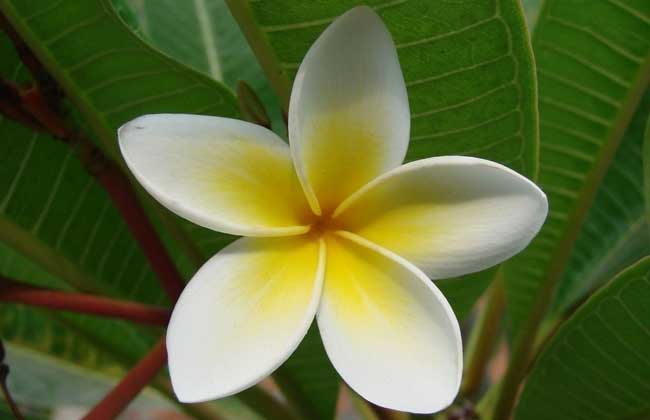
Plumeria, also known as Burmese frangipani, egg-yolk flower, etc., is a deciduous shrub or small tree of the genus Plumeria in the dogbane family (Apocynaceae). It has the effects of clearing heat, draining dampness and relieving summer heat, and is used to treat conditions such as colds with fever, cough due to lung heat, damp-heat jaundice, diarrhea and dysentery, urinary tract stones, and prevention of heatstroke. Let's take a look at the effects and uses of plumeria below!
Medicinal Effects of Plumeria
[Nature and Flavor] Sweet and slightly bitter in flavor, cool in nature.
[Meridians Entered] Lung and Large Intestine meridians.
[Effects] Clears heat and relieves summer heat, drains dampness and stops cough, prevents heatstroke; mainly treats diarrhea, bacillary dysentery, indigestion, infantile malnutrition, infectious hepatitis, and bronchitis.
Pharmacological Effects of Plumeria
1. Antibacterial effect: Antibacterial components isolated from the roots of red plumeria and pink plumeria, such as plumieride and plumeria glycosides, have strong antifungal effects, markedly inhibit both Gram-positive and Gram-negative bacteria as well as tuberculosis, and also significantly inhibit Gram-negative and Gram-positive bacteria.
2. Laxative effect: Plumeria glycosides also have a marked laxative effect. The ED50 for laxation in mice is 0.12 g/kg. Patients taking 0.2-0.3 g before bedtime can have 1-2 bowel movements the next morning; doses greater than 0.3 g also have a diuretic effect.
3. Anesthetic effect: Aqueous extracts of the stem, bark, leaves and peeled stem of red plumeria all have local anesthetic and antispasmodic effects on rabbits, guinea pigs, cats and mice.
Medicinal Formulas of Plumeria
1. Preventing heatstroke: Plumeria 20 g, decocted in water to obtain the liquid, taken as a tea.
2. Treating bacillary dysentery: Plumeria 10 g, kapok flower 30 g, Coptis chinensis 10 g, Phellodendron amurense 10 g, Polygonum chinense 30 g, decocted in water, 1-2 doses per day.
3. Treating acute bronchitis: Plumeria 10 g, honeysuckle 30 g, Houttuynia cordata 30 g, add 800 mL of water, decoct to 200 mL, take in 2 divided doses.
4. Treating acute infectious hepatitis: Plumeria 10 g, Artemisia capillaris 30 g, Fraxinus rhynchophylla 9 g, rhubarb 12 g, decocted in water, 1-2 doses per day.
5. Treating indigestion: Plumeria 20 g, Coptis chinensis 10 g, Polygonum chinense 30 g, Plantago asiatica 15 g, decocted in water, 2-3 doses per day.
6. Treating colds with fever: Plumeria 20 g, chrysanthemum 10 g, honeysuckle 10 g, mint 6 g (added later), add 350 mL of water, decoct to 150 mL, take in 2 divided doses.
7. Treating poor appetite due to food stagnation in children and diarrhea: Plumeria 9 g, malt 20 g, Massa Medicata Fermentata 10 g, Microcos paniculata leaf 9 g, decocted in water, 2 doses per day.
8. Treating dysentery and summer diarrhea: Plumeria 20-40 g, decocted in water, 1 dose per day.
9. Treating cough due to lung heat: Plumeria 3-12 g, decocted in water, 1 dose per day.