What are the effects and functions of Pyrola?
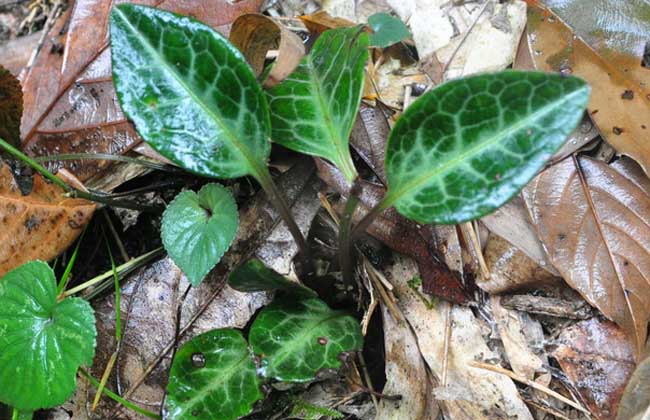
Pyrola, also known as Pyrola japonica, Xiao Qin Wang Cao, Po Xue Dan, etc., is the whole plant of Pyrola rotundifolia or Pyrola incarnata of the Pyrolaceae family. As medicine it has the effects of tonifying the kidney and strengthening the bones, dispelling wind and removing dampness, stopping cough and stopping bleeding, and has therapeutic effects on kidney-deficiency low back pain, flaccidity and weakness of the sinews and bones, rheumatic arthralgia, consumptive cough, hematemesis and metrorrhagia, irregular menstruation and other conditions. Let us take a look at the effects and functions of Pyrola below!
The medicinal value of Pyrola
[Nature and flavor]Sweet, bitter in taste, slightly warm in nature.
[Meridian entry]Liver and kidney meridians.
[Effects]Tonifies the kidney and strengthens the bones, dispels wind and removes dampness, stops cough and stops bleeding. Indications: kidney-deficiency low back pain, flaccidity and weakness of the sinews and bones, rheumatic arthralgia, consumptive cough, hematemesis and metrorrhagia, irregular menstruation, traumatic bleeding, insect and snake bites.
The medicinal effects of Pyrola
1. Tonifying the kidney and strengthening the bones: Pyrola is sweet-bitter and slightly warm, readily entering the liver and kidney meridians; it can tonify the kidney and benefit essence, strengthen the sinews and bones, and dispel wind and remove dampness. For kidney-deficiency low back pain with flaccidity and weakness of the sinews and bones, it can be combined with kidney-tonifying drugs such as Eucommia bark, Achyranthes root, and Dodder seed. For rheumatic pain of the sinews, bones and joints with long-standing liver and kidney deficiency, it can be used together with wind-dampness-dispelling drugs such as Pubescent angelica root and Geranium wilfordii. For the elderly with kidney deficiency and bone hyperplasia, it can be combined with prepared rehmannia, Drynaria rhizome, Millettia reticulata stem, and Cistanche.
2. Stopping cough and stopping bleeding: Pyrola can tonify deficiency and stop cough, and astringe and stop bleeding. For chronic cough due to lung deficiency with tidal fever and night sweats, it can be combined with qi-benefiting and yin-nourishing drugs such as Schisandra fruit and Lily bulb. For hemoptysis due to pulmonary tuberculosis, it can be used together with Bletilla striata, donkey-hide gelatin, etc.; for metrorrhagia with bleeding, it can be administered together with aged palm charcoal, charred Sanguisorba root, etc.; for traumatic bleeding, it can be ground into powder with Panax notoginseng and applied to the affected area.
3. Strengthening the heart and lowering blood pressure: Pyrola has cardiotonic, blood-pressure-lowering and blood-lipid-lowering effects. It can enhance cardiac contraction and correct heart rhythm in the weakened frog heart, but has no obvious effect on the normal frog heart, and can dilate blood vessels to lower blood pressure. Its curative effect on senile cardiovascular and cerebrovascular diseases is even more obvious. For cardiotonic purposes it can be combined with prepared aconite, ginseng, cassia twig, etc.; for lowering blood pressure it can be combined with Eucommia bark, Siegesbeckia, Prunella vulgaris, Gambir vine, etc.; and for lowering blood lipids it is often used together with Cassia seed, raw hawthorn, etc. Its effects of tonifying the kidney and strengthening the waist and knees, and dispelling wind-dampness, are also relatively significant, and it can be combined with Eucommia bark, Mulberry mistletoe, Huai Achyranthes root, etc.
The pharmacological effects of Pyrola
1. Anti-inflammatory effect: Pyrola has an inhibitory effect on xylene-induced ear inflammation in mice, acetic acid-induced increased peritoneal capillary permeability in mice, carrageenan-induced arthritis and adjuvant-induced joint swelling in rats, and can also markedly counteract chronic granuloma in rats. Repeated administration can significantly increase thymus and spleen weights.
2. Effect on cerebral blood vessels: Pyrola injection can dilate cerebral blood vessels, increase cerebral blood flow, and reduce cerebral vascular resistance. Its effect is similar to that of poppy and stronger than that of Salvia miltiorrhiza.
3. Effect on the cardiovascular system: Pyrola infusion can increase myocardial contractility and resist arrhythmia in the weakened frog heart, but its effect on the normal isolated frog heart is not significant. It can also enhance myocardial contractility in dogs and rabbits, markedly dilate blood vessels, and lower blood pressure; the effect of the leaves is stronger than that of the roots and stems. Perfusion of isolated rabbit ears, forelimbs and hindlimbs, and heart with Pyrola injection can all increase cardiac flow, among which the dilating effect on rabbit coronary vessels is stronger than that on rabbit ear and forelimb and hindlimb vessels.
4. Antibacterial effect: Pyrola decoction has an inhibitory effect on Staphylococcus aureus, hemolytic Streptococcus, Pneumococcus, Meningococcus, Shigella flexneri, Salmonella typhi and Pseudomonas aeruginosa, etc. Pyrolin also has an inhibitory effect on Staphylococcus aureus, Salmonella typhi, Pseudomonas aeruginosa, Proteus, Shigella sonnei and Escherichia coli.
5. Anti-fertility effect: Female mice were given Pyrola decoction daily for a total of 10 days, and from the 5th day were caged together with male mice for 1 month, with fertility inhibited by 100%. Administration for 10 to 30 days can inhibit the estrous phase and cause atrophy of the uterus and ovaries.
Medicinal formulas of Pyrola
1. To treat kidney-deficiency low back pain and impotence: Pyrola 30 g, 1 pair of pig trotters. Stew and eat.
2. To treat consumptive disease: Pyrola 1 liang, 1 pair of pig trotters. Stew and eat.
3. To treat kidney-deficiency five stranguries and white turbidity: Pyrola 60 g, decoct in water and take.
4. To treat chronic rheumatoid arthritis and rheumatoid arthritis: Pyrola and Atractylodes macrocephala 12 g each, Alisma 9 g. Decoct in water and take.
5. To treat hemoptysis due to pulmonary tuberculosis: Pyrola and Bletilla striata 12 g each. Decoct in water and take.
6. To treat functional uterine bleeding: Pyrola and Kuding tea 9 g each. Decoct in water, take during menstruation.
7. To treat postpartum blood-stasis abdominal pain: Pyrola 15 g, Solidago decurrens 6 g, Ixeris denticulata 9 g. Decoct in water and take.
8. To treat metrorrhagia: Pyrola 15 g, charred Sanguisorba root 30 g. Decoct in water, take twice a day.
9. To treat chronic enteritis and dysentery: Pyrola 15 g, decoct in water and take.
10. To treat allergic dermatitis, sores and abscesses, and insect and snake bites: Appropriate amount of Pyrola. Decoct in water and wash the affected area, twice a day.
11. To treat bone hyperplasia: Pyrola 25 g, prepared rehmannia 100 g, Shen Jiang (Drynaria rhizome) 75 g, Millettia reticulata stem 75 g, Cistanche 50 g. Grind together into fine powder, refine into pills with honey, each pill weighing 15 g. Take 1 pill each time, twice a day.