What are the effects and functions of kelp? Read this one article to understand
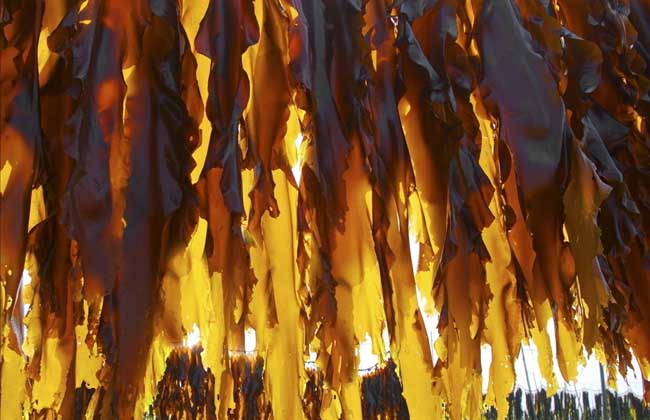
Kelp, also known as black vegetable, goose palm vegetable, five palm vegetable, etc., is the dried leaf-like thallus of the Laminariaceae plant kelp or the Alariaceae plant kelp (goose palm vegetable). When used as medicine, it has the effects of resolving phlegm and softening hardness, and promoting diuresis to reduce swelling. It has a relatively good therapeutic effect on goiter, scrofula, testicular swelling and pain, phlegm-fluid edema, and other conditions. Now let us take a look at the effects and functions of kelp!
The medicinal effects of kelp
[Nature and flavor] Salty in flavor, cold in nature, non-toxic.
[Meridian entry] Liver, stomach, and kidney meridians.
[Effects] Resolve phlegm and soften hardness, promote diuresis and reduce swelling; treats scrofula, goiter, dysphagia, testicular swelling and pain, and phlegm-fluid edema.
The pharmacological effects of kelp
1. Effect on the thyroid: Kelp can be used to correct thyroid insufficiency caused by iodine deficiency, and can also temporarily inhibit the metabolic rate of hyperthyroidism to relieve symptoms, but the effect is not lasting, and it can be used as preparation before surgery. After iodide enters tissues and blood, it can also promote the absorption of pathological products such as inflammatory exudates, and can cause diseased tissue to break down and dissolve, so it is generally not used for active pulmonary tuberculosis.
2. Blood pressure-lowering effect: Laminine has a blood pressure-lowering effect. Intravenous injection of laminine monocitrate into anesthetized rabbits can cause a brief decrease in blood pressure. This effect is not blocked by atropine and does not affect the pressor response caused by occlusion of both common carotid arteries or injection of norepinephrine. In both in vivo and in vitro tests, it can inhibit the amplitude of heartbeat, but does not affect heart rate.
3. Blood sugar-lowering effect: Laminarin contained in kelp, when administered by gavage at 30 ml/kg, has a clear blood sugar-lowering effect in normal mice. When the dose reaches 100 mg/kg, blood sugar decreases by 49% after 7 hours. Sodium alginate has a weaker blood sugar-lowering effect and is ineffective by gavage. Only intraperitoneal injection at 100 mg/kg has a clear blood sugar-lowering effect. When the dose reaches 300 mg/kg, blood sugar can decrease by 38% after 7 hours. For alloxan-induced hyperglycemia, laminarin at 300 mg/kg by gavage reduces blood sugar by 61% after 24 hours, while sodium alginate at 300 mg/kg by intraperitoneal injection reduces blood sugar by 39%, but gavage is ineffective.
4. Blood lipid-lowering and anticoagulant effects: Repeated gavage of kelp polysaccharides can significantly inhibit the increase in serum total cholesterol and triglyceride levels in hyperlipidemic chickens, and can reduce the formation and development of atherosclerotic plaques in the aortic intima of chickens. Kelp polysaccharides have anticoagulant effects both in vivo and in vitro. Because many patients with coronary heart disease, in addition to having hyperlipidemia, often have blood in a hypercoagulable state. Therefore, kelp polysaccharides have both blood lipid-lowering and anticoagulant effects, which has certain clinical significance.
5. Anti-radiation effect: A single injection of kelp polysaccharides can significantly increase the survival rate of mice irradiated with 900 rad, and the survival rate increases with increasing dose, and it can significantly protect the hematopoietic tissue of irradiated animals. Therefore, kelp polysaccharides may have certain practical significance for preventing hematopoietic tissue damage caused by radiotherapy, stimulating hematopoietic recovery, and enhancing immune function in cancer patients, and may be combined with radiotherapy.
6. Other effects: Seaweed kelp fluid extract has a protective effect on rabbits infected with Schistosoma japonicum cercariae (the decoction is ineffective). When the fluid extract is orally administered at 2 g/kg starting 1 day after infection for 90 consecutive days, the residual number of schistosome worms in the rabbits is significantly reduced compared with the control group, especially the liver lesions are far milder than those in the control group, with the normal structure largely preserved, only a small amount of egg nodule formation seen, and surrounding fibrosis not significant, especially newly formed eggs are very difficult to find. Oral administration of a compound decoction (Hua Ai Dan) of seaweed, kelp, scorpion, centipede, etc. to mice has an inhibitory effect on Ehrlich ascites carcinoma. Laminarin has no effect on rat reticulosarcoma IRE (ascites type).
Medicinal selected prescriptions of kelp
1. To treat goiter nodules with swollen and hard scrofula: Kelp 1 liang (washed to remove salty taste). Grind and sift into powder. Each time use 1 qian, wrap in silk cloth and soak in good vinegar, then hold in the mouth and swallow the saliva until the medicinal taste is gone, then hold another.
2. To treat sudden formation of a lump below the neck that gradually enlarges and is about to become goiter: Kelp and seaweed in equal parts. Grind into powder, make honey pills as large as apricot kernels, hold in the mouth, and gradually swallow the juice, four to five times a day.
3. To treat initial formation of goiter qi with obstruction and stuffiness in the throat, which if untreated will gradually swell: Areca nut 3 liang, seaweed 2 liang (washed to remove saltiness), kelp 3 liang (washed to remove salt water). Grind the above medicines and sift into powder, mix with refined honey and form pills as large as small bullets, and frequently hold one pill in the mouth and swallow the saliva.
4. To treat qi goiter with fullness and blockage in the chest and diaphragm, and gradual thickening of the throat and neck: Kelp 2 liang (washed to remove salty juice), ricepaper plant pith 1 liang, sheep throat 2 pieces (roasted), sea clam 1 liang (ground), horsetail seaweed 1 liang (washed to remove salty juice). For the above five ingredients, make honey pills as large as bullets, and slowly hold them in the mouth and swallow the juice. Avoid raw vegetables, hot noodles, roasted meat, garlic, and bamboo shoots.
5. To treat diaphragmatic qi with choking and inability to eat: Kelp (washed clean, roasted, powdered) 1 liang, fine chaff from the pounder head 1 ge, grind together. Use old cow saliva 1 ge and raw lily juice 1 ge, slowly decoct and add honey, stir into a paste, and pound with the powder into pills as large as Gordon euryale seeds. Take one pill each time, hold in the mouth, dissolve, and swallow.
6. To treat qi and urgent obstruction of the bladder, it is appropriate to descend qi: Kelp 1 jin, soak overnight in white rice washing water, wash to remove salty taste, use 1 dou of water, boil until nearly cooked, tear into pieces 3 cun long and 4 to 5 fen wide, then take 1 handful of scallion white, cut into 2 cun sections and tear them, cook together again until the kelp is extremely soft, then add salt, vinegar, fermented black beans, and minced seasoning to harmonize, following the method for meat stew, but do not let it become salty or sour, and harmonize with ginger, tangerine peel, pepper powder, etc. It is suitable to eat with japonica rice and japonica rice porridge. Seaweed can also be prepared by this method. It strongly descends qi and is highly effective, with no restrictions.