I love the orchids of my hometown, and this nostalgia is unforgettable
Promote Chinese orchid culture, spread orchid knowledge
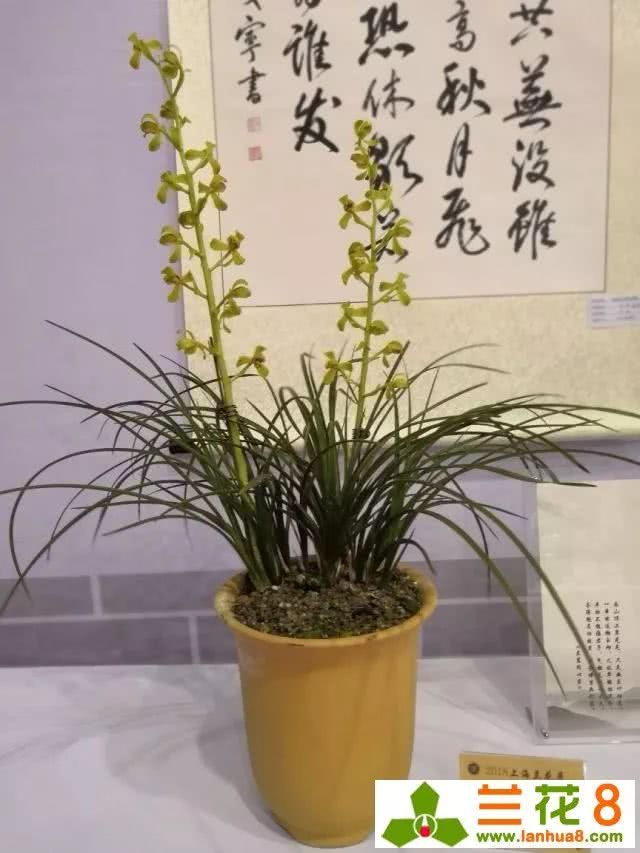
In the beautiful Huangshan area, two cold-tolerant orchids grow - Wannan Chunlan (Cymbidium goeringii from southern Anhui) and Huilan (Cymbidium faberi). Amid the mountains and waters south of the Yangtze River lies the shared hometown of us and the orchids. In spring, whenever I climb Orchid Mountain, once I sit down I never want to leave again, body and soul in the jade-green misty valley, with no desire to seek out where the "Peach Blossom Spring" actually is. I love the orchids of my hometown, and I love all the fragrant orchids of China. I especially love the Chunlan and Huilan of my hometown because they are so cold-tolerant. Look at these tiny lives, exposed on the mountain top in harsh winter, enduring freezes of minus seven or eight degrees Celsius - what is this? It is a kind of power of the very essence of life, with the steadfastness and beauty of strength of a character built for survival.
Culturally, artists often elevate this kind of thing into a spirit, an aesthetic realm, and praise it - the poet's ode to the plum blossom, the painter's green pine, and so on. One early spring, I stepped through ice and snow up Orchid Mountain, and in the piercing cold wind, the Chunlan trembled its small leaves and bloomed, releasing fragrance. Seeing this scene, wave after wave of love and tenderness surged in my heart, but more than that, admiration and praise. In the sense of being equally life and equally existing, I am not the equal of the orchid. For a fragrant grass that braves the dew and treads the snow like this, how could one not love it?
The wonder of the orchid lies first in its fragrance. When our ancestors first thought to cultivate orchids, it must have been the trouble of seeking out the orchid's own special scent that drew them. People fought the little wild bees (the orchid's matchmakers) for the fragrance and the jade, and then went to the trouble of "seekers filling every mountain corner", and to this day they still dig the mountains endlessly every day. The orchids could never know that the trouble stirred up by their fame as "national fragrance" and "king's fragrance" has become so very extraordinary. The waves of subtle fragrance from the orchid seem able to cleanse one's heart and viscera, and seem to purify the surrounding air - no description can do it justice. In this too, I am not the equal of the orchid: it can be fragrant so well, yet I cannot explain it. The blooming of precious Chunlan and Huilan is a special holiday for orchid growers; these fine flowers are the goddess of beauty in our hearts. I remember once, also a plant of introduced orchid, for which I waited bitterly for more than three years, and at last it bloomed. Because I was so excited and my feelings surged, I could not sleep at night. Helpless, I could only imitate the ancients: "Deep in the night I fear only that the flower will sleep, so I light tall candles to shine on the red attire." Unlike Master Su with his tall candle shining on the crabapple, what I shone on was a pure-hearted Chunlan. What I got for it was my wife's nagging - such an orchid fanatic, whose infatuation is hard to change.
In the Wannan of former days, although there were many wild Chunlan and Huilan, when it came to introducing them for "beauty contests", finding good orchids was truly difficult. Nature is quite stingy. Though the "Lord of the Soil" is so miserly, in the 20 years after 1970 I still saw several rather good Chunlan. Some had petals resembling neither the walking type nor the lotus type, like the immortal type yet not the immortal type, with good petal texture and colour, and large flowers. The registered "Xuenan Lan" and another retained kind both belong to this category. These two orchids still leave me a riddle: just how large a flower can they open? To this day I do not know. When collected from the mountain there were three shoots with broken leaves and roots, and from the "chicken beak" stage to the following spring's bloom, the main petal reached 15 mm wide (this is clearly a shrunken version of the original mountain flower); if aided by new cultivation techniques, could it reach a main petal width of 16 mm? If it could, it would be a very interesting Chunlan flower. For orchid growers, toward this group of beauties born of the "Mountain God", there is a layer of mystery hidden within their love. Though they clearly know these are the result of careless hybridization on the wild mountains or of accidental bud mutation, they are still drawn by the marvel of creation and a certain mysterious beauty. On Wuyun Mountain in Hangzhou, for more than a century only one "Luyun" Chunlan has emerged - why can no second one be found? Even similar things have vanished without a trace. It seems that pursuing nature's marvels and mysterious beauty is not without reason.
Those who have always deeply loved orchids all value the beautiful charm of orchid leaves. The elegant bearing of orchid leaves has been praised by men of letters and orchid lovers through the ages. Here I will add one more point from another angle: in a good orchid, the leaf, from the very tip of the young shoot, is linked to its owner's heart (the emergence of flower buds is also very lovely); the orchid's small shoots are beautifully tender, delicately fresh, suddenly appearing after a night of rain, as thrilling as a mother discovering her baby's first milk tooth. After that, watching every day and longing every day, the small fresh green gradually stretches upward, unfurling the activity of youth amid green shadows and jade light - orchids are like people, most beautiful in youth. As the new leaves grow, under the verdant leaf light, among the protruding veins, there lies a dense, tenacious feel of leaf texture. Huilan leaves carry even more the rugged beauty of the wild mountains, even the wild beauty of mountain forests; their leaf edges are finely toothed, revealing an inborn unwillingness to be bullied, more subtle than the spines of a cactus against bees and butterflies. This cold, stern feel of orchid leaves is not at all vulgar. The orchid leaf has austere beauty also because "firmness and softness reside in one". How are the leaf's curves and its firmness and softness combined into beauty? Just look at the "Orchid Picture" in our Wuhu iron painting, and you will grasp the spirit of the Chinese orchid from its vigour, grace, conciseness and depth. From the character and flowers of my hometown orchids I have spoken of the beautiful charm of the leaves. Here I will cobble together a line to end: not yet understanding orchid fragrance, ask the earth; already knowing iron flowers, awaken to the heavenly book.
Orchid Bar, your good teacher on the road of growing orchids