A roundup of common scams in centipede farming: what you must see clearly before entering the industry
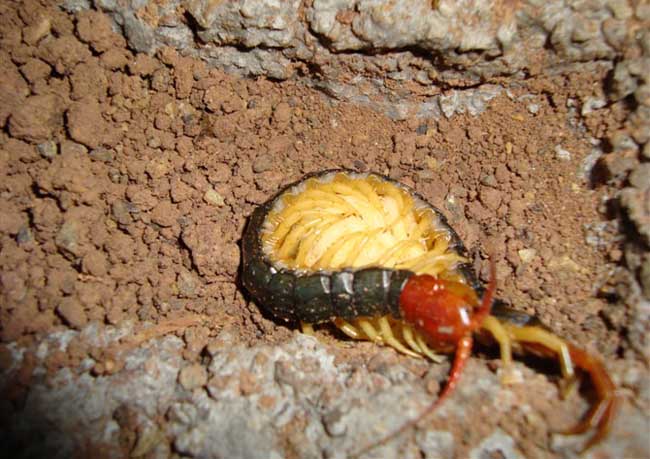
Companies, farms, breeders, organizations and individuals across the country preparing to take up centipede farming should correctly understand the scams and misconceptions surrounding artificial centipede farming. Do not always be swayed by advertising about centipede farming and its seemingly impressive economic returns, and give in to temptation, so as to avoid falling into farming scams and misconceptions and suffering unnecessary financial losses. The scams and misconceptions of artificial centipede farming are now made public as follows:
Common misconceptions about centipede farming
1. For breeders, it is essential to maintain a calm mindset. Do not keep fantasizing that farming some animal will make you rich overnight. Every investment requires hard work and wisdom. Steadily and firmly running a business may be the best path for us breeders. This is a rather serious misconception about centipede farming.
2. Tempting advertising slogans: farm centipedes, the market is tight, no need to worry about sales, truly great value, huge profits from a small investment. The above is not wrong, but it is built on the basis of mature farming technology, relatively complete facilities and strict management. This is also the most serious misconception about centipede farming.
3. No supportive policy for centipede farming: although increasing farmers' income is a concern of the state, this has very little to do with centipede farming. So far, no province or city across the country has a policy supporting centipede farming. So-called policy support is in fact a cover used by technology companies. This is a rather serious misconception.
4. Large market space: centipedes, as a traditional animal-based Chinese medicinal material, have a history of several thousand years. For a long time, the state has called every year for “vigorous capture of centipedes”, and what was originally seasonal capture and seasonal purchasing has developed into cross-seasonal capture and year-round purchasing. The purchase price per centipede has also soared from a few cents to more than 1.5 yuan, with export prices even higher, and demand exceeds supply, with prices rising year after year. A once-in-a-century opportunity to enter is falling from the sky. Many people think this is false, but in fact this is a misconception.
Common scams in centipede farming
1. The centipede egg-laying scam
Some materials or websites claim that centipedes lay eggs 3-4 times or 2-5 times at normal temperatures, with more than 80 eggs each time, and some even claim more than 100 eggs each time. This is definitely false. At normal temperatures (with four distinct seasons in a year), centipedes lay eggs once a year, with 30-80 eggs each time. At a constant annual temperature of 25--35 degrees, they can lay eggs 2-3 times in 2 years.
2. The centipede growth scam
Some materials or websites claim that centipedes can grow into adults in 2-4 months, or that they can grow into adults 3-4 times a year, and that adults are generally over 13 cm, taking about 3.5-4 years, while 2-8 months can produce adults. This is unrealistic and definitely false. At normal temperatures (with four distinct seasons in a year), centipedes take more than 3 years to grow into adults. Under artificial farming conditions, centipedes take about a year and a half to grow into adults.
3. The centipede disease-treatment scam
Some materials or websites claim that centipedes have no pests or diseases, which is false (centipede pests and diseases include: green mold disease, bloating disease, molting disease, miscarriage, throat ulceration, gastroenteritis, indigestion, dry rot disease, flour mites, digestive tract inflammation, and parasitic nematode disease). Before centipedes enter the pool: the breeding pool, breeding trough and rearing soil must be strictly disinfected, and the food must be fresh and not spoiled. The breeding shed, water trays and food trays must be disinfected regularly, and the temperature and humidity must be suitable, so that centipedes will not get sick.
4. The farming technology scam
① Some materials or websites claim that soilless centipede farming has no scientific basis. According to the morphological and structural characteristics and biological characteristics of centipedes, centipedes cannot do without rearing soil. Rearing soil can maintain the humidity of the breeding trough and control temperature and other characteristics (according to traditional Chinese medicine theory, earth generates metal). If centipedes are separated from the rearing soil for a long time, they will die or their growth will be affected. This is false.
② More than 98% of the centipede farming bricks used by centipede farms or companies are made in imitation of those from the Tianlong Centipede Farm in Zaoyang City, Hubei Province. This kind of brick cannot better solve the humidity problem of the rearing soil (with slight technological breakthroughs). All farms say their technology is the best, but the real farming technology will not be taught by Luo Yonglin (Luo Yonglin only sells seedlings and does not teach technology). This is a scam.
③ Some companies or farms using tiles to raise centipedes is the earliest farming method. According to the morphological and structural characteristics and biological characteristics of centipedes, this farming method has no scientific basis. It can only provide an environment for centipedes to hide by day and come out at night, and cannot solve the humidity problem. The survival rate of centipedes is extremely low. This farming method is outdated and is definitely false.
④ Centipede venom extraction can now only be called a theoretical matter, and the conditions for it are simply not mature. Centipede venom also has no market despite being offered. If anyone promotes getting rich by farming centipedes for their body venom, this is definitely false.
5. The farming base scam
① Falsely reporting a farming base: the base simply does not exist, yet they report it recklessly. Or they show you another base. This is obvious and definitely false. To go into farming, you must make an on-site inspection of the base and look at its farming scale. Most people who resell seedlings have no farming base at all; they just rent a few houses and set up a few boxes and pools for show. Confirm the identity of the seedling seller. We should also be more cautious about seedling-selling units that appear in cities. Do not think that convenient transportation is a good thing, because these wild animals can only reproduce and thrive normally in rural areas with good air. Be on guard against being deceived.
② On-site inspections require a fee: centipede farming construction and centipede farming technology look relatively simple, but they are not something you can learn well just by watching a few times, so charging a fee is completely unnecessary.