What are the common insects? A roundup of common insect species around us
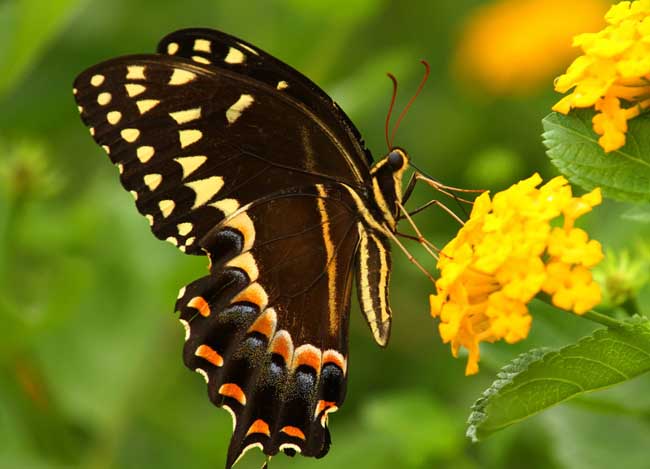
Insects are extremely diverse in species and forms, and are the most numerous animal group on Earth. Humans have identified about 1 million species of insects. The most common ones include locusts, butterflies, bees, dragonflies, flies, grasshoppers, cockroaches, and more. Let's take a look below at what kinds of insects there are!
Coleoptera
Coleoptera is the largest order in the class Insecta, commonly known as "beetles." There are more than 330,000 species, accounting for 40% of all insect species. Over 7,000 species have been recorded in China. Their forewings are chitinized, hard, and lack veins, called "elytra," which is how the order gets its name. They have a well-developed exoskeleton and a hard body, which protects their internal organs. Body size varies greatly. Insects in this order are highly adaptable. They have chewing mouthparts and a very broad diet, divided into herbivorous, carnivorous, saprophagous, necrophagous, coprophagous, and other types.
Coleoptera undergo complete metamorphosis. Larvae take various forms depending on their living environment and diet. The vast majority of pupae are exarate pupae, with rare cases of obtect pupae.
Coleoptera insects mainly include various leaf beetles, flower chafers, ground beetles, tiger beetles, hister beetles, burying beetles, dung beetles, and more.
Lepidoptera
Lepidoptera is the second-largest order in the class Insecta after Coleoptera, named for the large number of scales covering the body and wings. It is mainly divided into moths and butterflies. Their shared identifying feature is a siphoning proboscis, formed from the specialized galeae of the maxillae, with the mandibles reduced or absent. Complete metamorphosis. The body and wings are densely covered with scales and hairs. Two pairs of wings, membranous, each with a closed median cell, covered with scales and hairs that form distinctive patterns, commonly used in classification. A few are wingless or short-winged. Tarsi have 6 segments. No cerci. Holometabolous.
Lepidoptera larvae are polypodous: in addition to three pairs of thoracic legs, they generally have one pair of prolegs each on abdominal segments 3-6 and 10, though these may be reduced or specialized. The prolegs have crochets at their tips. The stripes on larval bodies are very important in classification. Pupae are obtect. Adults generally feed on nectar, water, and similar substances, and do not cause damage (except for a few, such as fruit-piercing noctuid moths that damage near-ripe fruit). The vast majority of larvae are terrestrial, herbivorous, and damage various plants. A few are aquatic.
Butterflies are a group of day-active Lepidoptera insects, usually identifiable by their bright colors, club-shaped antennae, and their resting posture of holding all four wings together upright above the back. The base of a butterfly's hindwing is enlarged and powerful, supporting and connecting to the forewing during flight. About 17,000 species of butterflies are known worldwide, all of them striking insects.
China has over 1,300 species of butterflies. Butterflies are holometabolous insects, going through egg, larva, pupa, and adult stages in their lifetime. Larvae mostly feed on plants, while adults use their siphoning proboscis to drink nectar. Moths are the largest group within Lepidoptera, accounting for about 9/10 of Lepidoptera species. Moths vary greatly in appearance, making general descriptions difficult. Most moths are nocturnal with dull body colors. Some are also active during the day and are brightly colored. However, moth antennae differ from those of butterflies: they do not have club-shaped tips, but instead are filamentous, plumose, or of other forms. In addition, most moths rely on special connecting structures to link their forewings and hindwings during flight -- the frenulum and retinaculum -- giving moths and butterflies even more ways to be distinguished.
Diptera
Diptera is a relatively large order in the class Insecta. It is named because the adult forewings are membranous and the hindwings are reduced to "halteres." Diptera is divided into three suborders: Nematocera, Brachycera, and Cyclorrhapha. Nematocera have antennae with more than 6 segments and are a relatively primitive group. Brachycera have antennae with fewer than 5 segments, generally 3, commonly known as "horse flies." Cyclorrhapha are what we commonly call "flies."
Diptera insects mainly include mosquitoes, biting midges, blackflies, horse flies, flies, and more.
Hymenoptera
Hymenoptera insects have distinctive features, including chewing-lapping mouthparts and forewings and hindwings connected by hamuli. This group is widely distributed, with over 100,000 known species and an estimated minimum of 250,000 species. Based on whether the base of the abdomen is constricted and narrowed, they are divided into Symphyta and Apocrita. Symphyta are a primitive herbivorous group, including sawflies, horntails, stem sawflies, and similar groups. Apocrita includes most Hymenoptera species, including ants, wasps, and various parasitic wasps.
Hymenoptera insects are mainly various ants and bees.
Hemiptera
Hemiptera is composed of two suborders, Heteroptera and Homoptera, with 133 families and more than 60,000 species. Heteroptera, namely true bugs, is one of the major groups in the class Insecta. The forewings of Hemiptera insects cover the back of the body at rest, with the hindwings hidden beneath. They are named for the fact that in some groups the base of the forewings is sclerotized and thickened, becoming "hemielytra-like." They have piercing-sucking mouthparts and feed on the body fluids of plants or other animals. They are hemimetabolous insects. Their abdomen has stink glands, and when encountering enemies they spray a volatile odorant liquid. Homoptera includes cicadas, aphids, and more.